
MOZOM-analyse
MOZOM analysis: conflict around Anthropic shows how AI companies rely not only on innovation but also on political favor
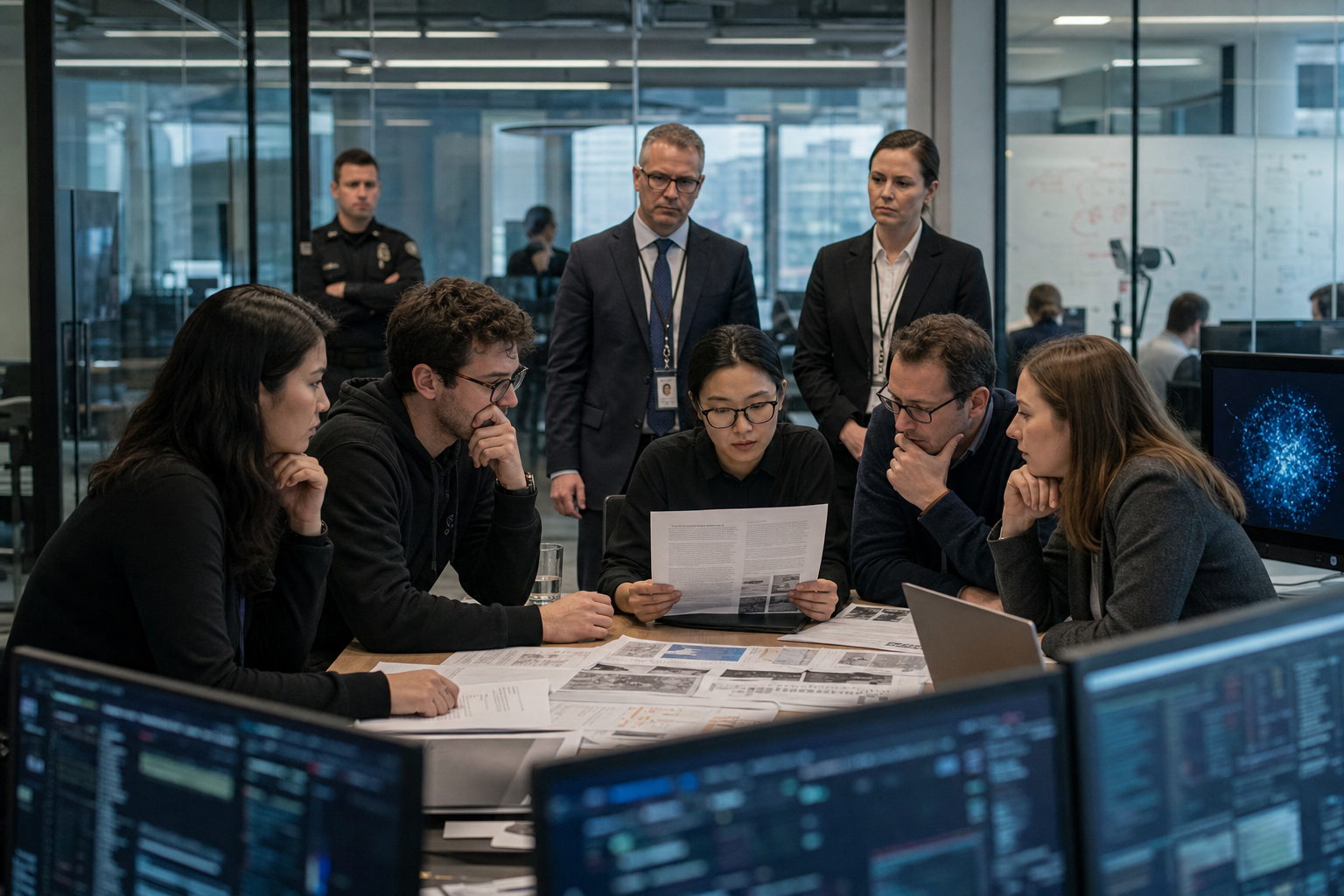
- Source
- The New York Times
- MOZOM headline
- MOZOM analysis: conflict around Anthropic shows how AI companies rely not only on innovation but also on political favor
- Original headline
- Anthropic Employees Accuse Trump Administration of Targeting Them
- Author
- Redactie The New York Times
- Date
- 19 juni 2026 om 14:43
- Subject
- The New York Times reports that Anthropic employees believe the Trump administration is putting targeted pressure on their company and latest AI models. Behind that conflict lies a broader question about the political vulnerability of powerful AI companies.
Summary of the original report
The New York Times describes Anthropic employees as increasingly wondering whether the Trump administration is deliberately trying to restrict their business and latest AI models. This news is not just about one company complaining about government intervention, but about the changed balance of power between states and AI labs. For a long time, leading AI companies were able to present themselves as technologically unstoppable: whoever had the best model largely determined the pace of launch and scale-up. This message shows that that phase may be over. As soon as a government decides that a model, a company or a direction is politically undesirable, the battle shifts from purely technical superiority to administrative consent. For employees, this feels like purposeful opposition; for governments it can be interpreted as security intervention, national control or political correction of a sector that is taking too much power.
Striking in this message
The headline uses the word “targeting,” and that is powerful. It suggests not just regulation or disagreement, but a targeted campaign with winners and losers. As a result, the message immediately reads as a conflict between the state and technology company, not as a neutral debate about AI safety. This frame makes the employee position palpable, but it also pushes the reader towards a hostile interpretation of government intervention before all administrative motives have been fully explained. This is relevant in AI news, because language such as restricting, banning, targeting or securing directly determines whether the public sees the government as a protector, inhibitor or political player.
Background that often remains out of view
For international readers, it is useful to clarify that Anthropic is an influential American AI company that competes with other major labs in the field of advanced generative models. What remains less visible is that the American government in this sector not only acts from security or regulation, but also from geopolitics, domestic power politics and the desire to direct technological influence. There is therefore a broader tension underlying these types of messages: AI companies would like to be treated as innovative engines of economic growth, but are increasingly approached by states as an infrastructure of information and power formation that cannot operate completely freely. The conflict is then not just about one model, but about who ultimately decides which intelligence is allowed to circulate publicly.
Possible message behind the news
A possible message behind this news is that AI companies will only appear truly powerful as long as governments tolerate their advance. In plain language: anyone who builds the smartest models is not automatically free to roll them out unhindered. Between the lines, the picture emerges that the next AI race will be fought not only between companies, but also between labs and states that want to determine where the limit of permissible intelligence lies.
Neutral conclusion
This article shows that the conflict surrounding Anthropic is more than an internal tech story. It is also a sign that AI is in a phase where political approval, regulation and power struggles are becoming as decisive as computing power, talent and product quality.