
MOZOM-analyse
MOZOM analysis: discovery of large Roman baths in Nijmegen shows how national history becomes more tangible as soon as the soil literally reveals an urban past
- Source
- De Telegraaf
- MOZOM headline
- MOZOM analysis: discovery of large Roman baths in Nijmegen shows how national history becomes more tangible as soon as the soil literally reveals an urban past
- Original headline
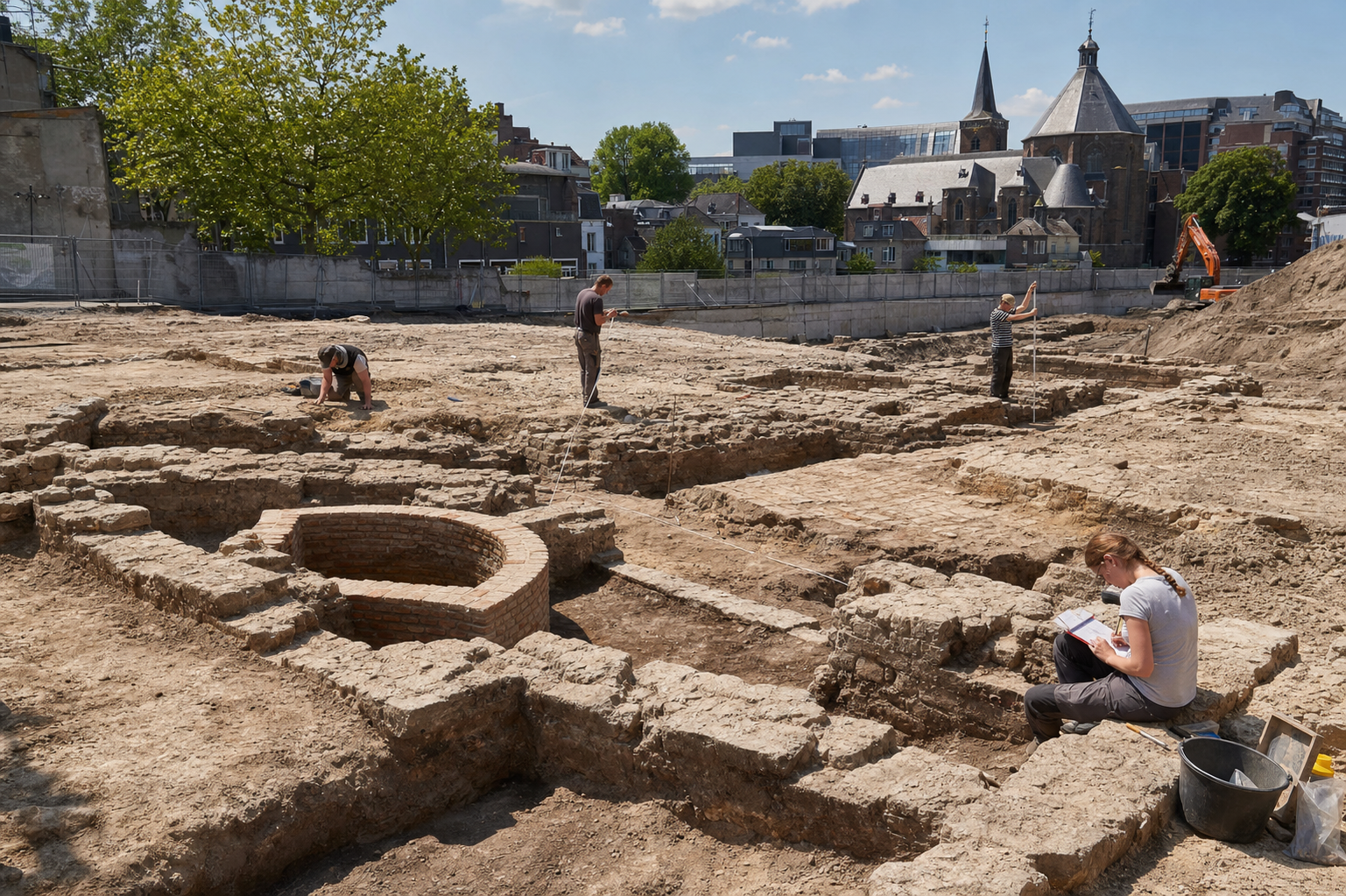
- Archaeologists excavate the largest Roman baths in the Netherlands in Nijmegen
- Author
- Redactie De Telegraaf
- Date
- 21 juni 2026 om 12:15
- Subject
- De Telegraaf reports on the excavation of the largest Roman baths in the Netherlands in Nijmegen, with which archeology once again makes visible how contemporary cities are built on older layers of power, daily life and public space.
Summary of the original report
De Telegraaf reports that archaeologists in Nijmegen have excavated the largest Roman baths in the Netherlands. This means that the news is not only about stones and history, but also about the way in which contemporary identity is often reinforced by tangible evidence from the ground. A discovery of this scale makes an abstract past physical. It is relevant for international readers that Nijmegen is one of the oldest cities in the Netherlands and was an important military and administrative place in Roman times. This makes these baths not only a local curiosity, but also an indication of how closely Roman infrastructure, power and daily life were intertwined in this part of Europe.
Striking in this message
It is striking that the largest possible scale immediately carries the headline. That makes the find newsworthy, but also shifts the attention towards superlativeness. What becomes less immediately visible is which historical questions arise from such an excavation: who were these baths intended for, how public was this space and what does this say about urban hierarchy in Roman times?
Less visible context
What is often less visible is that archeology in cities is also a struggle for pace and space. Every major discovery rubs against construction plans, timetables and costs. This is precisely why excavations are not only culturally interesting, but also administratively relevant: they force the present to take into account a past that has not remained neatly outside the modern city.
Possible message behind the news
A possible message behind this news is that history only takes on real weight when it physically presents itself. In plain language: a past that you can read about is impressive, but a past that you have literally lived through forces a city to look at itself differently.
Neutral conclusion
The report therefore shows that the Roman baths in Nijmegen are more than a beautiful archaeological find. They make visible how deep administrative, social and spatial pasts still remain beneath the modern city.