MOZOM-analyse
MOZOM analysis: return of German looted property to Poland shows that the legacy of war also continues to have an administrative effect
- Source
- Tagesschau
- MOZOM headline
- MOZOM analysis: return of German looted property to Poland shows that the legacy of war also continues to have an administrative effect
- Original headline
- Deutschland gibt NS-Raubgut an Polen zurück
- Author
- Redactie Tagesschau
- Date
- 17 juni 2026 om 19:58
- Subject
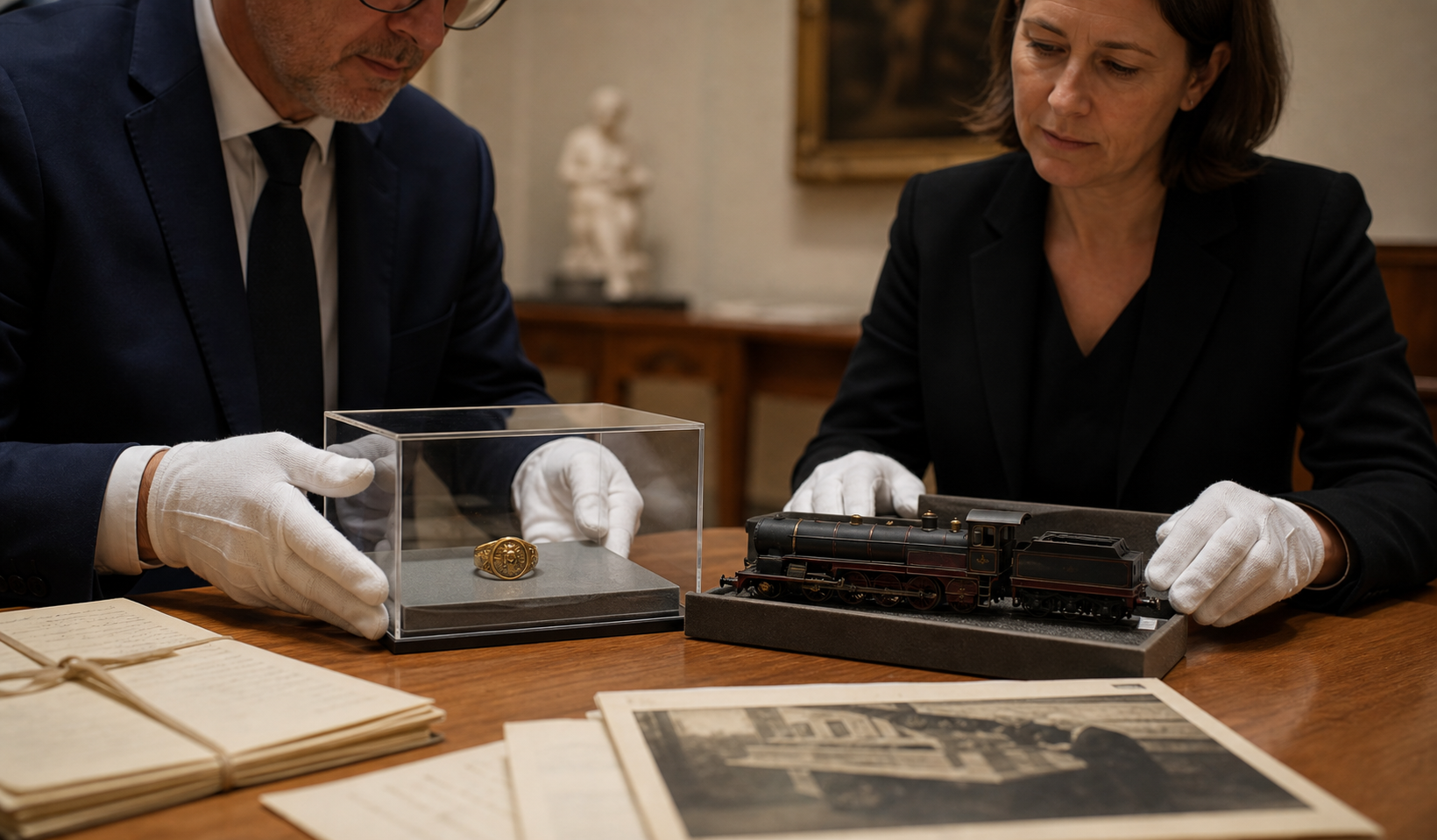
- Tagesschau, the German public newsroom, reports that more than eighty years after World War II, Germany has returned several cultural objects looted during the Nazi occupation to Poland, including a historic gold ring and train models.
Summary of the original report
Tagesschau reports that more than eighty years after the Second World War, Germany has again returned several cultural objects looted during the Nazi occupation to Poland. This includes a historic gold ring and train models. In a direct sense, this is a message of restitution: objects return to the country from which they disappeared under war conditions. But the article also makes it clear that looted art and other looted goods are not a closed historical file. As long as collections, archives and provenance research yield new finds, the war will remain administratively present in museums, governments and bilateral relations. The return of relatively small objects also shows that these are not only world-famous masterpieces, but also symbolic and locally significant objects that weigh heavily on national memory.
Striking in this message
It is striking that the formulation NS-Raubgut immediately places the reader in a legal and moral framework. The message therefore does not read as a friendly cultural gesture, but as a belated correction on war crime and occupation robbery. By emphasizing that this happens more than eighty years after the war, a second effect also arises: the time gap does not make the restitution smaller, but rather more difficult. The implicit message is that historical responsibility does not simply evaporate with the passing of generations.
Background that often remains out of view
What remains less visible is that the return of cultural goods between Germany and Poland also touches on a broader sensitivity in their mutual relationship, in which war heritage, occupation, recovery and recognition have had an impact for decades. For international readers, it is useful to clarify that Tagesschau is the national newsroom of the German public broadcaster and that such reports resonate in Germany not only culturally, but also politically. Moreover, restitution is rarely just about possession: it is also about archival discipline, legal legitimacy, national dignity and the question of which country has the final say on the history of disappeared objects.
Possible message behind the news
A possible message behind this news is that war does not end with the silence of weapons, but continues for generations in archives, collections and state relations. In plain language: a ring or model train may seem small, but its return says something bigger about who continues to bear responsibility for stolen history. Between the lines, the image emerges that Europe not only commemorates its past, but has to continually rearrange it administratively and symbolically.
Neutral conclusion
The article thus shows that the return of looted property to Poland is more than cultural news. It is also a signal that historical correction in Europe is still taking place through concrete state actions, even when the war itself is already far behind the horizon.