
MOZOM-analyse
MOZOM analysis: billion-dollar renovation of the Louvre shows how cultural prestige only becomes truly visible when decay and overload can no longer be hidden
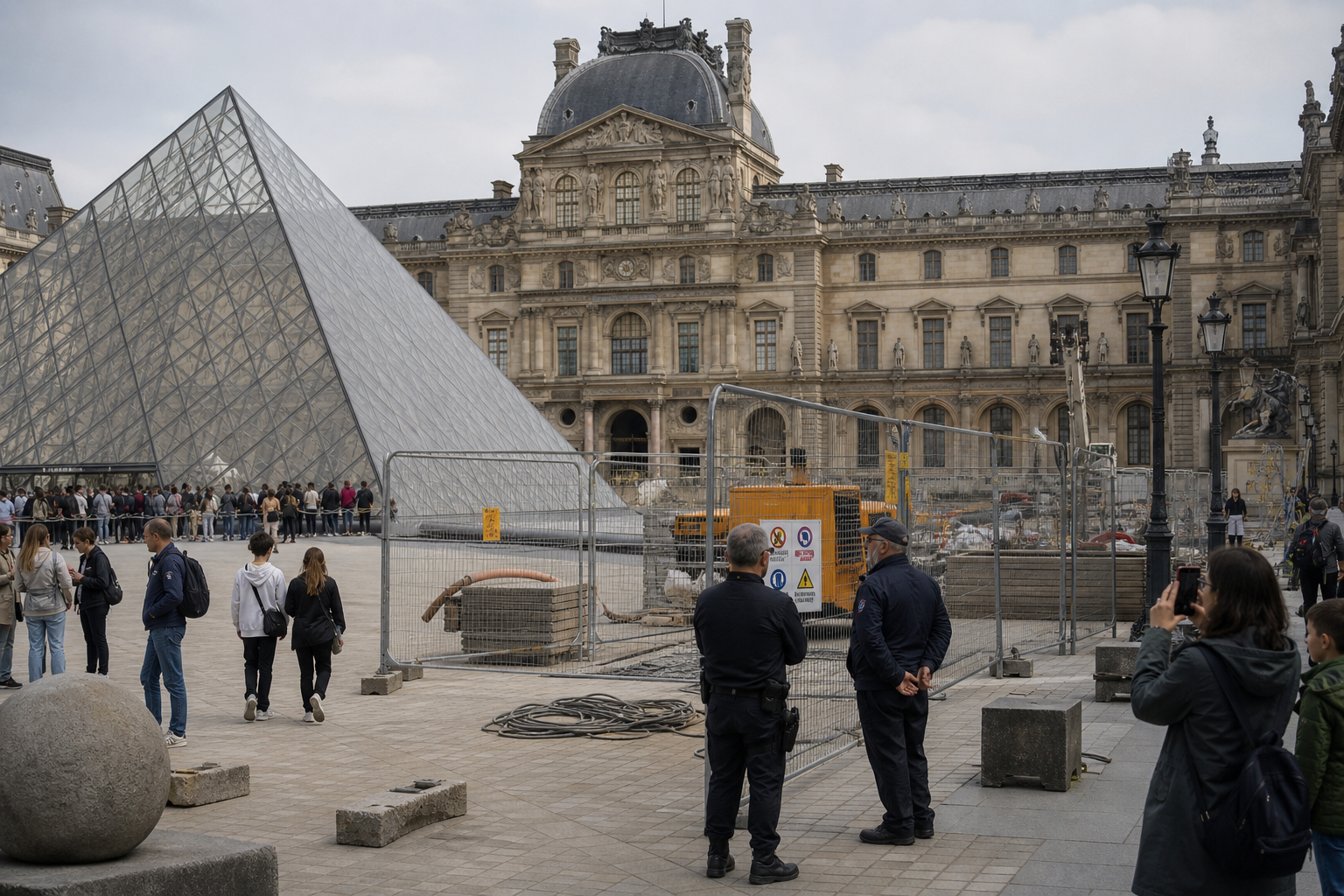
- Source
- NOS.nl
- MOZOM headline
- MOZOM analysis: billion-dollar renovation of the Louvre shows how cultural prestige only becomes truly visible when decay and overload can no longer be hidden
- Original headline
- Louvre director defends billion-euro renovation: 'Absolutely necessary'
- Author
- Redactie NOS.nl
- Date
- 19 juni 2026 om 18:41
- Subject
- NOS.nl (NL) reports that the new director of the Louvre defends a renovation of approximately one billion euros as absolutely necessary, because the world-famous museum is under heavy technical and logistical pressure.
Summary of the original report
NOS.nl describes how the new director of the Louvre defends a major renovation plan as inevitable, because the museum is reaching its limits technically, logistically and in terms of visitor load. In a direct sense, this is a story about money, maintenance and cultural-political choices. But beneath that layer lies a broader reality: world-famous institutions are often seen as self-evident national showpieces, while their infrastructure is wearing out more quickly because of that success. The discussion is therefore not only about a high price tag, but also about the question of how much a society is willing to pay to physically maintain cultural prestige. In this lecture, the Louvre is not only a museum, but also a machine of tourism, symbolism and national image that becomes visibly vulnerable precisely due to permanent overload.
Striking in this message
It is striking that the headline focuses on the defense of the billion-dollar renovation and concludes with absolutely necessary. As a result, the message immediately shifts from a technical maintenance issue to a legitimation battle over public expenditure. The reader is invited less to think about restoration as routine and more to consider the need for exceptional scale. In this way, the language of urgency makes the costs themselves part of the news frame.
Less visible context
For international readers, it is useful to clarify that the Louvre is not only France's most famous museum, but also one of Paris's greatest tourist symbols. It is precisely for this reason that questions about renovation quickly converge with debate about state priorities, visitor flows, heritage protection and economic image. What remains less visible is that cultural infrastructure often only receives political attention when wear and tear becomes publicly observable, while structural pressure has been mounting for much longer through mass tourism, security requirements and high operating costs.
Possible message behind the news
A possible message behind this news is that cultural heritage is the easiest to generate political monetization when decay itself almost becomes a scandal risk. In plain language: as long as an icon is still running, maintenance often seems postponeable, but as soon as wear and tear threatens its prestige, investment suddenly becomes a national necessity. Between the lines, the image emerges that states preserve heritage not only out of love for culture, but also out of fear of visible decay of their own symbols.
Neutral conclusion
The article thus shows that the billion-dollar renovation of the Louvre is more than an expensive makeover. It is also a moment that reveals how cultural prestige, public funding and physical wear and tear only really intersect once a national symbol no longer looks untouchable.