
MOZOM-analyse
MOZOM analysis: EU trade deal with US chooses peace over equality
- Source
- Tagesschau
- MOZOM headline
- MOZOM analysis: EU trade deal with US chooses peace over equality
- Original headline
- Abstimmung in EU Parliament: Way free for Trade Deal with USA
- Author
- Sarah Lopez, ARD Brussel
- Date
- 16 juni 2026 om 15:38
- Subject
- German public newsroom Tagesschau reports on the approval of an EU-US trade deal with a 15 percent tariff on most EU exports to the United States.
Summary of the original report
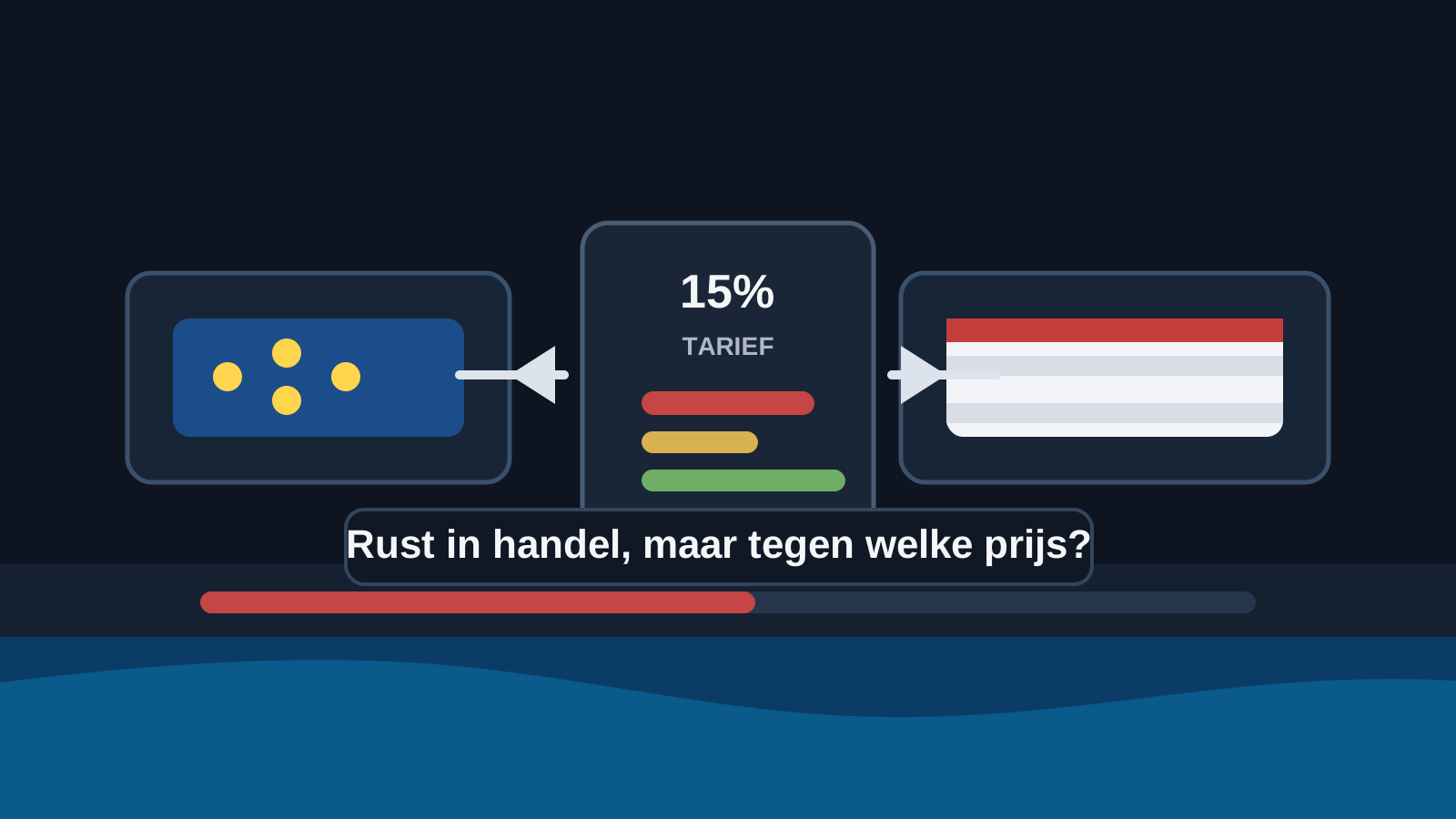
Tagesschau reports that the European Parliament has approved the so-called Turnberry deal between the European Union and the United States. According to the article, import duties on American industrial products in the EU would expire, while a tariff of 15 percent would continue to apply to most EU products bound for the US. The EU would also facilitate market access for American agricultural products and seafood. Supporters within Parliament and the business community call the agreement not perfect, but necessary for stability and predictability. Criticism comes from left-wing MEPs, among others, who believe that European jobs and independence are coming under pressure. Tagesschau also emphasizes that emergency clauses have been built in in case Washington does not comply with the agreement.
Striking in this message
Words such as Weg frei, Stabilitat, Planungssicherheit and Sicherheitsklauseln direct the reader towards manageability and damage limitation. At the same time, the piece also uses terms such as ungleich and Schadensbegrenzung, which immediately makes it palpable that the agreement is not being sold as an honest victory. The emphasis is therefore not on free trade as an ideal, but on preventing worse. That makes the deal in the presentation almost a necessary compromise rather than a convincing success.
Less visible context
What remains less visible is what this asymmetry means in the longer term for consumers, producers and European negotiating power. If European exports to the US remain taxed, while the EU lowers thresholds for American goods, this could put pressure on price competition, margins and investment space. What is also neglected is that political peace in trade relations is often temporary if it mainly depends on the whims of a single American president. For citizens, this means that lower tension on paper does not automatically equate to a stronger or fairer economic position.
Possible message behind the news
A possible message behind this news is that in a tense trade climate, Europe would rather finalize an imperfect agreement than end up in open tariff battles again. For a casual reader, it comes down to something simple: the deal is presented as less bad than the alternative. As a result, the question shifts unnoticed from 'is this fair?' to 'is this still manageable?'. Between the lines, this creates the impression that short-term economic security outweighs full equality between the two trading blocs.
Neutral conclusion
The article thus shows how a trade deal can be simultaneously sold as stability and yet give the impression that Europe is mainly buying time in an unequal power relationship.