
MOZOM-analyse
MOZOM analysis: EU migration pact is about solidarity, but penal language lingers
- Source
- Euronews
- MOZOM headline
- MOZOM analysis: EU migration pact is about solidarity, but penal language lingers
- Original headline
- Fact check: Is the EU fining member states that don't accept migrants?
- Author
- Noa Schumann
- Date
- 16 juni 2026 om 17:03
- Subject
- Euronews, a pan-European news channel, is investigating claims that EU countries will be fined if they do not accept migrants under the new migration and asylum pact.
Summary of the original report
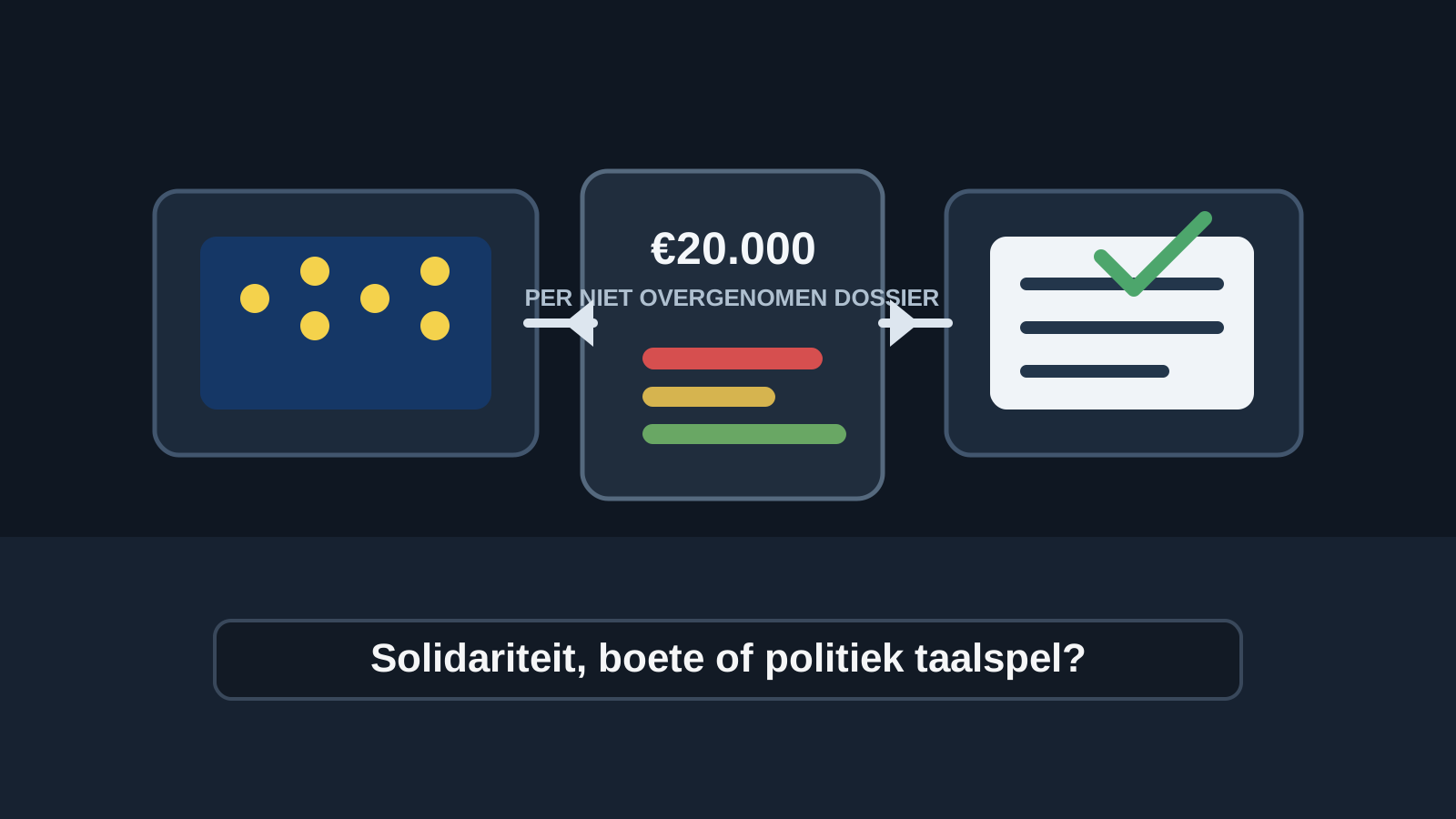
Euronews reports that the new EU pact on migration and asylum entered into force on June 12 after years of negotiations. The article discusses criticism from French politicians from Rassemblement National, including Marine Le Pen, who argue that member states face fines if they refuse to accept migrants. According to Euronews, this representation is misleading, because member states have several ways to contribute to the solidarity mechanism. They can take over asylum seekers, but also provide operational support, supply personnel and materials or contribute financially. Euronews mentions an amount of 20,000 euros per unadmitted asylum seeker as an alternative within that system, not as a separate criminal sanction. At the same time, the piece shows that many Member States would indeed prefer to opt for money or other support before 2026 rather than actually taking over asylum seekers.
Striking in this message
Words such as misleading, solidarity mechanism, mandatory but flexible and not a fine clearly direct the reader towards correcting a political claim. Euronews thus positions itself not only as an interpreter, but also as a referee of the formulation. The reader is drawn away from the word fine and towards the administratively more neutral word contribution. Yet it remains palpable that a mandatory financial route can quickly be perceived as a punishment in the public perception.
Less visible context
What is less visible is that legal definitions and political perception can diverge here. Formally something can be an alternative contribution, while in practice citizens still experience it as paying to avoid an imposed choice. What is also neglected is that although the pact offers flexible solidarity, the pressure on countries at the EU's external borders does not disappear. For the wider population, the underlying issue is therefore not only whether the claim is exactly correct, but also how the EU distributes responsibility without further eroding trust.
Possible message behind the news
A possible message behind this news is that the migration debate is not just about facts, but also about which word the public remembers first. For a layman it comes down to this: officially it is not a fine, because countries are also allowed to contribute in other ways. But if you are obliged to make financial contributions as soon as you do not take over people, it still looks like a sanction to many citizens. Between the lines, this creates the impression that Brussels and national politicians are not only fighting about migration, but also about who has the right to appoint the measure.
Neutral conclusion
The article thus shows that the core of the conflict lies not only in the arrangement itself, but also in the language with which mandatory solidarity is made politically salable or, on the contrary, suspect.