
MOZOM-analyse
MOZOM analysis: Europe is talking about competitiveness again, but the real problem is that the EU simultaneously wants to protect market power and continues to feel industrial vulnerability
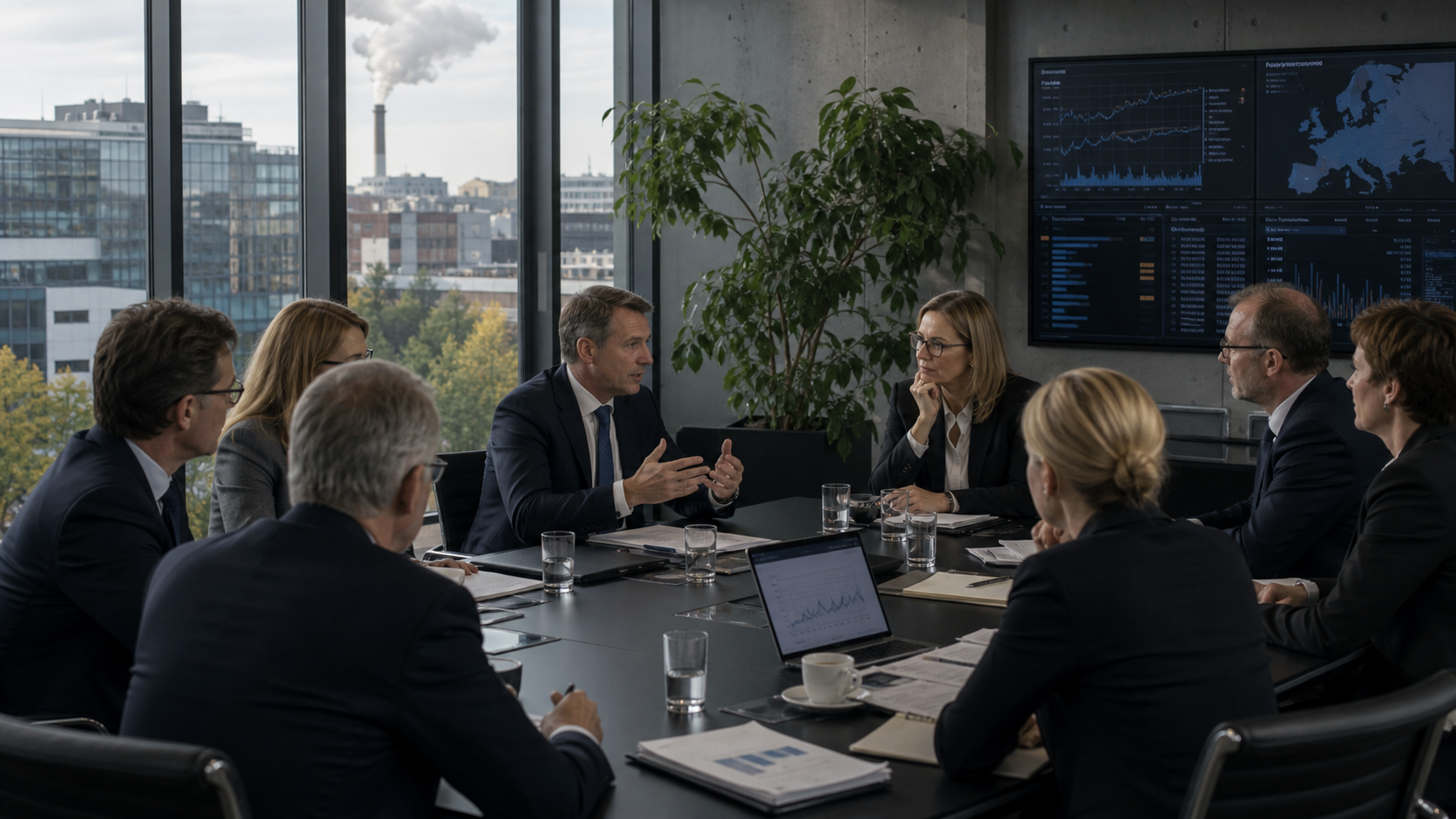
- Source
- Euronews
- MOZOM headline
- MOZOM analysis: Europe is talking about competitiveness again, but the real problem is that the EU simultaneously wants to protect market power and continues to feel industrial vulnerability
- Original headline
- How can Europe compete with the US and China economically? MEPs debate on The Ring
- Author
- Redactie Euronews
- Date
- 18 juni 2026 om 16:48
- Subject
- Euronews discusses how MEPs assess Europe's economic position against the United States and China, focusing on artificial intelligence, rare raw materials, trade tariffs and cheap Chinese exports.
Summary of the original report
Euronews allows MEPs to discuss how Europe is holding up economically against the United States and China. Themes such as artificial intelligence, rare minerals, American tariffs and cheap Chinese exports come together in one larger issue: how does Europe remain prosperous without becoming too dependent, too slow or too defensive? The core of the story lies not only in the individual files, but in the recurring administrative tension underneath. Europe wants to retain the benefits of open trade and legal certainty, but at the same time feels that industry, technology and raw materials are increasingly part of power blocs. This makes competitiveness sound less like a classic economic debate and more like a discussion about strategic survival in a world in which large states are more actively arming their markets.
Striking in this message
It is striking that the headline directly formulates the question as a competition: how can Europe compete with the US and China? This immediately places the reader in a force field of disadvantage, pressure and necessity. The conversation therefore reads less like an ordinary parliamentary exchange and more like a diagnosis that Europe is structurally missing or catching up on something. The combination of AI, raw materials, tariffs and export pressure also reinforces that feeling: the problem is portrayed broadly enough to capture almost every economic vulnerability under the same strategic umbrella.
The broader framework
For international readers, it is useful to briefly clarify that Euronews is a European news channel and that such discussions in Brussels often revolve around the same underlying question: should the EU primarily protect its internal market, or more quickly normalize state aid, industrial policy and trade defense? What remains less visible is that competitiveness in Europe is not just about innovation, but also about energy costs, licensing pace, financing, defense of supply chains and political willingness to take a less naive view of global trade. Underlying this message is therefore a broader shift: Europe no longer just talks about growth, but increasingly about economic resilience as a form of power politics.
Possible message behind the news
A possible message behind this news is that Europe can no longer see itself as a neutral market between two superpowers, but increasingly has to choose how actively it protects its own interests. In plain language: competitiveness here is not only about smarter production, but also about wanting to be less dependent on systems that are controlled elsewhere. Between the lines, this creates the impression that economic policy in the EU is increasingly becoming security and power politics.
Neutral conclusion
The article thus shows that the debate about European competitiveness is more than a technical discussion about growth or trade. It is also a recognition that the EU must redefine and defend its economic model in a world where markets, technology and geopolitics are increasingly disconnected.