
MOZOM-analyse
MOZOM analysis: rising veterinary costs reveal how animal care increasingly clashes with purchasing power, guilt and the urge for political correction
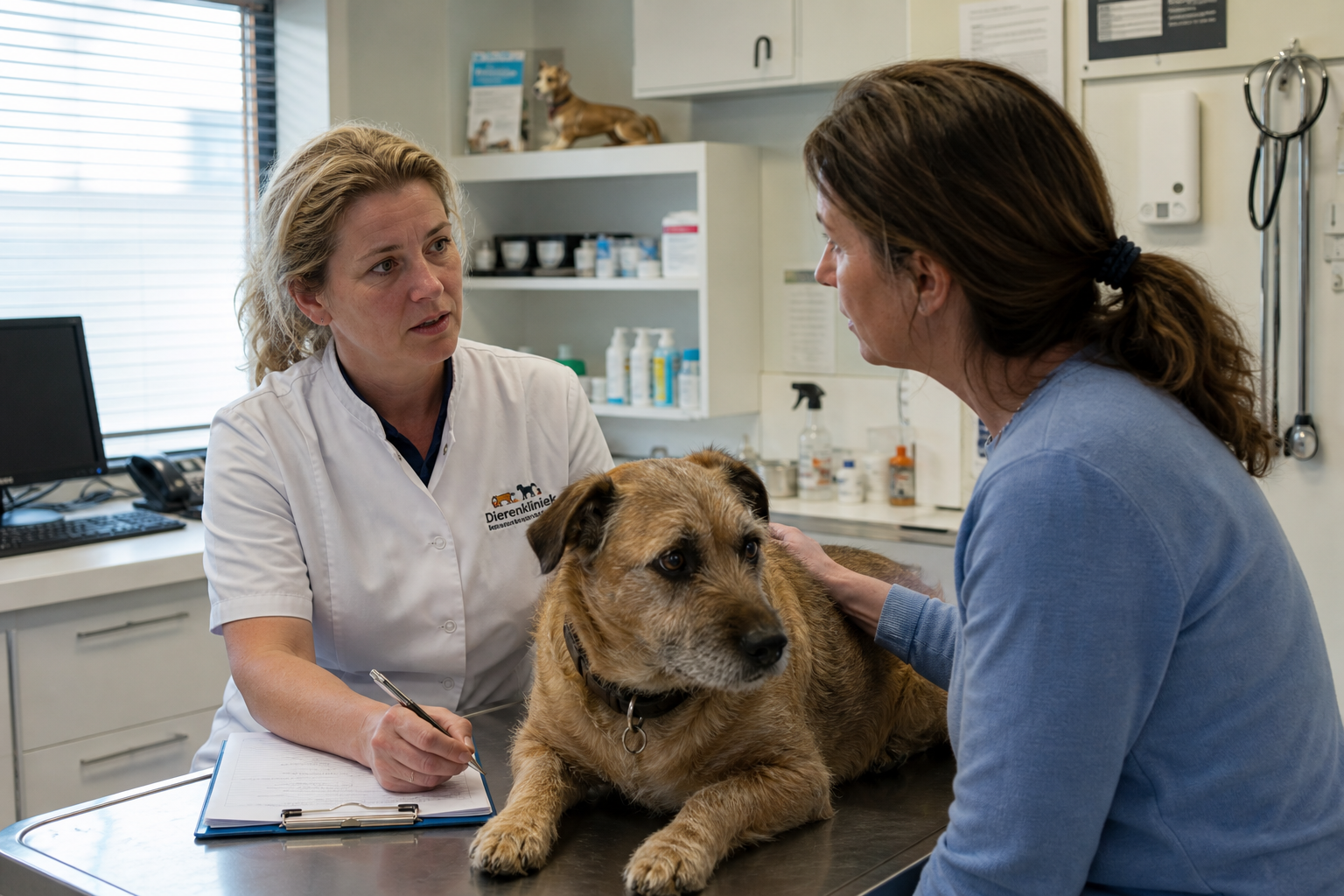
- Source
- AD.nl
- MOZOM headline
- MOZOM analysis: rising veterinary costs reveal how animal care increasingly clashes with purchasing power, guilt and the urge for political correction
- Original headline
- Pet owners are scared of visiting a vet, politicians want change: 'Often see doubts about costs'
- Author
- Redactie AD.nl
- Date
- 19 juni 2026 om 11:55
- Subject
- AD.nl (NL) reports that politicians want to intervene in the rapidly increasing costs of veterinarians. Behind that domestic news lies a broader question about market forces, duty of care and the price of emotional responsibility for pets.
Summary of the original report
AD.nl describes that veterinary costs are so high for many pet owners that politicians are now considering legislation or interventions. This means that this topic is not just about individual bills, but about the question of what type of care veterinary medicine has become in the Netherlands. Unlike in human care, there are fewer collective safety nets here, while the emotional obligation for owners is often experienced just as heavily. This immediately makes the consultation room a place where medical considerations, income and guilt come together. That is precisely why this topic takes on political significance: as soon as many people experience that necessary care for their animal becomes financially burdensome, the debate shifts from individual discomfort to system criticism. The price of treatment not only affects the wallet, but also the uncomfortable feeling that love for an animal increasingly has to be paid for via market logic.
Striking in this message
The headline combines personal shock with political intervention. This makes the message feel both human and administrative: first the emotional shock of the bill, then the idea that the government must correct it. That is a powerful structure, because it means that an individual cost problem is almost immediately read as a social failure. At the same time, this framing pushes the reader towards the idea that the rates themselves are the main problem, while under the surface other factors also play a role, such as economies of scale, investor pressure, more expensive equipment, higher expectations of treatment and the question of how far animal care should be able to go medically today.
Background that often remains out of view
For international readers, it is useful to clarify that AD.nl is a major Dutch news source and that the discussion in the Netherlands touches on broader concerns about affordability of daily amenities. What remains less visible is that animal care is organized fundamentally differently than hospital care for people: there is no comparable broad public system that absorbs costs as soon as treatments become complex. As a result, choices become hard and personal more quickly. There is therefore a broader tension underlying this message: if animals are increasingly seen as family members, the expectation of high-quality care also grows, but without it automatically being clear who can still afford that medical ambition. The political question then becomes not only how rates should be reduced, but also which care model the Netherlands actually considers normal for pets.
Possible message behind the news
A possible message behind this news is that society is increasingly treating pets as full-fledged family members, but the organization of care has not grown financially. In plain language: people want to do what is medically possible for their animal, but notice that that love is increasingly coming up against a hard price limit. Between the lines, the picture emerges that the real tension is not just about expensive consultations, but about the question of how much market a care relationship may contain once emotional dependence is high.
Neutral conclusion
This article shows that mounting veterinary costs are more than a series of high bills. It is also a sign that the Netherlands must redetermine how affordable, commercial and medically advanced animal care can become when pets are increasingly seen less as a luxury and more as family.