
MOZOM-analyse
MOZOM analysis: neck-and-neck race in the Colombian second round shows how elections are increasingly about blocking the other instead of convincing the middle
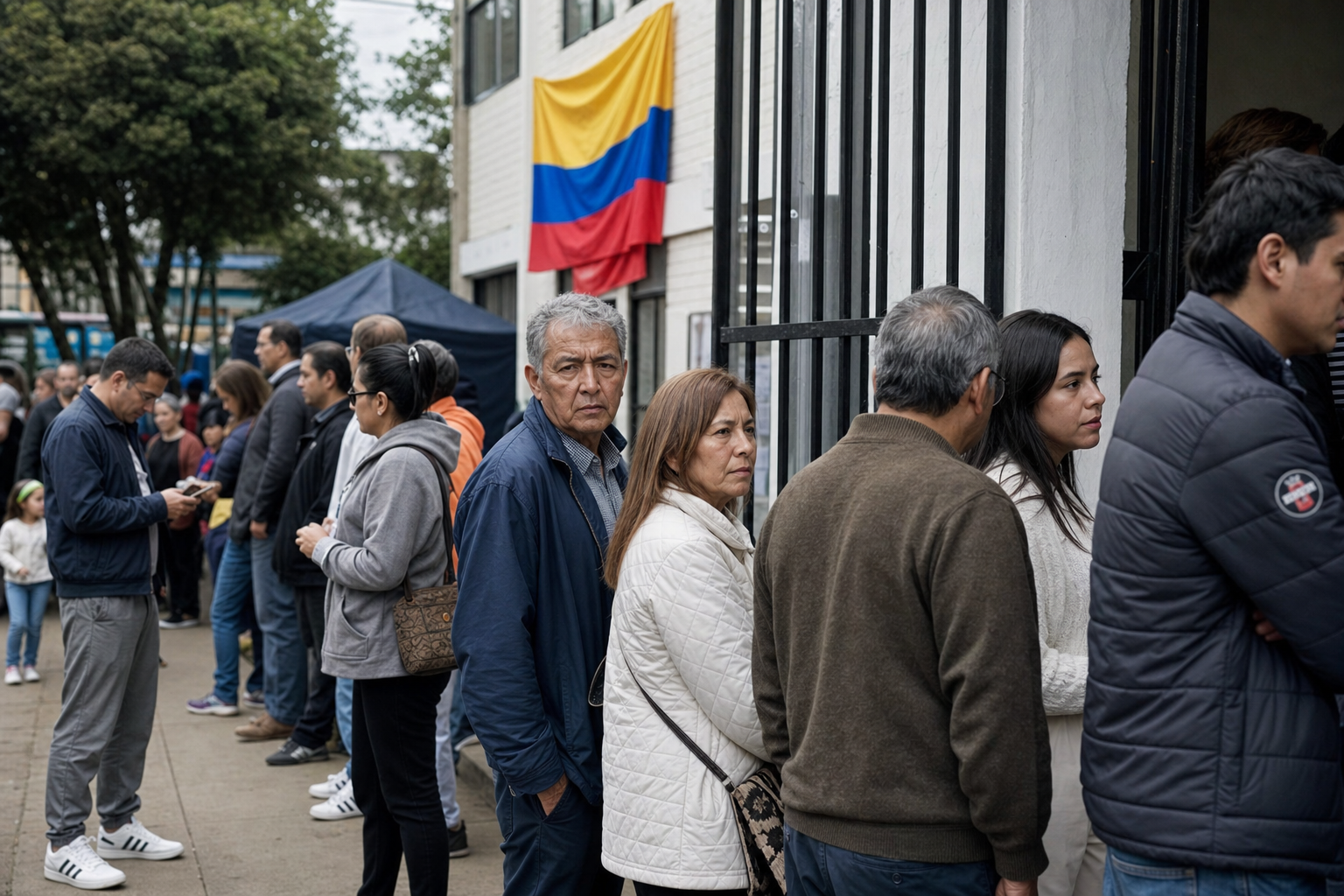
- Source
- Tagesschau
- MOZOM headline
- MOZOM analysis: neck-and-neck race in the Colombian second round shows how elections are increasingly about blocking the other instead of convincing the middle
- Original headline
- Kopf-an-Kopf-Rennen at Kolumbiens Stichwahl
- Author
- Redactie Tagesschau
- Date
- 21 juni 2026 om 12:17
- Subject
- Tagesschau describes a neck-and-neck race in the Colombian presidential campaign, with which polarization, coalition building and legitimacy are once again taking center stage.
Summary of the original report
Tagesschau reports that the Colombian presidential election is neck and neck. The message is therefore not only about polls or tension in the results, but also about how polarized elections work. In such races, the decisive factor is often not who is the most convincing, but who manages to organize the strongest aversion to the opponent. It is relevant for international readers that Colombia has politically, socially and security-related election dossiers. As a result, second rounds are rarely purely technical. They become a test of coalitions, legitimacy and the question of whether a winner can still build up governable authority after a small margin.
Striking in this message
It is striking that the headline almost completely summarizes the tension in the image of a neck-and-neck race. This increases urgency and viewing value, but at the same time can conceal the fact that the political significance lies in what such a narrow margin subsequently does to trust, recognition and administrative stability.
The broader framework
Less visible in rapid election reporting is that a small lead in a highly polarized context can have a more administrative impact than a comfortable win. The space to accept loss, bind allies and implement policy then becomes smaller. As a result, this message is not only about who wins, but also about the question of how a society should continue to function after such a result.
Possible message behind the news
A possible message behind this news is that the toughest phase of an election sometimes only begins after the counting. In plain language: a narrow win does produce a president, but not automatically peace, recognition or sufficient space to really govern.
Neutral conclusion
The message therefore shows that the Colombian second round is more than an exciting duel. She also exposes how fragile democratic support can become when elections are mainly about holding back the other.