
MOZOM-analyse
MOZOM analysis: Luigi Mangione's defense shows how American murder cases are not only about guilt but also about the boundary between psychological disturbance and legal accountability
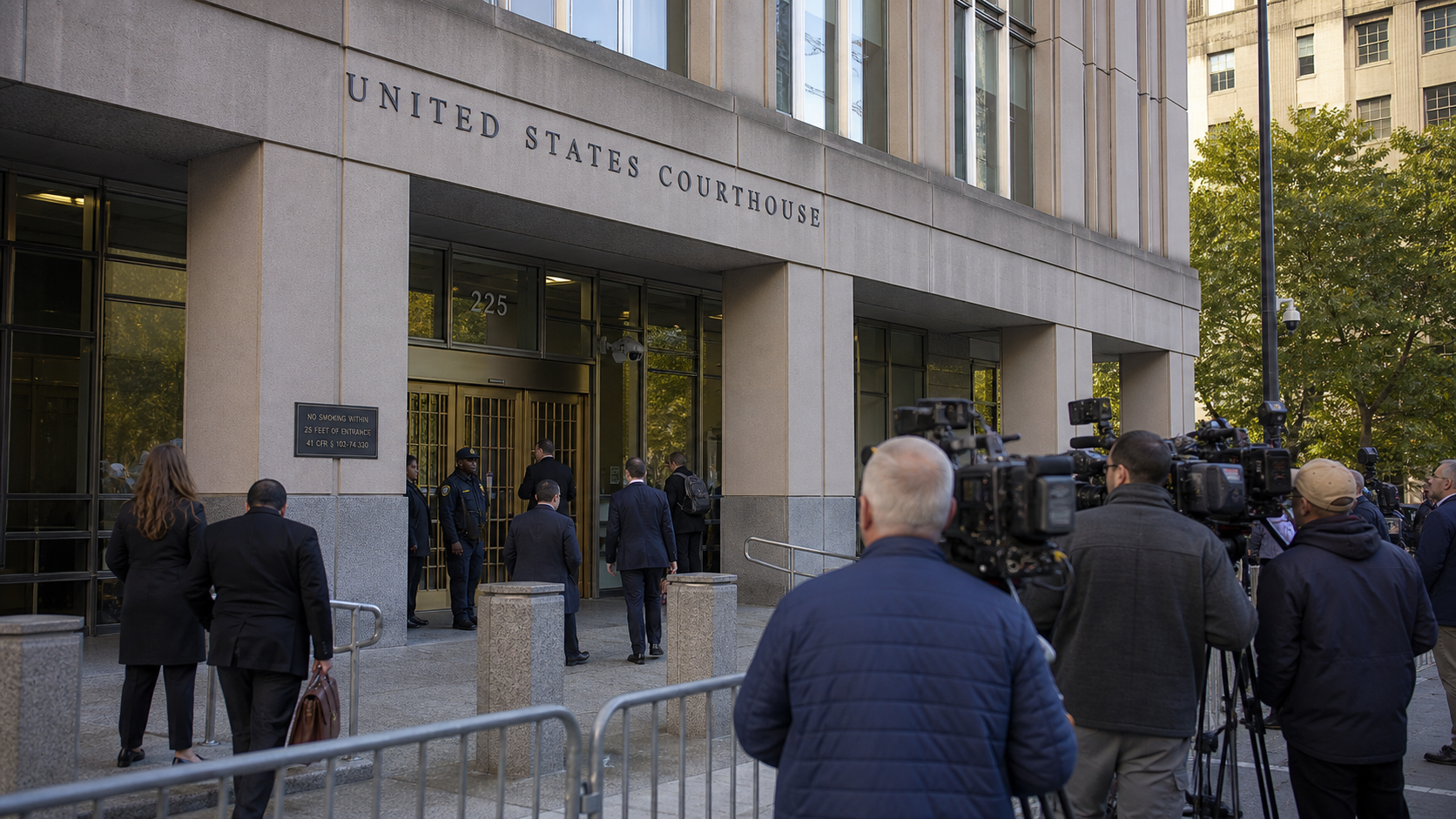
- Source
- NU.nl
- MOZOM headline
- MOZOM analysis: Luigi Mangione's defense shows how American murder cases are not only about guilt but also about the boundary between psychological disturbance and legal accountability
- Original headline
- Luigi Mangione uses psychological condition as defense in US murder case
- Author
- Redactie NU.nl
- Date
- 18 juni 2026 om 18:20
- Subject
- NU.nl (NL) reports that Luigi Mangione uses his psychological condition as a defense in an American murder case, which could determine whether the judge decides on murder or a lighter conviction such as manslaughter.
Summary of the original report
NU.nl writes that Luigi Mangione, who is on trial for the murder of an American insurance boss, is using his psychological condition as part of his defense. If a judge or jury agrees, this may result in a lighter classification than murder, for example manslaughter, resulting in a clearly lower sentence. This makes the lawsuit more than just a battle of facts about the offense itself. It will also be a legal battle about accountability, intention and the question of how much control someone had over their actions. That is precisely what makes these types of cases so charged: it is not only the violence that counts, but also how the law draws the line between psychological disturbance and criminal responsibility.
Striking in this message
It is striking that the headline focuses on the psychological condition and not first on the victim, the evidence or the course of the trial. This immediately brings the reader into the tension between medical concept and criminal law qualification. In this way, the defense itself becomes the news anchor. This is understandable, because it has direct consequences for the sentence, but it also ensures that the case is read from an early stage as a debate about mental state rather than exclusively about guilt and evidence.
Background that often remains out of view
For international readers, it is useful to clarify that such defenses in the US often depend heavily on constitutional law, expert testimony and the precise distinction between murder, manslaughter and insanity. What is less visible is that psychological defense does not automatically mean that someone is declared completely incompetent; it often revolves around degrees of intent, premeditation and control over one's own actions. There is therefore a broader tension underlying this message: on the one hand, the law wants to leave room for mental disruption, but on the other hand, it wants to prevent serious violent cases from being read too easily in a softer context.
Possible message behind the news
A possible message behind this news is that modern criminal cases are increasingly not just about evidence, but also about the legal translation of someone's inner state. In plain language: what someone did remains central, but the sentence also depends on how much control, intention and awareness the judge finds plausible. Between the lines, the picture emerges that criminal law must organize medical, moral and legal matters at the same time.
Neutral conclusion
The article thus shows that Mangione's defense is more than a tactical procedural move. It is also a moment when it becomes clear how sensitive the line is between serious personal disruption and full criminal liability in a murder case.