
MOZOM-analyse
Malaria vaccines: routine care or global breakthrough?
- Source
- WHO en Gavi
- MOZOM headline
- Malaria vaccines: routine care or global breakthrough?
- Original headline
- WHO and Gavi describe rapid introduction of malaria vaccines into African vaccination programs
- Author
- MOZOM-redactie
- Date
- 28 juni 2026 om 14:10
- Subject
- Analysis of the introduction of malaria vaccines as a silent breakthrough in child health, with attention to effect, implementation, financing and expectations.
Summary of the original report
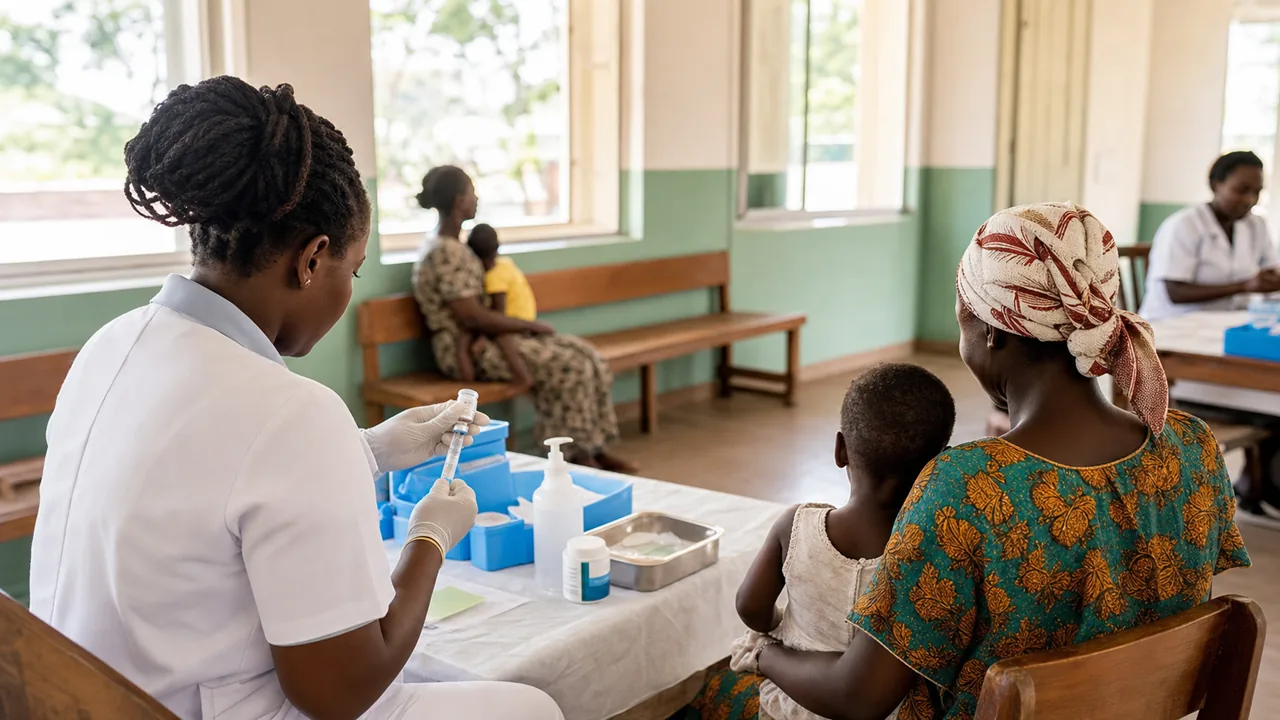
The WHO recommends the malaria vaccines RTS,S and R21 for children in areas where malaria is common, especially against P. falciparum, the deadliest malaria parasite and the most common in Africa. Gavi reported that by early 2026, 25 African countries had introduced malaria vaccines into routine programs with support from Gavi. The WHO describes that more than 10 million children are targeted for vaccination each year in these countries. The pilot with RTS,S in Ghana, Kenya and Malawi previously reached more than 2 million children and, according to WHO, showed a decrease in mortality among children eligible for vaccination. At the same time, the vaccine is not a panacea: mosquito nets, diagnosis, treatment and seasonal prevention remain necessary.
Striking in this message
It is striking that big news actually looks small here. No vaccine alone defeats malaria, but routine vaccination can reduce the risk of disease and death for millions of children. The word routine sounds modest; in public health, routine is often precisely the form in which progress persists.
Less visible context
Less visible is how fragile such progress remains. Countries need sufficient doses, but also money for staff, transport, registration, information and follow-up injections. If funding stalls, a scientific breakthrough can be left behind in boxes, schedules or waiting lists. In addition, vaccination should be in addition to existing protection, not instead. The best malaria control is a package, not a single symbol.
Possible message behind the news
One possible message is that global health often advances when innovation becomes common. The moment a special vaccine becomes part of a children's program may be less photogenic than a breakthrough in a lab, but it can be much more important for families.
Neutral conclusion
The neutral conclusion: malaria vaccines are not a finish line, but they are a big step. If WHO, Gavi, UNICEF, countries and local health care providers maintain funding and implementation, a disease that threatens millions of families could become less deadly for many children. That's exactly the kind of good news that is slow, practical and human.