
MOZOM vergelijkt
MOZOM compares: Africa climate report, warning or adjustment bill?
- Source
- MOZOM vergelijkt
- MOZOM headline
- MOZOM compares: Africa climate report, warning or adjustment bill?
- Original headline
- Extreme weather and climate events will impact millions in Africa by 2025
- Author
- MOZOM-redactie
- Date
- 30 juni 2026 om 15:47
- Subject
- The WMO reports that Africa is warming faster than the global average and that extreme weather is affecting millions of people.
Summary of the original report
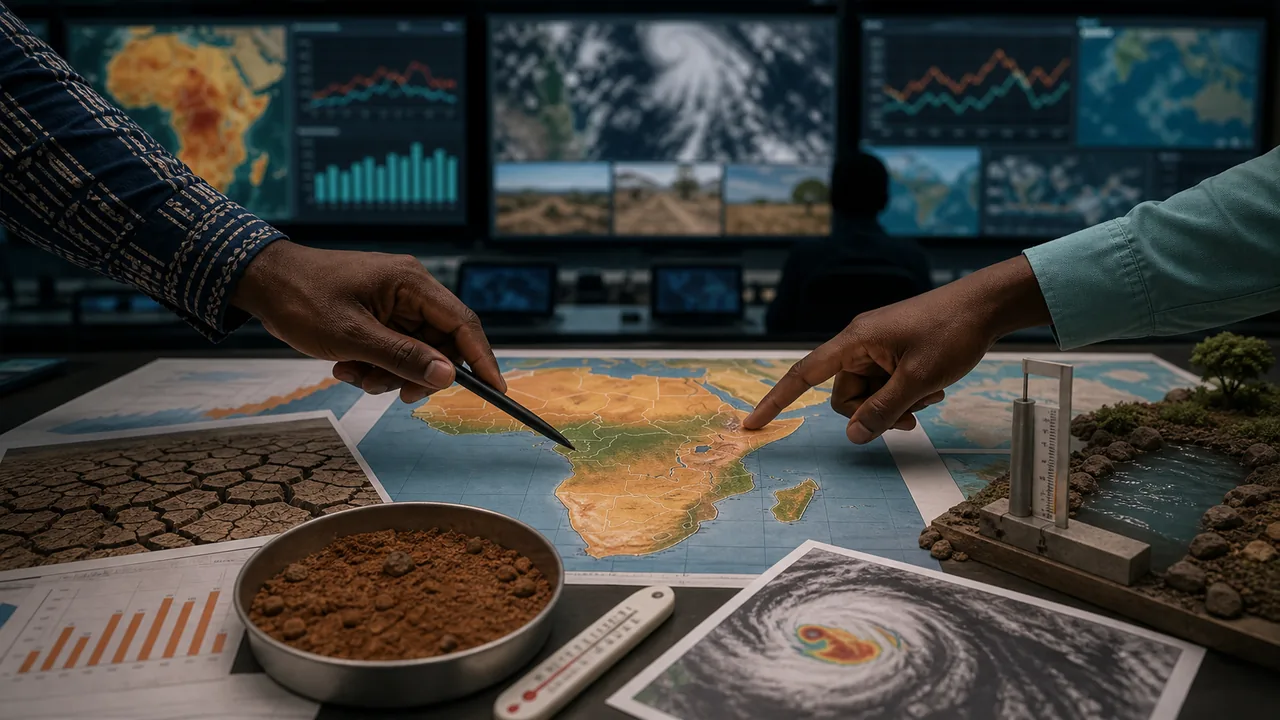
The WMO, the United Nations World Meteorological Organization in Geneva, Switzerland, reports that Africa is warming faster than the global average. According to the 2025 report, warming on the continent since 1991 was clearly higher than in previous 30-year periods. Extreme weather and climate events affected millions of people. The WMO mentions, among other things, heat, drought, floods, marine heat waves and loss of glaciers. Glaciers in Africa have lost more than 90 percent of their area since the late nineteenth century; The ice surface on Mount Kilimanjaro in Tanzania has declined sharply. The report is not only a climate summary, but also a warning about agriculture, water, health, cities and economics. Africa is geographically extremely diverse, from the Sahel to South Africa and from coastal cities to highlands, but the pressure from climate risks is being felt more widely.
Striking in this message
It is striking that Africa is often framed as a victim region, while the report also shows that knowledge, measurement networks and adaptation are central. The continent is not only a backdrop for damage, but also a place where climate policy is practically tested.
Less visible context
What is less visible is that climate adaptation is expensive before it produces visible results. A dike, warning system or water network mainly prevents damage that would otherwise occur later. This makes prevention politically more difficult to sell than emergency aid after a disaster.
Possible message behind the news
A possible message is that climate change is not just about temperature, but about who has the money to adapt in time.
Neutral conclusion
The neutral conclusion: the WMO report is not a separate climate alarm, but a budget question. If Africa heats up faster, adaptation will not become a luxury project but basic infrastructure.