
MOZOM vergelijkt
MOZOM compares: AI environmental costs, innovation or hidden bill?
- Source
- MOZOM vergelijkt
- MOZOM headline
- MOZOM compares: AI environmental costs, innovation or hidden bill?
- Original headline
- UN chief António Guterres wants AI companies to disclose their emissions, water use and land use
- Author
- MOZOM-redactie
- Date
- 29 juni 2026 om 12:01
- Subject
- The United Nations call for transparency on the environmental footprint of AI data centers.
Summary of the original report
AP reports that United Nations Secretary General António Guterres is calling on major AI companies to disclose their environmental impacts. It is not only about CO2 emissions, but also about water use and land use for data centers and energy infrastructure. Guterres launched the AI Environmental Transparency Initiative during London Climate Action Week in the United Kingdom. UNU-INWEH, a UN University Institute for Water, Environment and Health, says AI's environmental costs depend on where power is generated and what sources are used. Axios now describes water use as an important local point of contention around data centers.
Striking in this message
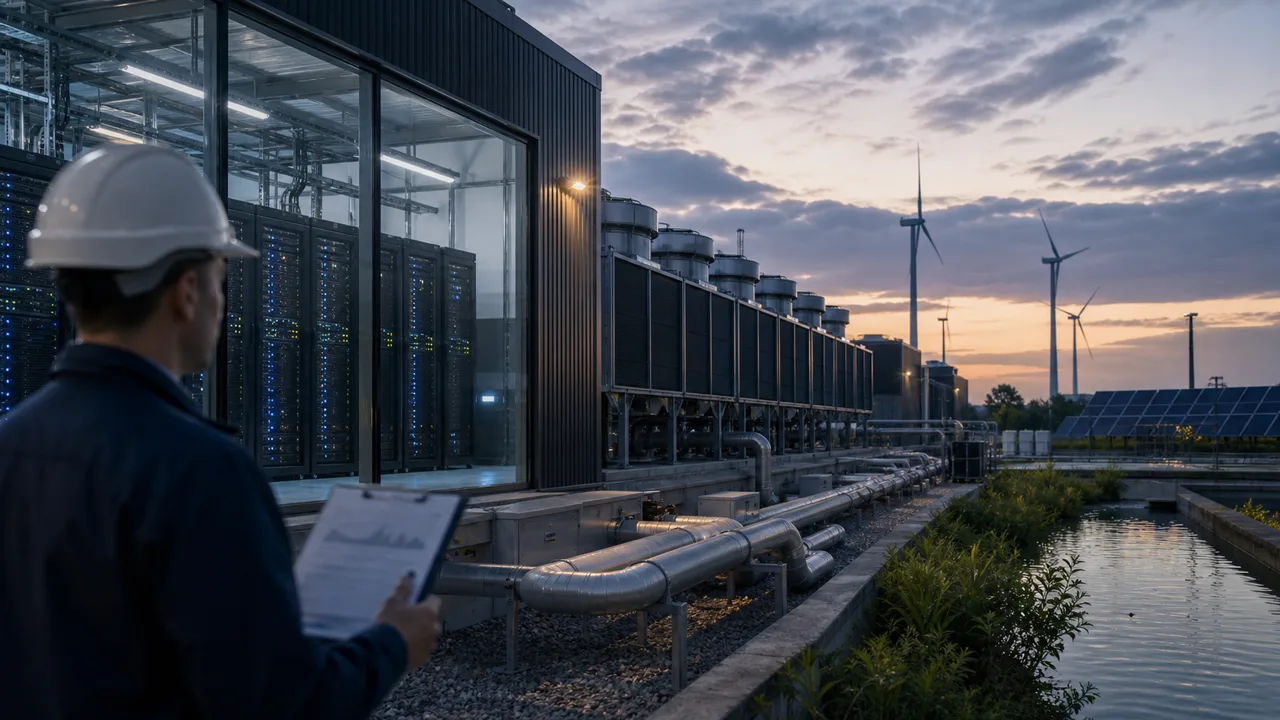
The shift from smart to heavy is striking. AI sounds digital, but the debate becomes material: cooling, pipes, power mix, water rights and construction locations. As a result, an abstract technology suddenly becomes a local cost item.
Less visible context
What is less visible is that environmental gain and environmental damage do not always occur in the same place. A company can work more efficiently worldwide through AI, while a region locally receives additional data centers, power demand or water pressure. Transparency is therefore not only a climate question, but also a fairness question: who benefits and who bears the physical burden?
Possible message behind the news
A possible message is that AI can only be considered truly responsible when the bill for electricity, water and space is visible.
Neutral conclusion
The neutral conclusion: the UN call is not a ban on AI. It is a warning that innovation without measurable environmental information is too easily sold as clean and intangible.