
MOZOM-analyse
MOZOM compares: drones around Moscow and Kharkiv show two sides of war language
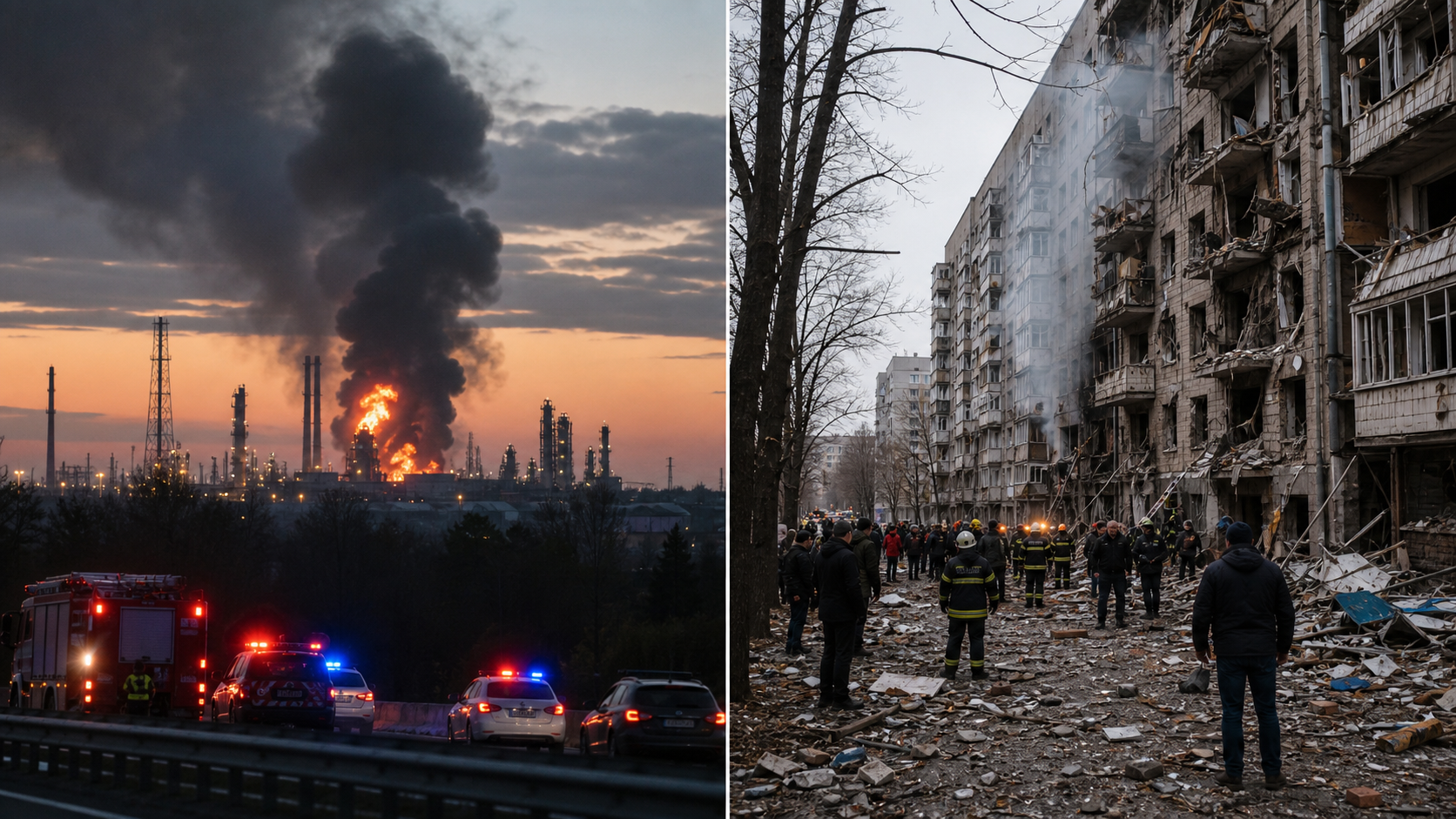
- Source
- MOZOM vergelijkt
- MOZOM headline
- MOZOM compares: drones around Moscow and Kharkiv show two sides of war language
- Original headline
- Drone reports around Moscow, refinery and Kharkiv are placed differently by sources
- Author
- MOZOM-redactie
- Date
- 16 juni 2026 om 12:18
- Subject
- Comparison of reporting on Ukrainian drone attacks around Moscow and Russian attacks on Kharkiv.
Summary of the original report
NU.nl reports that Ukraine has attacked a Russian oil refinery in the Moscow region. RIA Novosti reports that dozens of drones have been shot down over the Moscow region and mentions injuries. Ukrainska Pravda reports on Russian drone attacks on Kharkiv causing casualties. TSN also reports on Russian military losses. The shared reality is war with drones, infrastructure, civilians and military targets. The differences are mainly in focus: Russian sources emphasize defense and damage on their own side, Ukrainian sources emphasize Russian attacks and Russian losses. Western sources often place the events in a broader escalation and infrastructure context.
Striking in this message
It is striking that the same weapon technology, drones, always takes on a different meaning. In one source, drones are a threat that is being repelled. At the other source, drones are a means to reduce military or economic pressure. The words knocked down, attacked, injured and losses direct attention to other victims and other questions of guilt.
Less visible context
What remains less visible is that war language usually selects where the viewer should begin emotionally. If you start with Moscow, you see Russian vulnerability. If you start with Kharkiv, you see Ukrainian suffering. If you start with refineries and bombers, you will see strategic damage. None of those perspectives is complete enough without the other.
Possible message behind the news
A possible message is that war is not only waged with weapons, but also with sequence and emphasis. Who is named as the first victim often determines where sympathy begins. For an ordinary reader, the practical lesson is: preferably read multiple sides of war, because one message can be factually correct and yet only show a narrow sliver of reality.
Neutral conclusion
This comparison is not about taking one side as absolute truth, but about making visible how different sources start the same war differently.