
MOZOM vergelijkt
MOZOM compares: is the German-Polish defense deal mainly about cooperation or does mistrust continue to guard the border?
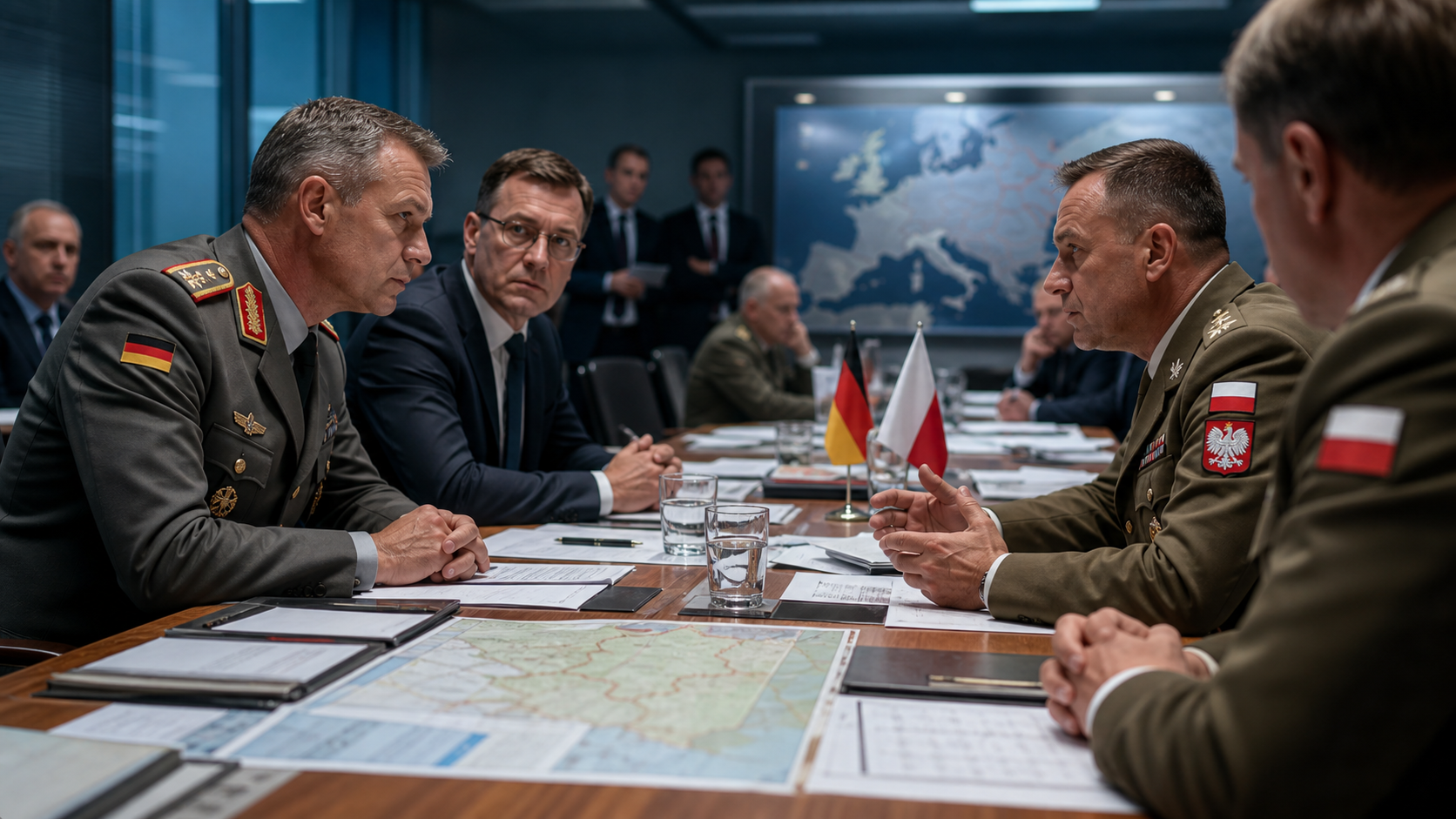
- Source
- MOZOM vergelijkt
- MOZOM headline
- MOZOM compares: is the German-Polish defense deal mainly about cooperation or does mistrust continue to guard the border?
- Original headline
- AP, Tagesschau and the German Federal Government present the same German-Polish defense deal differently: historical depth, practical necessity or fraught proximity
- Author
- MOZOM-redactie
- Date
- 17 juni 2026 om 10:24
- Subject
- Comparison of reporting on the new defense agreement between Germany and Poland, which deepens military cooperation on NATO's eastern flank while historical sensitivity and political restraint remain visible.
Summary of the original report
AP News reports that Germany and Poland will sign a new defense deal on Wednesday to strengthen European military cooperation as tensions with Russia remain high and the role of the United States in Europe feels less obvious. Tagesschau, the German public newsroom, emphasizes the 35th anniversary of the German-Polish Neighborhood Treaty and the desire to further develop cooperation in defense, industry and exercises, while the relationship between the two countries remains strained, according to the report. The German federal government describes the agreement primarily as a political signal of reliable partnerships in troubled times and as a deepening of cooperation within NATO and the European Union. All three sources state that the agreement covers, among other things, military mobility, the Baltic Sea, hybrid threats, cyber defense and joint exercises. The reporting also makes it clear that the agreement does not constitute a new independent mutual defense treaty on top of NATO and the EU, but a practical elaboration and reinforcement of existing cooperation. AP mentions the changed balance of power in Europe, in which Poland has become more important due to its role on the eastern flank and as a logistics hub for Ukraine. The shared fact is therefore clear: Germany and Poland are moving closer defensively, but the meaning of that step differs per source.
Striking in this message
It is striking how words such as strengthening, reliable partnerships, burdened relationship, eastern flank and balance of power each give a different emotional direction. The government line makes the agreement stable and orderly. Tagesschau allows for a little more friction by explicitly including the difficult history. AP opens the subject further to strategic pressure and shifting relationships in Europe. For example, the choice of source determines whether the reader mainly sees reassurance, necessity or repositioning.
Less visible context
What is less visible is how sensitive the German-Polish security relationship still is politically, especially in Poland, where internal battles over Germany, reparations, national dignity and dependency can quickly flare up. What is also neglected is that a practical defense agreement does not automatically mean that old mistrust will disappear or that both countries will treat each other as equal core partners in every major European dossier. For ordinary citizens, this is not just about military paperwork, but also about who will actually help shape security, borders, infrastructure and crisis response in Europe.
Possible message behind the news
A possible message behind this reporting is that Europe needs to come closer together defensively, but that old hierarchies and old distrust do not simply disappear. In plain language: Germany and Poland are working more closely together because the security situation requires it, but the question of who in Europe really counts as a full partner is constantly running through this. Between the lines, the impression emerges that this deal is not only about protection against threats, but also about recognition, influence and Poland's new place in the European security center.
Neutral conclusion
This comparison shows that the German-Polish defense agreement can be read simultaneously as a practical necessity, a strategic shift and a cautious attempt to strengthen a historically fraught relationship.