
MOZOM vergelijkt
MOZOM compares: F1 pole in Austria, flag rule or chaos?
- Source
- MOZOM vergelijkt
- MOZOM headline
- MOZOM compares: F1 pole in Austria, flag rule or chaos?
- Original headline
- The Guardian and SB Nation describe the same Austrian F1 qualification as Russell pole, Verstappen crash and test of yellow flag rules
- Author
- MOZOM-redactie
- Date
- 27 juni 2026 om 21:16
- Subject
- Analysis of qualifying for the Austrian Grand Prix, in which George Russell takes pole after Max Verstappen crashes and the explanation of a single yellow flag becomes decisive.
Summary of the original report
The Guardian describes qualifying for the Austrian Grand Prix as a dramatic and controversial final phase: Verstappen crashes late in Q3, yellow flags go out and Russell still drives to pole. According to reports, Russell lost time because he hitchhiked, but his lap remained valid because it was a single yellow flag. SB Nation places greater emphasis on the later confirmation by the stewards: according to that reading, Russell had slowed down correctly, so his time stood. The top three were Russell, Charles Leclerc and Lewis Hamilton, with Kimi Antonelli fourth and Verstappen fifth after his crash.
Striking in this message
It is striking that the word 'controversial' here does not automatically mean that the result is incorrect. It mainly points out the difference between television image, cockpit observation and regulatory language. Anyone who only sees the crash quickly thinks of neutralization. Anyone who reads the flag category will see why a round can still stand.
Less visible context
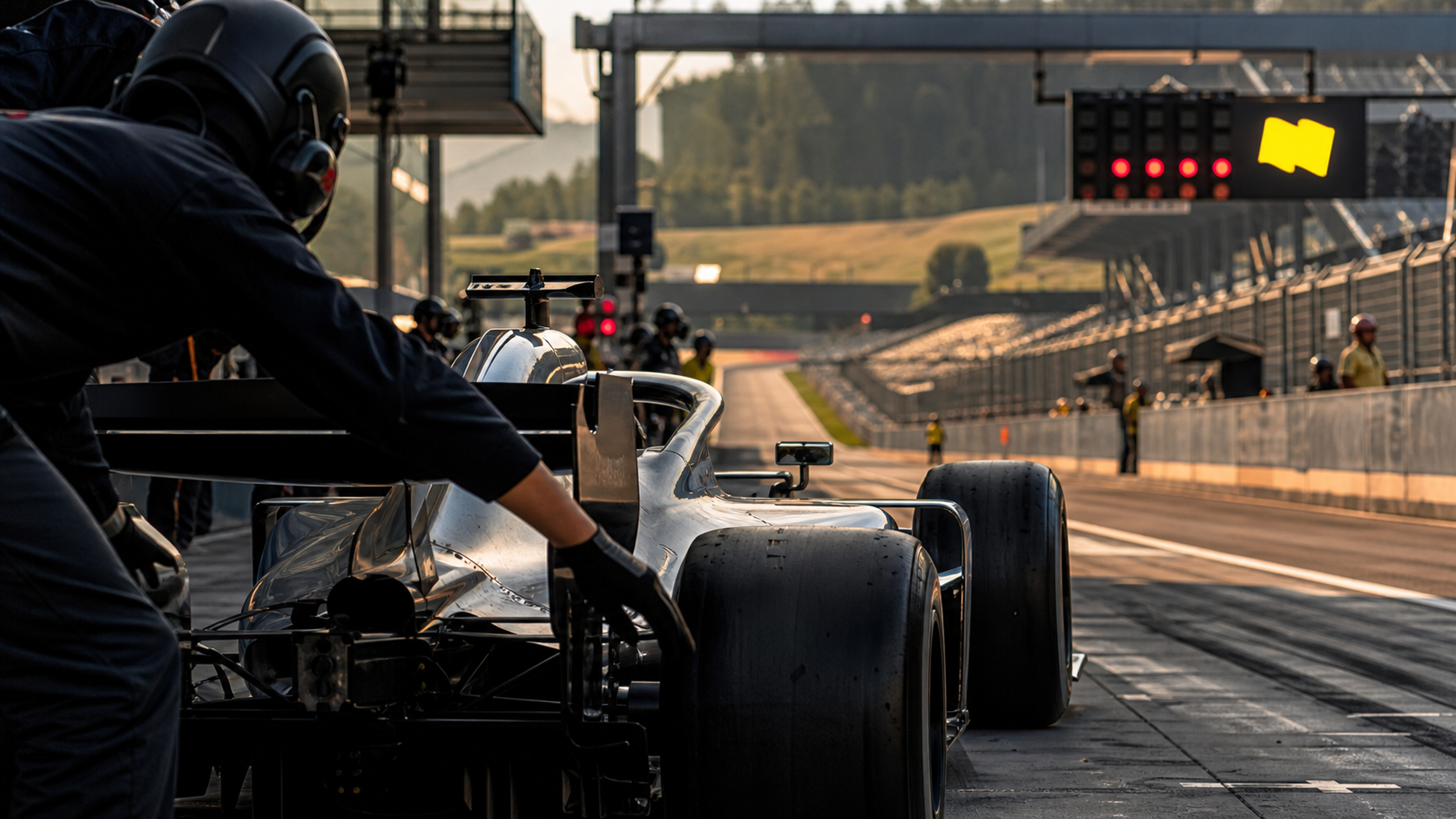
What is less visible is that modern Formula 1 is not just about lap time, but also about information processing. Drivers see light panels, flag posts, deltas, radio instructions and traffic at the same time. This is extra competitive in qualifying, because a tenth is enough for pole or fourth place. As a result, a yellow flag is not a detail, but a sporting dividing line between courage, compliance and miscalculation.
Possible message behind the news
A possible message is that top sport is increasingly decided by those who not only drive fast under pressure, but also read the control signal fastest and most correctly.
Neutral conclusion
The neutral conclusion: Russell took pole not despite the rules, but within the rules as they were explained after the session. That makes the result defensible. At the same time, it explains why qualifying feels messy: Verstappen's crash, Antonelli's canceled lap and Russell who continued made a fastest lap a matter of interpretation. Before the race, the sporting question is now simpler: can Mercedes maintain that qualifying speed when there is no longer a flag explanation between the cars and the points?