MOZOM vergelijkt
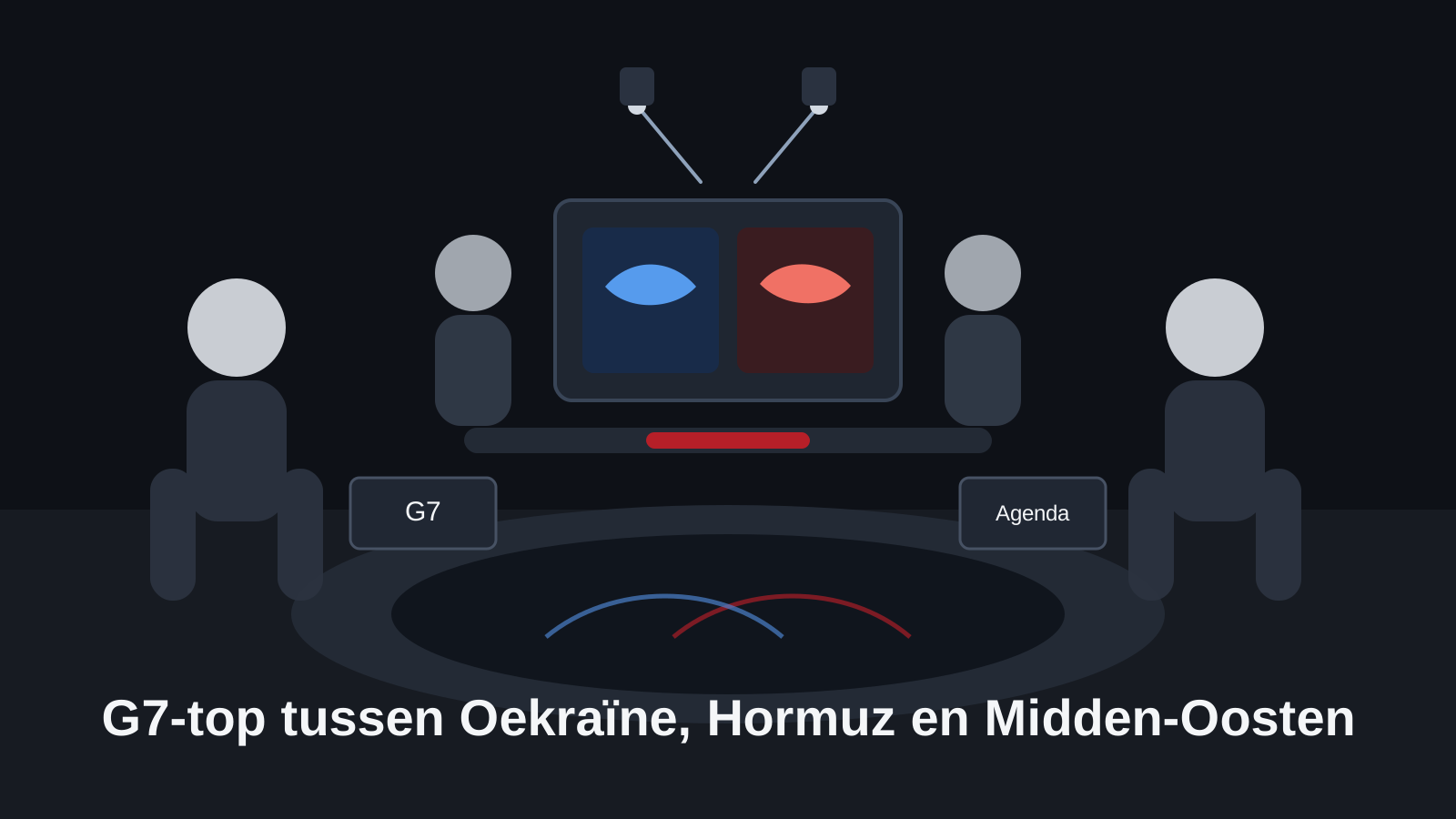
MOZOM compares: is the G7 summit about Ukraine, Hormuz or the Middle East?
- Source
- MOZOM vergelijkt
- MOZOM headline
- MOZOM compares: is the G7 summit about Ukraine, Hormuz or the Middle East?
- Original headline
- The second day of the G7 summit will have a different main focus per source: Ukraine, Hormuz or broader crisis diplomacy
- Author
- MOZOM-redactie
- Date
- 16 juni 2026 om 13:38
- Subject
- Comparing coverage of the second day of the G7 summit, focusing on Zelensky, the Strait of Hormuz and the broader Middle East crisis.
Summary of the original report
Euronews highlights that Volodymyr Zelensky will join the G7 leaders and new peace talks on Ukraine are being discussed. Tagesschau emphasizes European willingness to support a possible maritime mission in the Strait of Hormuz and links the summit more strongly to security around Iran and shipping. AP places both Ukraine and the Middle East on the agenda and at the same time shows how tensions between leaders, including Donald Trump and Emmanuel Macron, influence the atmosphere of the summit. All sources therefore describe the same meeting of major industrialized countries in a tense international context. The difference is not so much in the bare facts, but in which conflict is chosen as the moral and political starting point. This gives the reader a different idea of what this summit is really about, depending on the source.
Striking in this message
It is striking how words such as peace talks, mission, security, crisis and tensions always direct attention in a different direction. At Euronews, the top sounds more diplomatic and solution-oriented. At Tagesschau, the summit sounds more concrete and strategic, with an emphasis on commitment and preparedness. With AP the reader gains a greater sense of political friction and mutual power relations. These are not minor tonal differences: they determine which problem the reader will feel is most urgent.
Less visible context
What is less visible is that a top like this almost always carries multiple agendas at the same time. Behind Ukraine there is also the question of how much attention Europe can still divide now that the Middle East is escalating again. Behind Hormuz lies not only maritime security, but also energy prices, supplies and economic nervousness. Behind the leaders' texts lies the broader question of whether joint statements still have real power if countries start to differ in priority.
Possible message behind the news
A possible message behind this reporting is that international summits are not only about what is formally on the agenda, but also about which world problem deserves attention first. When a source opens with Zelensky, the summit feels like moral and diplomatic support for Ukraine. If a source opens with Hormuz, the same summit feels like a security response to threatened disruption of trade routes. If a source of tension between leaders opens up, the impression arises that the greatest uncertainty may not lie outside the room, but within the alliance itself.
Neutral conclusion
This comparison shows that the G7 summit does not have a fixed meaning, but shifts per source between war diplomacy, security management and the question of how united the West actually acts.