
MOZOM vergelijkt
MOZOM compares: Glastonbury rest year, culture break or festival machine?
- Source
- MOZOM vergelijkt
- MOZOM headline
- MOZOM compares: Glastonbury rest year, culture break or festival machine?
- Original headline
- Glastonbury skips 2026 with a planned fall year, while the hiatus is also read as a commentary on overcrowded culture
- Author
- MOZOM-redactie
- Date
- 27 juni 2026 om 17:07
- Subject
- Comparison of the Glastonbury rest year as an ecological necessity, organizational breathing space and broader cultural criticism of permanent availability.
Summary of the original report
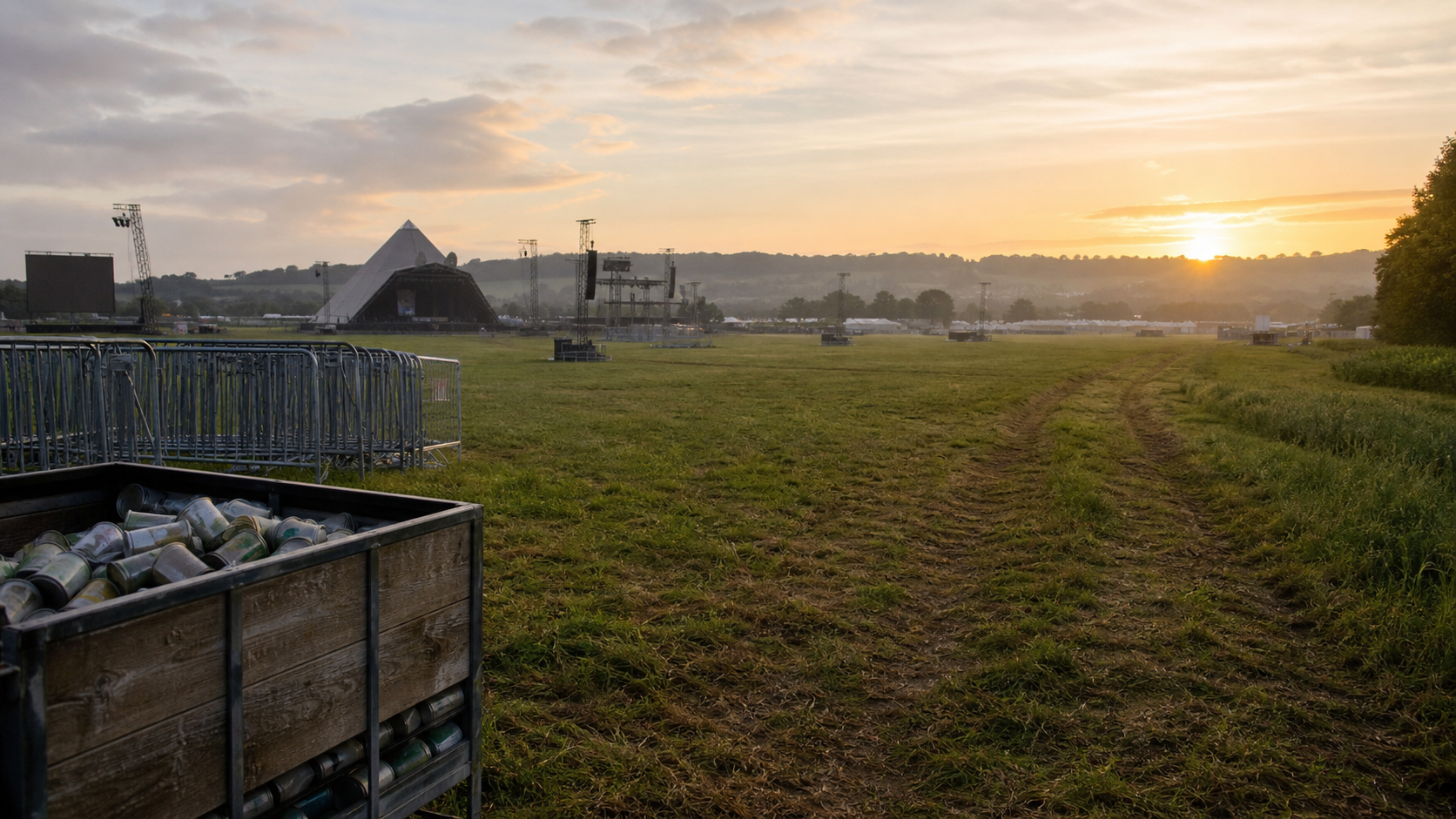
The Guardian uses the Glastonbury weekend without a festival as an opportunity to ask a broader question: should more cultural institutions consciously close down in order to come back stronger later? The direct reason is known from the Glastonbury tradition: a fallow year gives Worthy Farm, the environment and the organization time to recover. The break comes after the last edition of 2025 and before a planned return in 2027. In one reading, this mainly concerns sustainable management of a large festival site. In another reading, it is also a rare example of culture that does not have to deliver maximum output every year.
Striking in this message
It is striking that the word fallow comes from agriculture, but takes on cultural meaning here. It is not just about grass that needs to recover, but also about attention, personnel, public and reputation. A rest year sounds slow and old-fashioned, while it can actually be a modern answer to overheating: not everything has to be available every season.
Less visible context
What is less visible is that Glastonbury is able to take such a break because it is an exceptionally strong brand. The question of whether other cultural forms can do the same is therefore not a simple one. Theatres, smaller festivals, artists and music venues often need annual income. Yet Glastonbury shows that sustainability in culture is not just about cups, electricity and waste, but also about pace, planning and the willingness to be temporarily less visible.
Possible message behind the news
A possible message is that strong culture does not only grow through more editions, more screen time and more sales moments. Sometimes an institution preserves its value by refusing to be available every year.
Neutral conclusion
The neutral conclusion: Glastonbury 2026 is not a failure, but a planned break. That pause protects the site and gives the organization space. At the same time, it is bigger than Glastonbury alone, because it asks an uncomfortable question to the rest of the cultural sector: when does stopping become maintenance, and when is continuing simply habit?