
MOZOM vergelijkt
MOZOM compares: Voter fraud in Gorinchem, political color or blind spot?
- Source
- MOZOM vergelijkt
- MOZOM headline
- MOZOM compares: Voter fraud in Gorinchem, political color or blind spot?
- Original headline
- Public Prosecution Service, municipality, broad media and GeenStijl each place a different emphasis on the Gorinchem vote fraud: criminal case, administrative calm, revote or political color
- Author
- MOZOM-redactie
- Date
- 24 juni 2026 om 11:58
- Subject
- Comparison of reporting on six arrests in the investigation into voting fraud in Gorinchem and the question of why political affiliation is or is not mentioned.
Summary of the original report
The Public Prosecution Service reports that six residents of Gorinchem were arrested on June 23 in the investigation into voting fraud. They are between 20 and 65 years old and are suspected of forgery and conspiracy to vote. According to the Public Prosecution Service and the police, it is suspected that signatures on powers of attorney have been forged. The mayor filed a report on March 25 after receiving more than ten signals about possible irregularities in the municipal elections of March 18. The municipality of Gorinchem emphasizes that the investigation is still ongoing and that the police, Public Prosecution Service and the judge must be able to do their work carefully. Broad news media mainly report the arrests, the suspicion and the link with the revote. Domestic Government provides more background on the re-election and reports that a D66 candidate was linked in the media to the possible fraud, while D66 itself spoke of rumors and wanted to wait for the Public Prosecution Service investigation. GeenStijl pushes the political line the hardest and explicitly mentions D66 and Democrats Gorinchem, but that link is not the same as an official determination by the Public Prosecution Service or a judge.
Striking in this message
It is striking that political color largely disappears behind the legal formulation. Normally, in the case of possible election fraud, you would expect the political context to become clear as soon as it is verifiable and relevant. The legitimate question is therefore whether a comparable suspicion surrounding a more right-wing party would have been placed in the headline and introduction more quickly than a right-wing, radical right-wing or party-political incident. That does not prove a cover-up in this case, but it does expose a recognizable asymmetry in news framing.
Less visible context
The information circle remains less visible: the Public Prosecution Service does not mention a party, the media follows the official formulation, after which it can be said that party affiliation is not proven or not public. This is legally prudent, but not journalistically neutral without risk. Those who only follow official sources also adopt their blind spots. At the same time, a rumor may not be published as fact, especially not in a criminal case.
Possible message behind the news
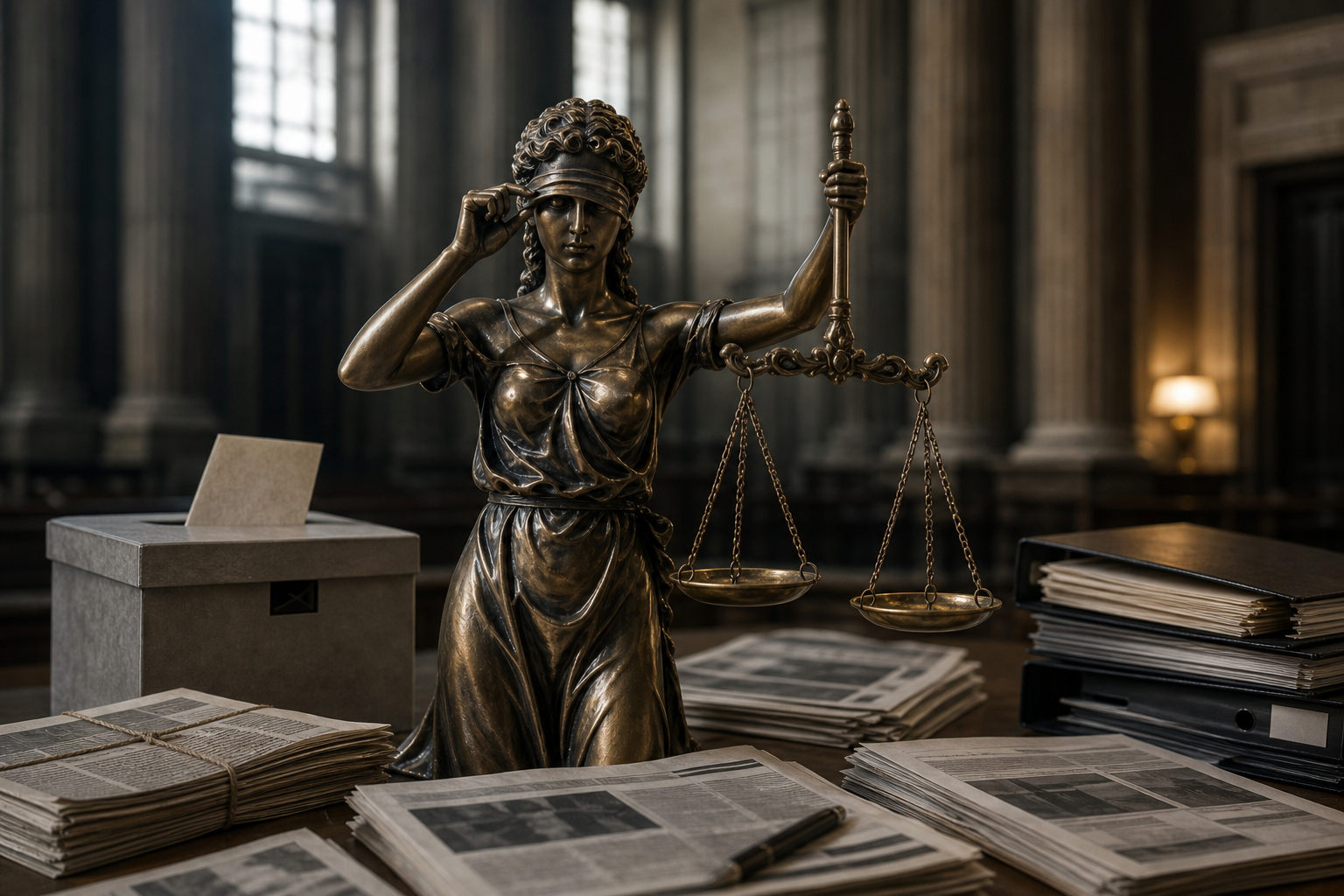
One possible message is that neutrality does not just mean leaving out unproven names. It also means that you use the same measure of context for all political directions. In plain language: Justice should be blind to preference, but journalism should not be blind to relevant differences in framing.
Neutral conclusion
The Gorinchem voting fraud case therefore shows two things at the same time. Legally, caution is necessary as long as suspects, parties and roles have not been officially established. Journalistically, the question remains why political color quickly becomes a context in some incidents and in other incidents it may only become visible after a lot of pressure.