MOZOM vergelijkt
MOZOM compares: does the US-Iran deal mainly sell transparency through the text, or doubt through what is missing?
- Source
- MOZOM vergelijkt
- MOZOM headline
- MOZOM compares: does the US-Iran deal mainly sell transparency through the text, or doubt through what is missing?
- Original headline
- The New York Times and De Telegraaf read the same US-Iran deal differently: full text as openness or missing points as a real warning
- Author
- MOZOM-redactie
- Date
- 19 juni 2026 om 13:36
- Subject
- Comparison of reporting on the new US-Iran deal, with The New York Times focusing mainly on the released deal text and De Telegraaf emphasizing the points that are not mentioned in the plan.
Summary of the original report
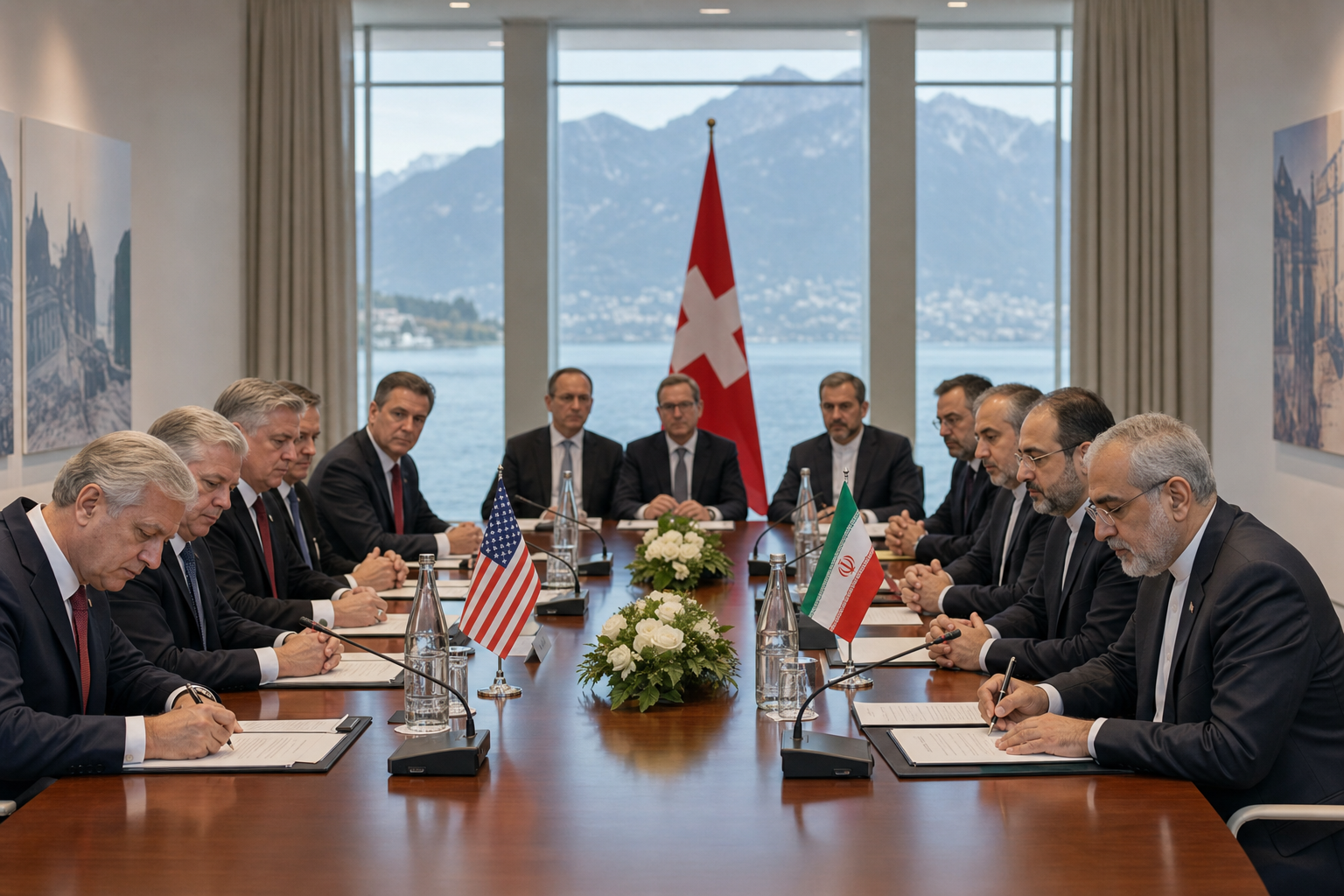
The New York Times presents the deal mainly through the released text and its annotation. The reader thus gets the feeling that the agreement can be understood by looking closely at what has been formally agreed on, among other things, the Strait of Hormuz, Lebanon and other sensitive files. De Telegraaf chooses a different route and focuses attention on the components that are not or hardly mentioned in the peace plan. As a result, the news shifts from text interpretation to distrust: not only what is there counts, but especially what is deliberately left out of view. Both approaches are therefore about the same diplomatic event, but build a different reading experience. One source suggests that disclosure leads to understanding through document reading. The other source suggests that real geopolitical significance often lies in the absence of explicit agreements, especially when a deal is sold as historic or stabilizing.
Striking in this message
It is striking how words such as full text, annotated agreement, salient matters and not mentioned give a completely different feeling. The New York Times makes the deal a readable dossier open for inspection. De Telegraaf turns the same deal into a document where the dark sides are between the lines. As a result, the framing determines whether the reader derives trust from textual openness, or suspicion from diplomatic silence.
Background that often remains out of view
For international readers, it is useful to clarify that the Strait of Hormuz is a crucial shipping route for the global oil trade and that any agreement around Iran therefore immediately extends far beyond bilateral diplomacy alone. What is less visible is that peace or deal squadrons often remain deliberately ambiguous in these types of files because complete clarity is politically unfeasible. Underlying this comparison is a broader question: should the public mainly judge a geopolitical deal on its explicit text, or on the points that have been left out of the formal formulation for reasons of negotiation, prestige or strategic vagueness?
Possible message behind the news
A possible message behind this reporting is that modern diplomacy is not only about what states agree to, but also about who manages to control the interpretation of those agreements. In layman's terms: the deal itself is important, but the battle over how to read that deal begins right afterward. Between the lines, the image emerges that openness does not automatically mean clarity, and that silence in international politics is sometimes just as meaningful as text.
Neutral conclusion
This comparison shows that the same US-Iran deal can be read simultaneously as a rare moment of diplomatic openness and as a fragile agreement whose most dangerous meaning lies precisely in what has not yet been written out loud.