
MOZOM vergelijkt
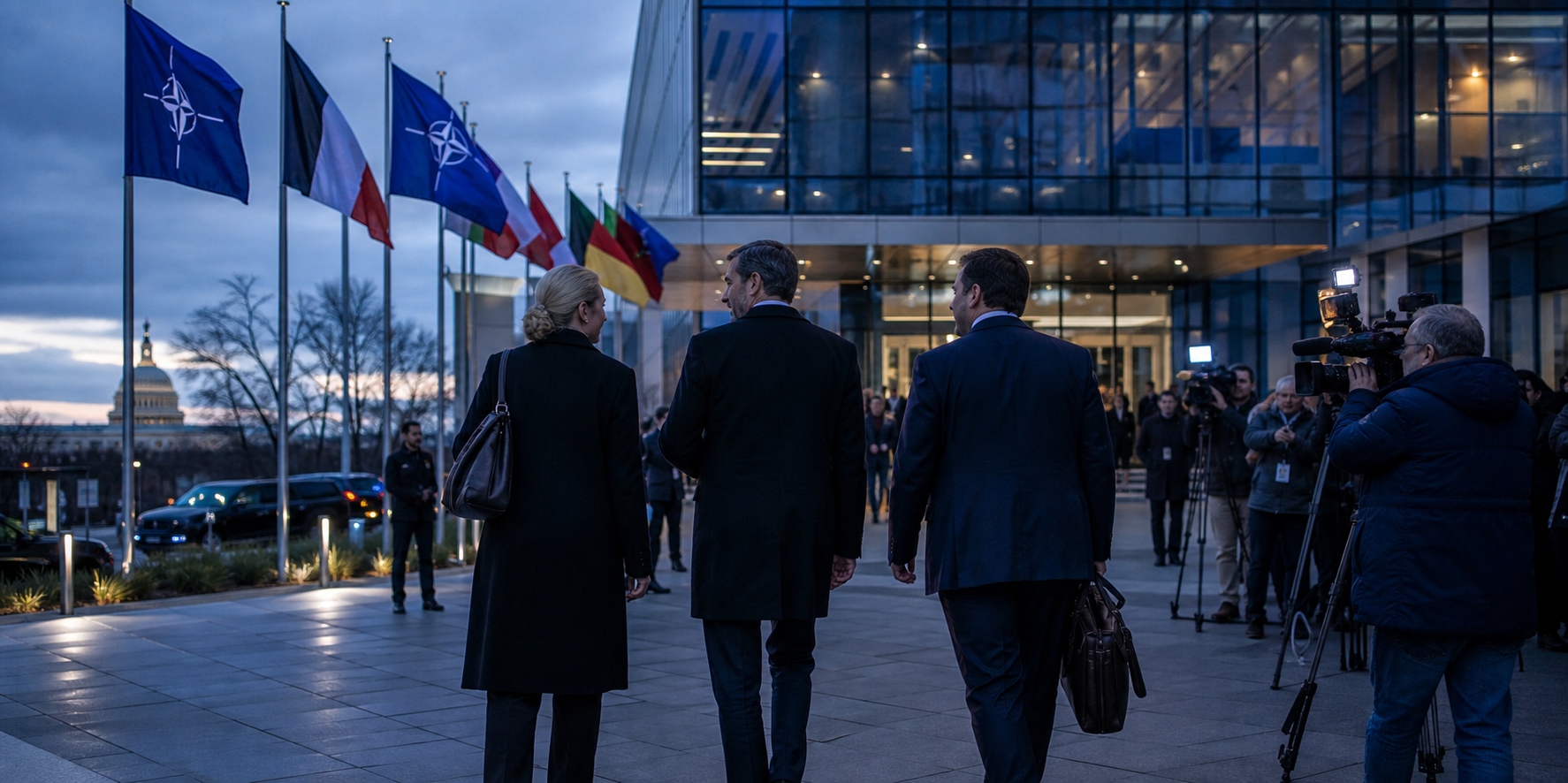
MOZOM compares: does Rutte travel to Washington to preserve NATO unity, or does Europe mainly fill a growing American gap?
- Source
- MOZOM vergelijkt
- MOZOM headline
- MOZOM compares: does Rutte travel to Washington to preserve NATO unity, or does Europe mainly fill a growing American gap?
- Original headline
- Der Spiegel and Euronews present the same NATO tension differently: European emergency repair or diplomatic glue attempt around Rutte
- Author
- MOZOM-redactie
- Date
- 17 juni 2026 om 18:08
- Subject
- Comparison of reporting on rising NATO tensions prior to the summit in Ankara, with Der Spiegel mainly emphasizing the military gaps after American withdrawal and Euronews focusing on the mediating trip of NATO chief Mark Rutte to Washington.
Summary of the original report
Der Spiegel reports that the United States has drastically scaled back its military commitments to NATO. According to the piece, Europe is trying to fill those gaps, with Great Britain in particular moving forward and Germany still remaining reluctant. Euronews now exclusively reports that NATO Secretary General Mark Rutte will travel to Washington next week in the run-up to the NATO summit in Ankara in July. According to Euronews, relations within the alliance have become tense after Donald Trump accused European allies of abandoning the United States in the war with Iran. Both reports therefore point to the same underlying problem: the alliance is not only under military pressure, but also politically and confidentially. The difference is in the angle. Der Spiegel mainly looks at the gap that will arise when the American security guarantee erodes, while Euronews focuses on the attempt to diplomatically cushion that rupture. This creates a double image of the same crisis for the reader: on the one hand, practical emergency repairs, on the other hand, emergency mediation to prevent the alliance from splitting further.
Striking in this message
It is striking how words such as Krise, Lücken füllen, smooth tensions and alliance unity each give a different feeling. Der Spiegel pushes the reader towards urgency and shortage: there are gaps and Europe must respond. Euronews chooses a more diplomatic rhythm, in which Rutte appears almost as an intermediary or stabilizer. For example, the choice of source determines whether the reader mainly sees a crumbling security architecture or a tense but still manageable alliance.
Less visible context
What is less visible is that tensions within NATO only become tangible for ordinary citizens through very concrete consequences: higher defense expenditure, more pressure on European armies, greater dependence on certain countries and less certainty about automatic American backing. What is also underexposed is that a summit in Ankara is not just about formal statements, but about whether allies still believe each other when the pressure really increases. It is useful for international readers to say that Rutte is not only acting as former Prime Minister of the Netherlands, but as NATO chief who must safeguard the political glue of the alliance while the strategic cracks are becoming more visible.
Possible message behind the news
A possible message behind this reporting is that NATO is being tested not only on weapons and budgets, but also on credibility among allies. In plain language: if Washington becomes less secure and Europe has to accommodate more, every diplomatic trip also becomes a test of mutual trust. Between the lines, this creates the impression that Rutte is not only preparing for a summit, but is trying to prevent the alliance from first splitting politically and only then weakening militarily.
Neutral conclusion
This comparison shows that the tensions within NATO just before the Ankara summit can be read at the same time as a growing strategic deficit and as a last attempt to keep the political cohesion of the alliance together.