
MOZOM vergelijkt
MOZOM compares: plastic chewing gum, ban or cleaning costs?
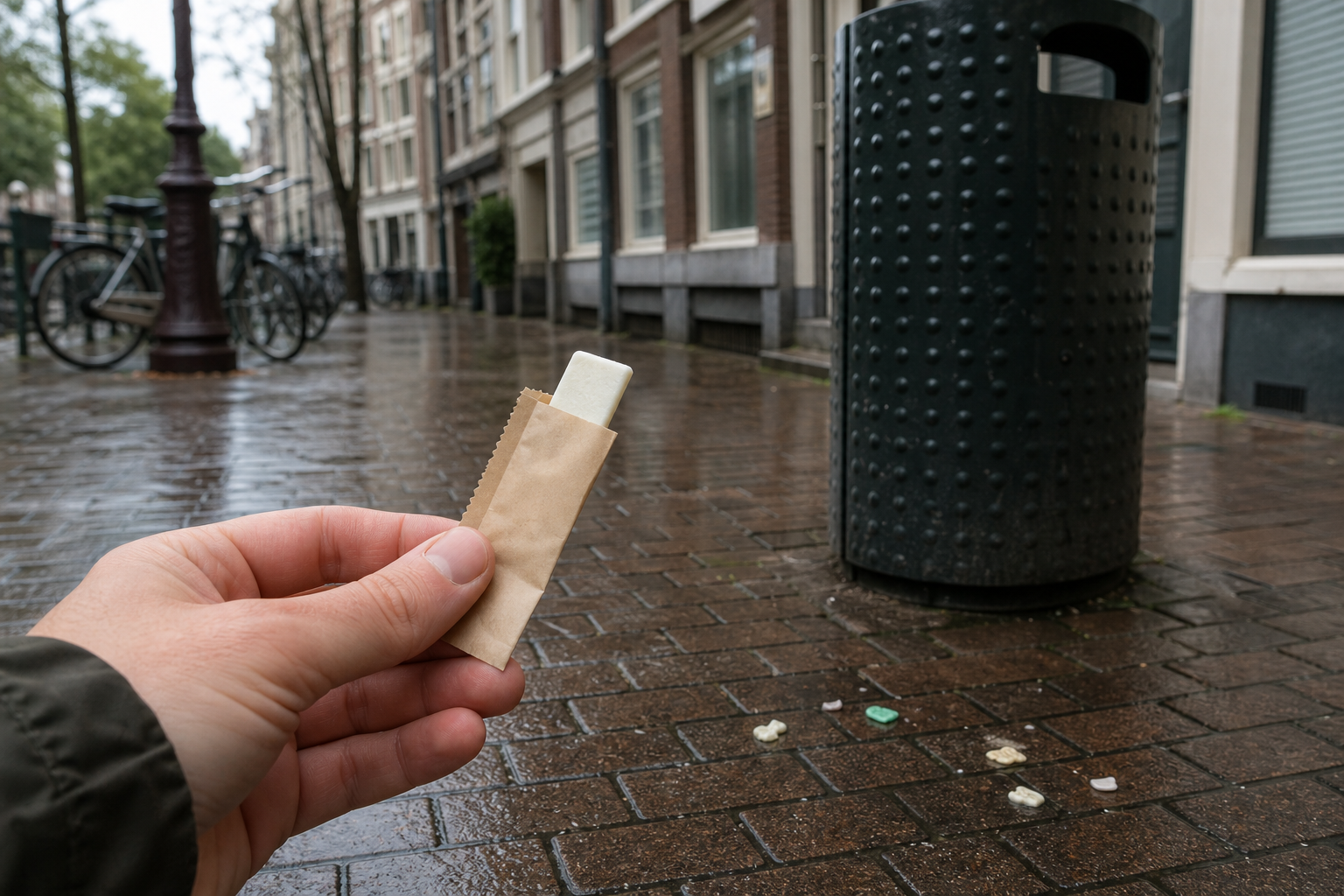
- Source
- MOZOM vergelijkt
- MOZOM headline
- MOZOM compares: plastic chewing gum, ban or cleaning costs?
- Original headline
- The Netherlands wants a sales ban on chewing gum containing plastic in Brussels, while the same problem can also be read as waste, consumer and producer demand
- Author
- MOZOM-redactie
- Date
- 27 juni 2026 om 12:59
- Subject
- Analysis of the Dutch commitment to a European ban on plastic in chewing gum and the framing around litter, producer responsibility and consumer behavior.
Summary of the original report
NOS reports that the Netherlands has submitted to the European Commission that chewing gum containing plastic should be banned when reviewing rules for disposable plastic. The problem is recognizable and at the same time less visible than bottles or bags: much modern chewing gum contains synthetic polymers, is often spit out carelessly and is expensive to remove from sidewalks, squares and stations. A ban places emphasis on the composition of the product. A waste frame emphasizes consumer behavior. A producer frame asks why a disposable product is designed in such a way that municipalities are left with cleaning costs later.
Striking in this message
It is striking that the word chewing gum makes the subject almost innocent, while plastic immediately draws it into an environmental file. This combination has a strong effect: something everyday suddenly becomes evidence of system waste.
Less visible context
What is less visible is that a ban only works if alternatives are available, affordable and verifiable. The composition is also often unclear to consumers. Anyone who only looks at the chewer misses the product choice. Anyone who only looks at the manufacturer misses the behavior on the street. The core lies in that chain: design, sales, use and public cleaning.
Possible message behind the news
A possible message is that environmental policy increasingly starts with design: do not wait until waste is on the street, but design products in such a way that they leave less damage.
Neutral conclusion
The neutral conclusion: a chewing gum ban sounds small, but affects a larger policy line. If a product is cheap to sell and expensive to clean up, the bill shifts to the public space. The political question is whether Europe will pass that bill back to the market through product rules.