
MOZOM-analyse
MOZOM compares: Venezuela earthquakes, disaster or governance test?
- Source
- AP en The Guardian
- MOZOM headline
- MOZOM compares: Venezuela earthquakes, disaster or governance test?
- Original headline
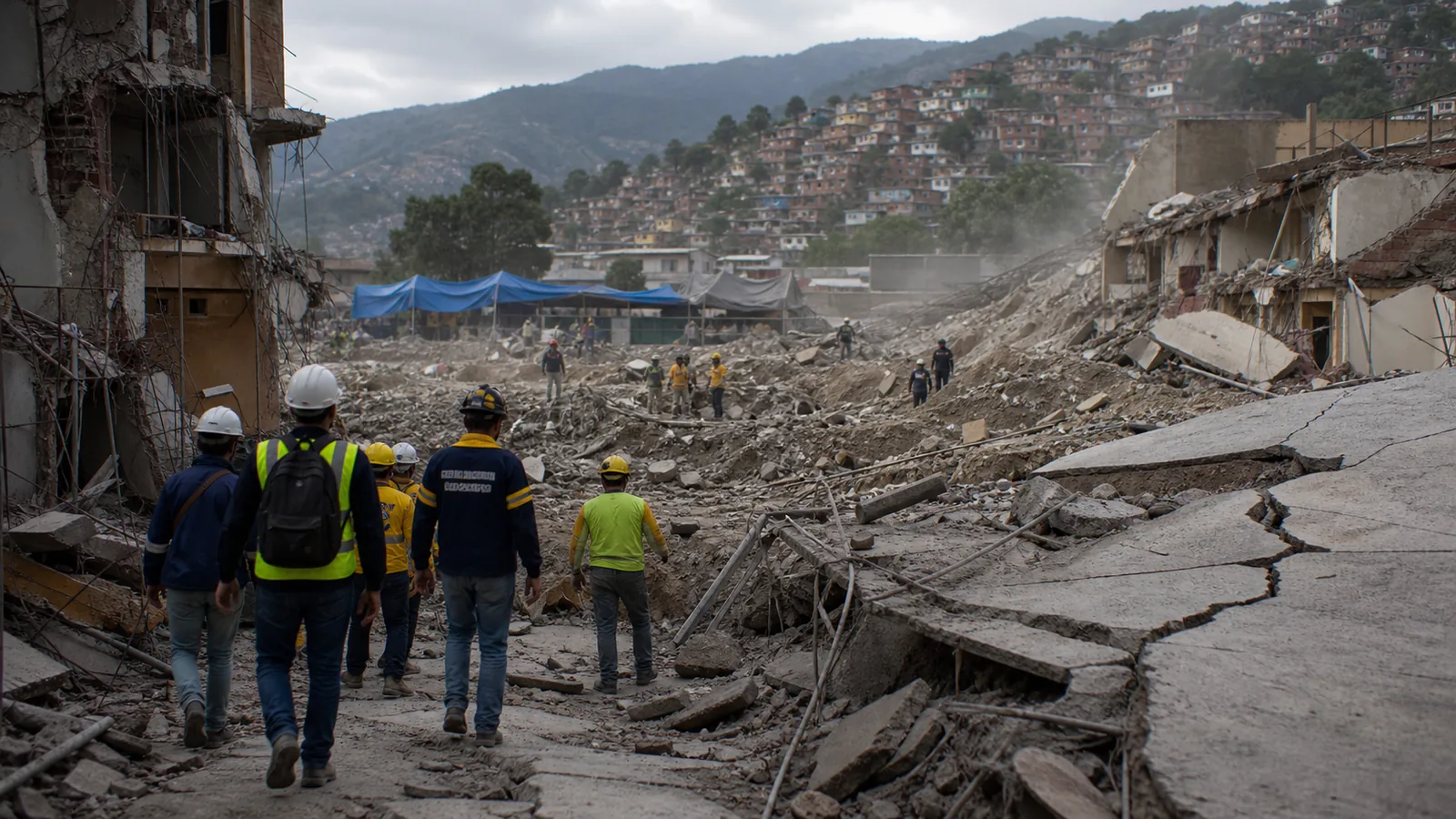
- Spotless uniforms, stalled cranes: Inside Venezuela's faltering quake rescue effort
- Author
- MOZOM-redactie
- Date
- 1 juli 2026 om 18:27
- Subject
- A week after two major earthquakes in Venezuela, attention shifts from the blow itself to rescue capacity, medical risks, mistrust and the question of who really organizes emergency aid.
Summary of the original report
AP describes from La Guaira how survivors and relatives wait for heavy machines, clear management and reliable help. The question that returns in the piece is simple and painful: who is in charge here? In a second AP report, doctors warn that untreated wounds, poor sanitary conditions and damaged hospitals could prolong the disaster into a medical crisis. The Guardian highlights public anger, alleged looting by security forces, limited access to disaster areas and volunteers continuing to search with few resources. The core facts run in the same direction: the earthquakes of June 24 hit Venezuela hard, the death toll is rising, tens of thousands of people are still missing or wanted, and the quality of aid has itself become the subject of conflict.
Striking in this message
It is striking that the language shifts from saving to trust. In the first hours everything revolves around survivors under rubble. After a week it is also about access, looting, medical infections, figures that are doubted and the question of whether the government visibly helps or mainly controls.
Less visible context
What is less visible is that disasters are rarely determined solely by natural disasters. Construction quality, maintenance, public health care, local corruption, emergency planning and trust in institutions determine how much damage an earthquake continues to cause afterwards. Particularly in a country with long-term economic and political vulnerability, the aftershock becomes administrative: every delayed tap and every missing bandage takes on political significance.
Possible message behind the news
One possible message is that disasters are not only measured in magnitude, but also in the speed with which institutions can earn trust.
Neutral conclusion
The neutral conclusion: Venezuela has been hit by a serious natural disaster, but the story is now broader than the earthquakes themselves. AP mainly shows how rescue and care practically come to a standstill. The Guardian shows how distrust, control and alleged abuses make aid political. Together, the sources show that the real aftershock is not only in buildings, but also in whether citizens still experience their government as a protector.