
MOZOM vergelijkt
MOZOM compares: Viking textile site, plunderer myth or production network?
- Source
- MOZOM vergelijkt
- MOZOM headline
- MOZOM compares: Viking textile site, plunderer myth or production network?
- Original headline
- Archaeologists find a large Viking Age textile production site with more than eighty pit houses at Søften in Denmark
- Author
- MOZOM-redactie
- Date
- 29 juni 2026 om 12:03
- Subject
- A large archaeological find at Søften, north of Aarhus in Denmark, indicative of organized Viking Age production and trade.
Summary of the original report
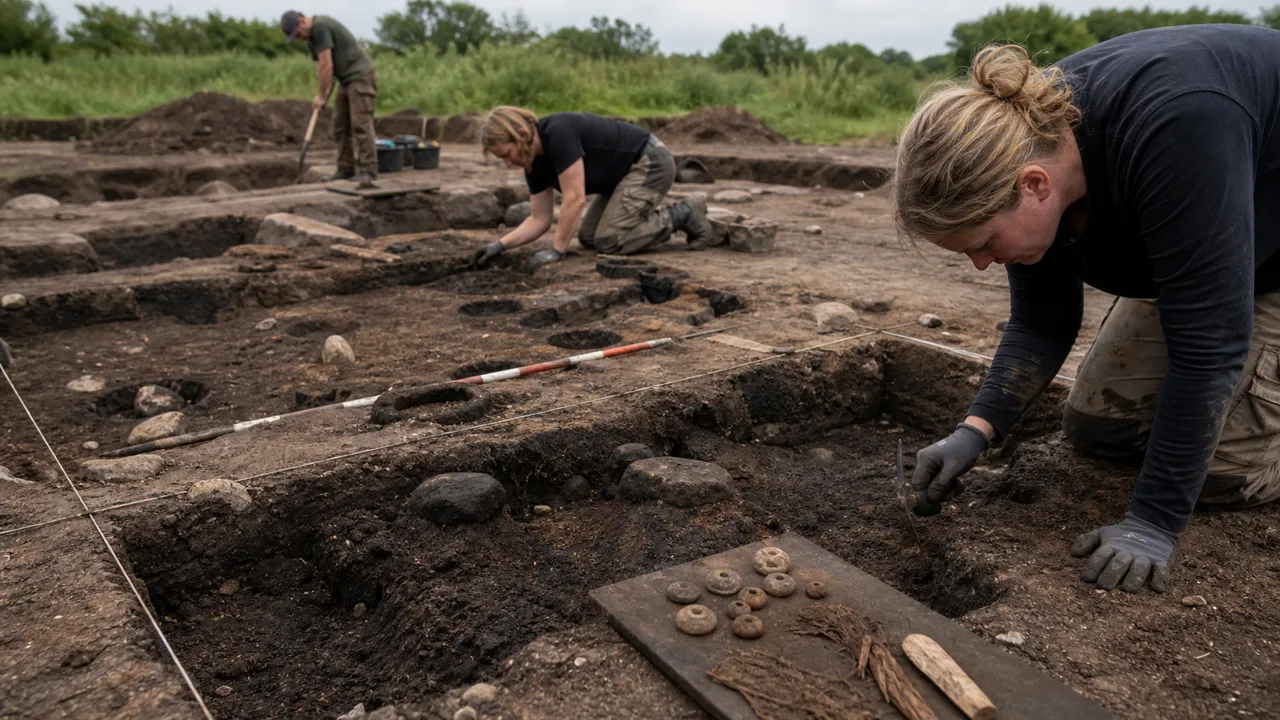
AP reports that archaeologists from the Moesgaard Museum near Søften in Jutland, Denmark, have found a large Viking Age textile production site. The site covers approximately 100,000 square meters and, according to the researchers, contains more than eighty pit houses, work spaces that were partly underground. There is evidence of flax processing and finds such as spinning bobbins, weaving weights, beads, pottery and coins. The site dates roughly to the late Iron Age and early Viking Age, between about 600 and 950 AD. The researchers see the clear focus on textile production as special, because it points to an organized economic function around ancient Aros, today's Aarhus.
Striking in this message
It is striking how quickly the word Viking conjures up images of violence in many readers, while textiles may be closer to everyday power. Clothing, sailing, trade and status symbols require production. Anyone who can organize textiles also organizes people, raw materials and exchange.
Less visible context
What remains less visible is that textiles could have a heavy economic impact in early societies. It was labor intensive, technically and socially important. A large production site can therefore say as much about power as a grave with weapons. Here, archeology shifts the story from heroes to workshops.
Possible message behind the news
A possible message is that power in the Viking Age not only sailed on ships, but also lay in workshops, textiles and organized labor.
Neutral conclusion
The neutral conclusion: the discovery at Søften does not make Vikings peaceful or modern. It makes their society more complete: in addition to war and travel, production, trade and organization were also central.