
MOZOM vergelijkt
MOZOM compares: Wimbledon line technology, precision or systemic risk?
- Source
- MOZOM vergelijkt
- MOZOM headline
- MOZOM compares: Wimbledon line technology, precision or systemic risk?
- Original headline
- AP describes video review as extra precision on six Wimbledon courts; The Times actually reports a Hawk-Eye malfunction during hot qualifying
- Author
- MOZOM-redactie
- Date
- 28 juni 2026 om 16:52
- Subject
- Analysis of Wimbledon's further automation of arbitration by 2026, with video review, electronic line assessment, player confidence, heat resistance and the disappearance of human line judges.
Summary of the original report
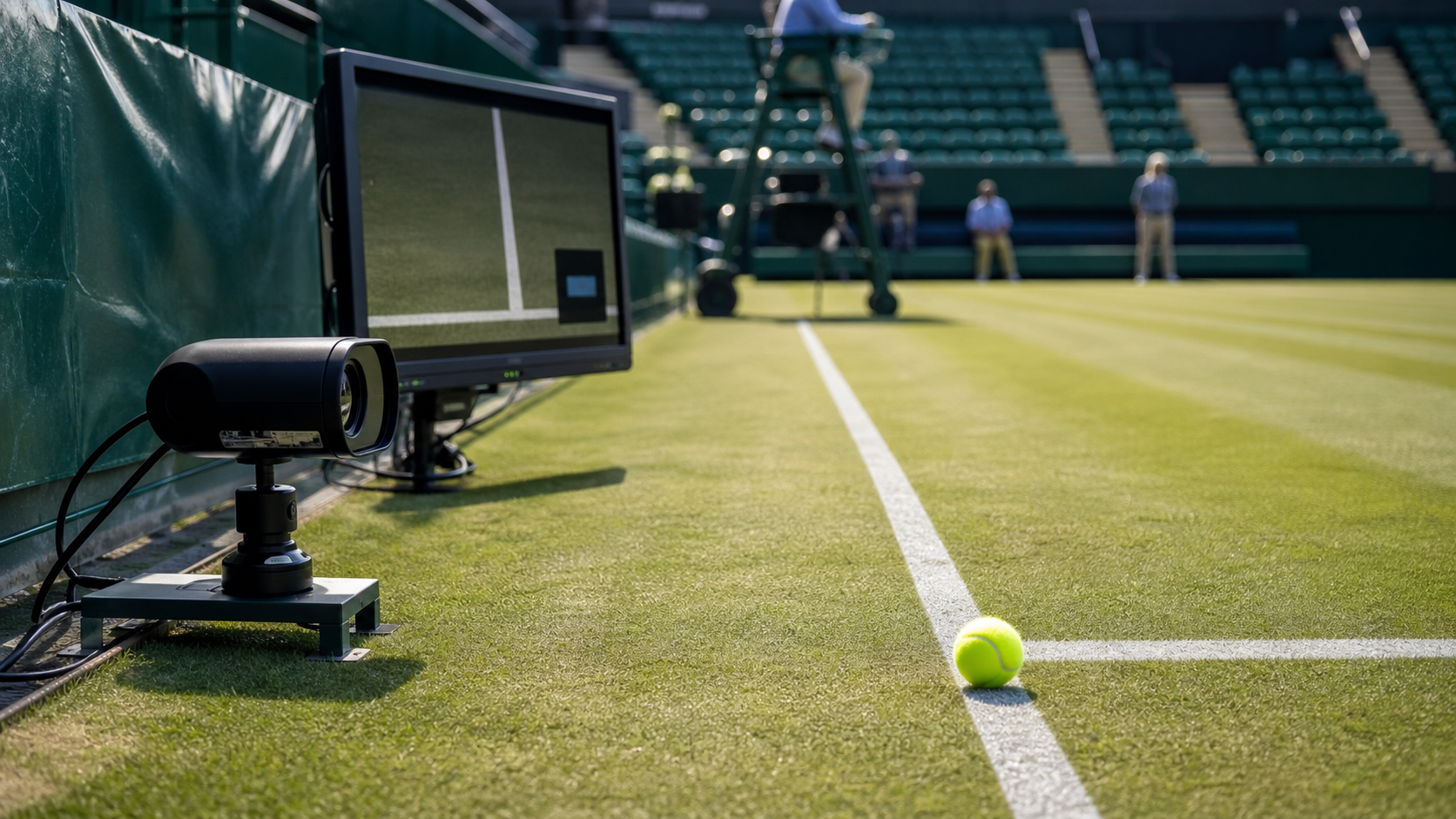
AP previously reported that Wimbledon will use video review for the first time in 2026. The technology is available at Center Court, Court No. 1 and four other show courts, especially for chair umpire decisions such as double bounces. This is in addition to the electronic line assessment for in-or-out balls, which Wimbledon has used instead of line judges since 2025. AP emphasizes the additional visual indicators on scoreboards following feedback from players and audiences. The Times added another accent just before the start of the tournament: during the qualifications in Roehampton, the Hawk-Eye line technology failed due to a power problem, causing play to temporarily stop on all fifteen courts at temperatures around 36 degrees. The Sun previously outlined the bigger shift: line judges disappeared from Wimbledon, automated voices took over the calls and control shifted to cameras, computers and an external operator.
Striking in this message
It is striking that the same technology can be described at the same time as objective progress and as a new breaking point. The word precision suggests calm: the ball was in or out. But live sports remains messy. Cameras must work, software must be in good condition, signals must be audible and players must understand why a decision remains or changes. Technology does not remove discussion; she shifts the discussion to the reliability of the measurement.
Less visible context
What is less visible is that Wimbledon is not only making a technical choice here, but also an institutional one. The tournament safeguards tradition, but at the same time professionalises arbitration towards a model in which visible human officials become less important. This fits with the TV logic of modern sports: fast repetition, graphic confirmation and immediate clarity for the viewer. Yet tennis remains dependent on player acceptance. If they experience the system as fair, discussion disappears more quickly. If they experience it as opaque or vulnerable, every close call can become a matter of trust.
Possible message behind the news
One possible message is that modern sport is becoming less about the authority of the official on the field and more about the authority of the system behind it. That can be fairer, but only as long as the system itself does not become the weak point.
Neutral conclusion
The neutral conclusion: Wimbledon's extra review technology is logical and probably useful on difficult calls. But the glitch during qualifying shows that precision is not an end point. The tournament must not only prove that technology measures accurately, but also that it continues to work under competitive pressure and remains understandable to players. The real test therefore does not start with the first close call, but with the moment when everyone believes that the call was made technically reliably.