
MOZOM vergelijkt
MOZOM compares: World Cup knockout phase, sports drama or format test?
- Source
- MOZOM vergelijkt
- MOZOM headline
- MOZOM compares: World Cup knockout phase, sports drama or format test?
- Original headline
- FIFA, sports media and format specialists describe the same transition differently: knockout party, calculation scheme or test of the 48-nation World Cup
- Author
- MOZOM-redactie
- Date
- 28 juni 2026 om 01:27
- Subject
- Analysis of the start of the 2026 World Cup knockout phase, in which for the first time a round of 32 teams follows twelve groups and eight best numbers three.
Summary of the original report
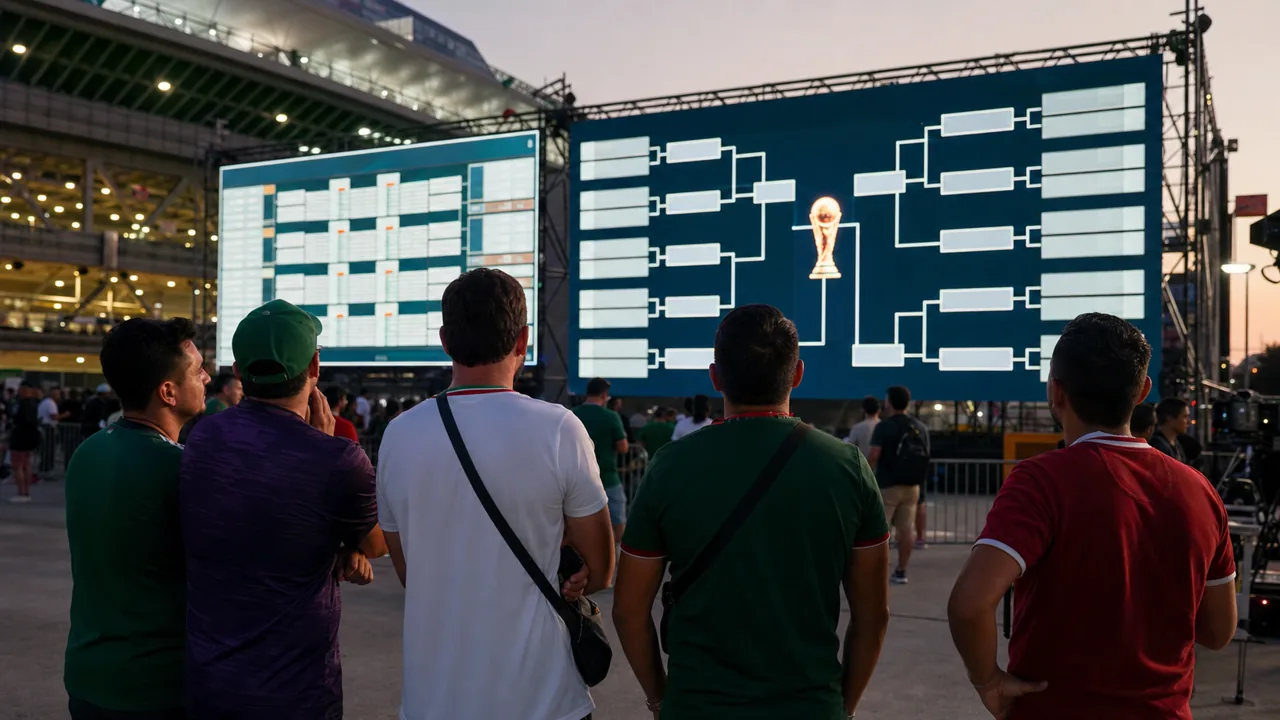
FIFA presents the transition to the knockout phase mainly as a match schedule: the round of 32 runs from June 28 to July 3, followed by the round of 16, quarter-finals, semi-finals and final. Sports media place greater emphasis on visible posters and routes. SB Nation writes that the bracket is quickly taking shape, with already confirmed or almost visible matches and possible follow-up paths for countries such as Germany, France, Brazil, the United States, the Netherlands, Spain and Argentina. TalkSPORT uses the same format from a national perspective: who can face England, what path is open next and where are the risks? A recent formats article on arXiv exposes the system side: twelve groups, eight best numbers three and 495 possible combinations make the bracket less intuitive than before.
Striking in this message
It is striking that the word knockout phase provides less overview here than before. At a World Cup with 32 countries, the round of 16 was a recognizable schedule for many viewers. In the 48-team format, elimination football starts earlier, but with more dependencies, more third-place logic and more chance that the scheme itself will become the subject of debate.
Less visible context
What is less visible is that the expansion of the World Cup is not only sporting, but also administrative and commercial. More participants means more countries with visibility, more competitions for organizers and more airtime for rights holders. At the same time, the core of a world championship is shifting: from a relatively compact selection to a larger event in which qualification, group stage and knockout path are less clearly separated. That doesn't necessarily make the tournament worse, but it does change what success, bad luck and fairness mean.
Possible message behind the news
A possible message is that the new World Cup will only really be judged now that the group stage is over: not on the expansion on paper, but on the question of whether the knockout phase feels logical, fair and exciting at the same time.
Neutral conclusion
The neutral conclusion: the round of 32 makes the World Cup bigger and longer exciting, but also less simple. If the schedule provides recognizable top matches, room for surprises and clear routes, the 48-nation format can gain support. If third-place logic, late clarity and uneven paths come to dominate, the knockout stages will become not just football, but also evidence in the expansion debate. This World Cup not only tests teams, but also the format itself.