
MOZOM-analyse
MOZOM analysis: new Public Prosecution Service suspicion surrounding explosion in Amsterdam shifts the story from isolated explosion to organized criminal preparation
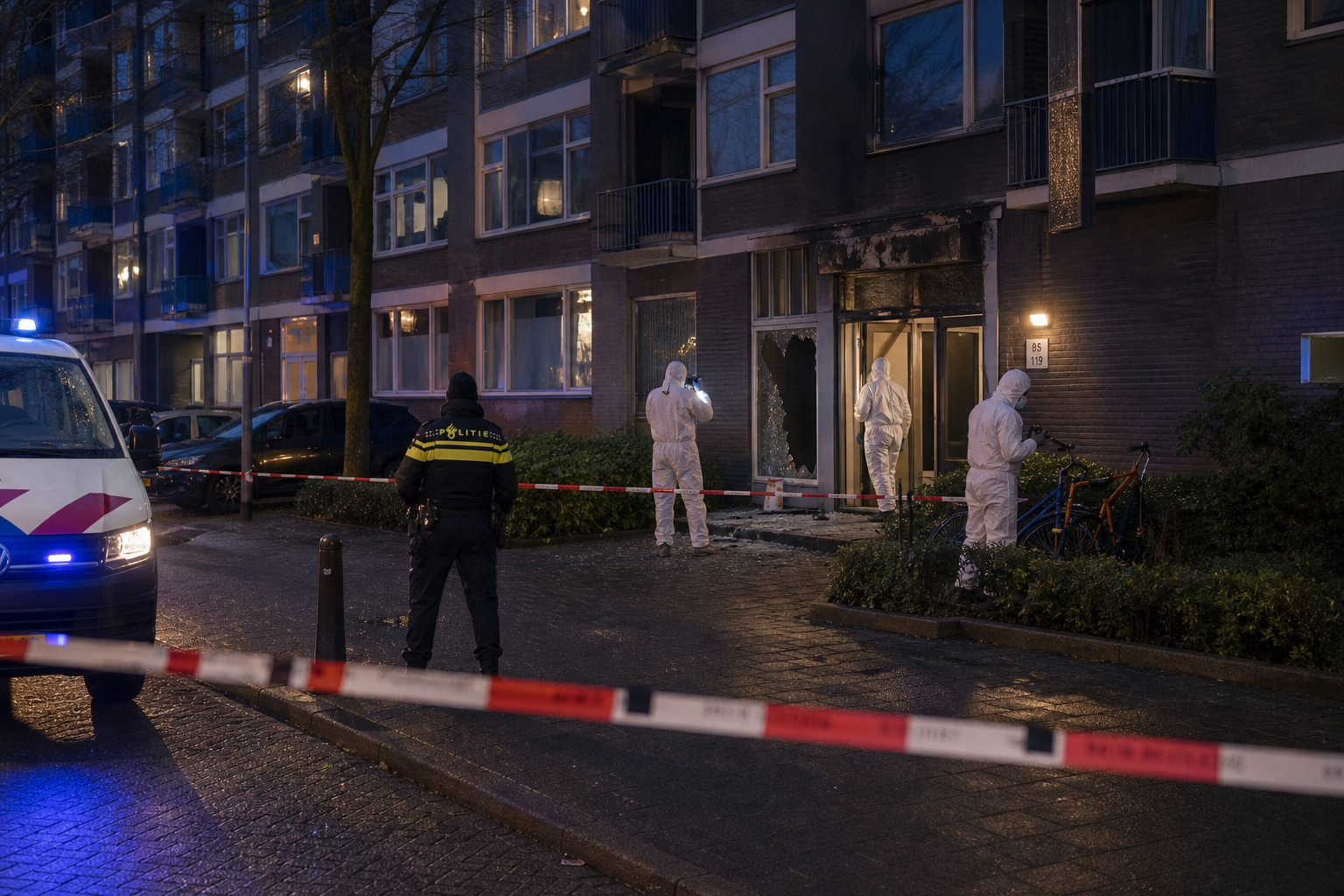
- Source
- NU.nl
- MOZOM headline
- MOZOM analysis: new Public Prosecution Service suspicion surrounding explosion in Amsterdam shifts the story from isolated explosion to organized criminal preparation
- Original headline
- Public Prosecution Service suspects Amsterdam apartment explosion suspects of preparing bombing
- Author
- Redactie NU.nl
- Date
- 19 juni 2026 om 23:45
- Subject
- NU.nl reports that the Public Prosecution Service now also suspects the two suspects in the explosion at an apartment in Amsterdam Nieuw-West of preparing an explosive robbery, making the case more emphatically read as part of organized crime.
Summary of the original report
NU.nl writes that the two Amsterdam residents suspected of involvement in the explosion at an apartment in Amsterdam Nieuw-West have been detained for two weeks longer and that the Public Prosecution Service now also suspects them of preparing a burglary or explosion. In a direct sense, this is a legal-technical step in the investigation. But underlying that step lies an important shifting frame: as soon as the Public Prosecution Service looks not only at the explosion itself, but also at its preparation and criminal purpose, the public story changes from damage and unrest in the neighborhood to a possible organized operation with broader criminal significance. The case thus grows beyond the isolated event and becomes part of the recurring Dutch discussion about explosions, subversive crime and the extent to which residential areas unintentionally become the backdrop for more serious criminal conflicts.
Striking in this message
It is striking that the headline immediately focuses on the Public Prosecution Service and the suspicion of preparation. As a result, attention shifts from the explosion as a moment of shock to its judicial interpretation. This makes the message legally stronger and more concrete, but it also means that the reader is more likely to read the incident as evidence of organized intention than as an open research question in which not everything has yet been determined.
The broader framework
For international readers, it helps to briefly clarify that the Public Prosecution Service in the Netherlands is the body that prosecutes criminal cases and formulates suspicions legally. The word 'explosive burglary' has also been used locally: it usually concerns a violent attempt to break open an ATM or other targets with explosives, for example. In the Netherlands, explosions at homes and businesses have increasingly become part of reports about subversive crime in recent years. It is precisely for this reason that a new Public Prosecution Service suspicion reads not only as a procedural update, but also as a signal that the state places an event in a broader criminal pattern.
Possible message behind the news
A possible message behind this news is that the authorities not only want to show that suspects are in custody, but also that they read the explosion within a larger criminal framework. In plain language: it is no longer just about who was involved, but about what type of crime the state thinks it recognizes here. This makes the message more serious than a standard neighborhood incident and at the same time increases the political and social significance.
Neutral conclusion
The article thus shows that this new Public Prosecution Service suspicion does more than update a criminal case. She shifts the reading from an explosion at an apartment to a possible organized criminal preparation story, with all the heavier meaning that attaches to it in the Netherlands.