
MOZOM-analyse
MOZOM analysis: suspicions about criminal causes of explosion in Amsterdam show how judicial language must restore public order at an early stage
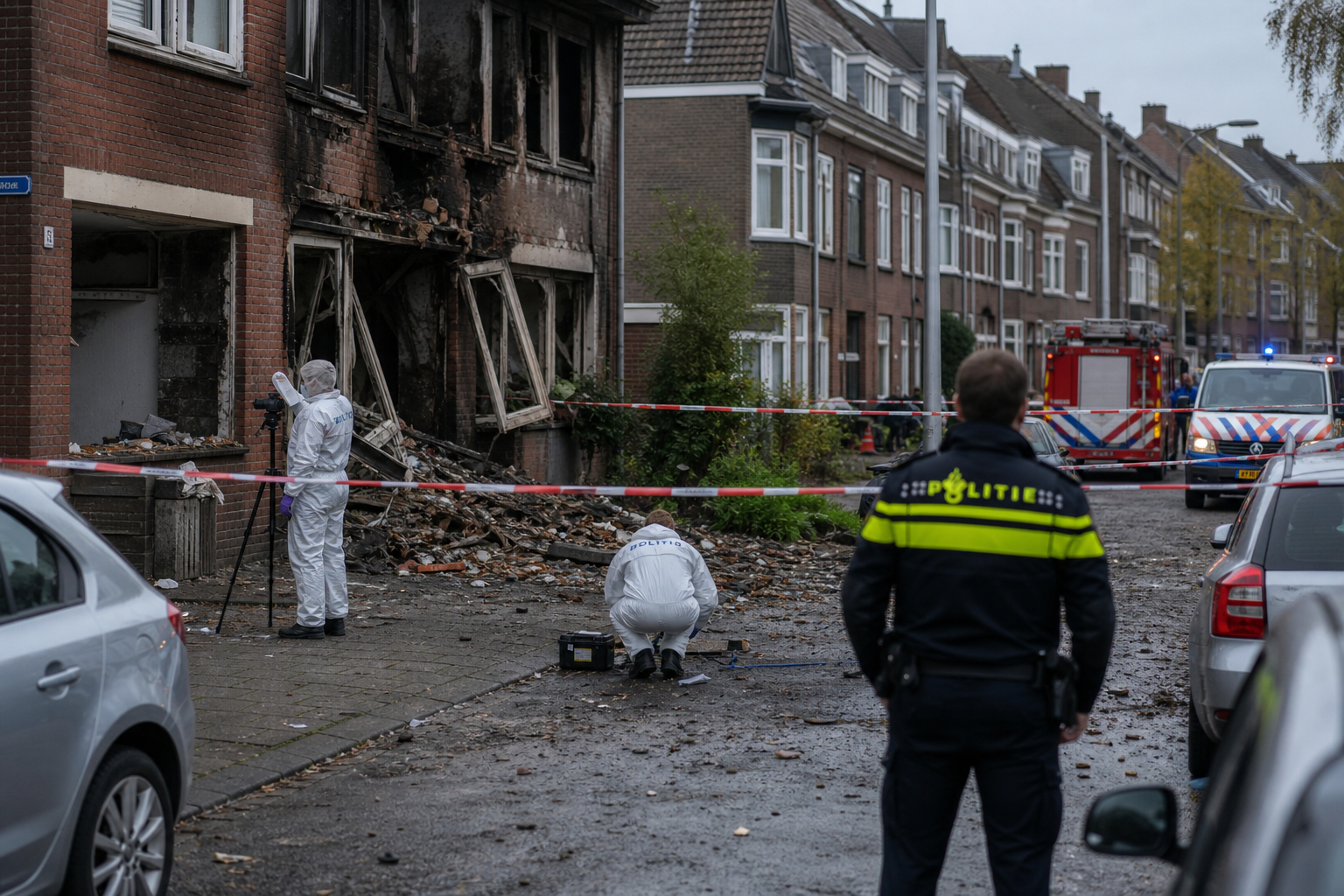
- Source
- NOS.nl
- MOZOM headline
- MOZOM analysis: suspicions about criminal causes of explosion in Amsterdam show how judicial language must restore public order at an early stage
- Original headline
- Public Prosecution Service suspects that criminal activities are the cause of the Amsterdam explosion
- Author
- Redactie NOS.nl
- Date
- 19 juni 2026 om 12:59
- Subject
- NOS.nl (NL) reports that the Public Prosecution Service suspects that criminal activities are behind a major explosion in an Amsterdam residential area. Behind that news lies the question of how authorities are trying to restore safety and meaning before all facts are established.
Summary of the original report
NOS.nl reports that the police and the Public Prosecution Service are investigating the scenario that criminal activities involving explosives are the cause of a major explosion in a residential area in Amsterdam. This shifts the news from a shocking explosion in itself to a criminal interpretation of what may be behind it. This is relevant, because a neighborhood incident initially means chaos, fear and misunderstanding for local residents. As soon as justice speaks of a suspected criminal cause, a different kind of order emerges: the incident is given direction, an investigative logic and an administrative language that says that the event does not have to be random, but may fit into a known pattern of subversive crime. At the same time, it remains a suspicion. The public significance of such a statement therefore lies not only in the actual state of the investigation, but also in the way in which authorities try to limit uncertainty without being able to provide complete clarity.
Striking in this message
The headline revolves around the word 'suspects'. This makes the message legally cautious, but not neutral in effect. The reader is immediately given a direction: think about crime, not about accident or coincidence. It is precisely this combination of restraint and guidance that is characteristic of judicial language. Nothing is formally established definitively, but a framework is established within which the event will be read from now on. This shifts attention from the explosion as an isolated incident to the broader story of explosives, networks and urban insecurity.
Background that often remains out of view
For international readers, it is useful to clarify that the Public Prosecution Service in the Netherlands is the body that manages criminal cases and prepares prosecution decisions. What remains less visible is that reports about explosions in residential areas in the Netherlands have also acquired political and social connotations in recent years, because they are often linked to organized crime, intimidation or settlements. This increases the pressure on authorities to quickly say something meaningful. There is also a tension under this type of news: residents want to know immediately whether they are a target, accidental victim or neighbor of a criminal conflict, while the investigation at that time is usually still fragmentary. The language of the Public Prosecution Service then functions not only legally, but also in a reassuring and orderly manner.
Possible message behind the news
A possible message behind this news is that, in the event of disruptive incidents, administration and the judiciary cannot wait until all the facts are known before they give direction to the public story. In plain language: people want to know what is going on, and the Public Prosecution Service tries to fill that vacuum as early as possible with a legally plausible scenario. Between the lines, this creates the impression that order in public perception must sometimes begin before order in the evidence is fully achieved.
Neutral conclusion
This article shows that the suspicion of a criminal cause is more than an investigative detail. It is also an example of how justice uses language to immediately provide meaning, direction and provisional support after a shocking incident, while the actual truth is still being investigated.