
MOZOM-analyse
Also British ban on social media for children under 16
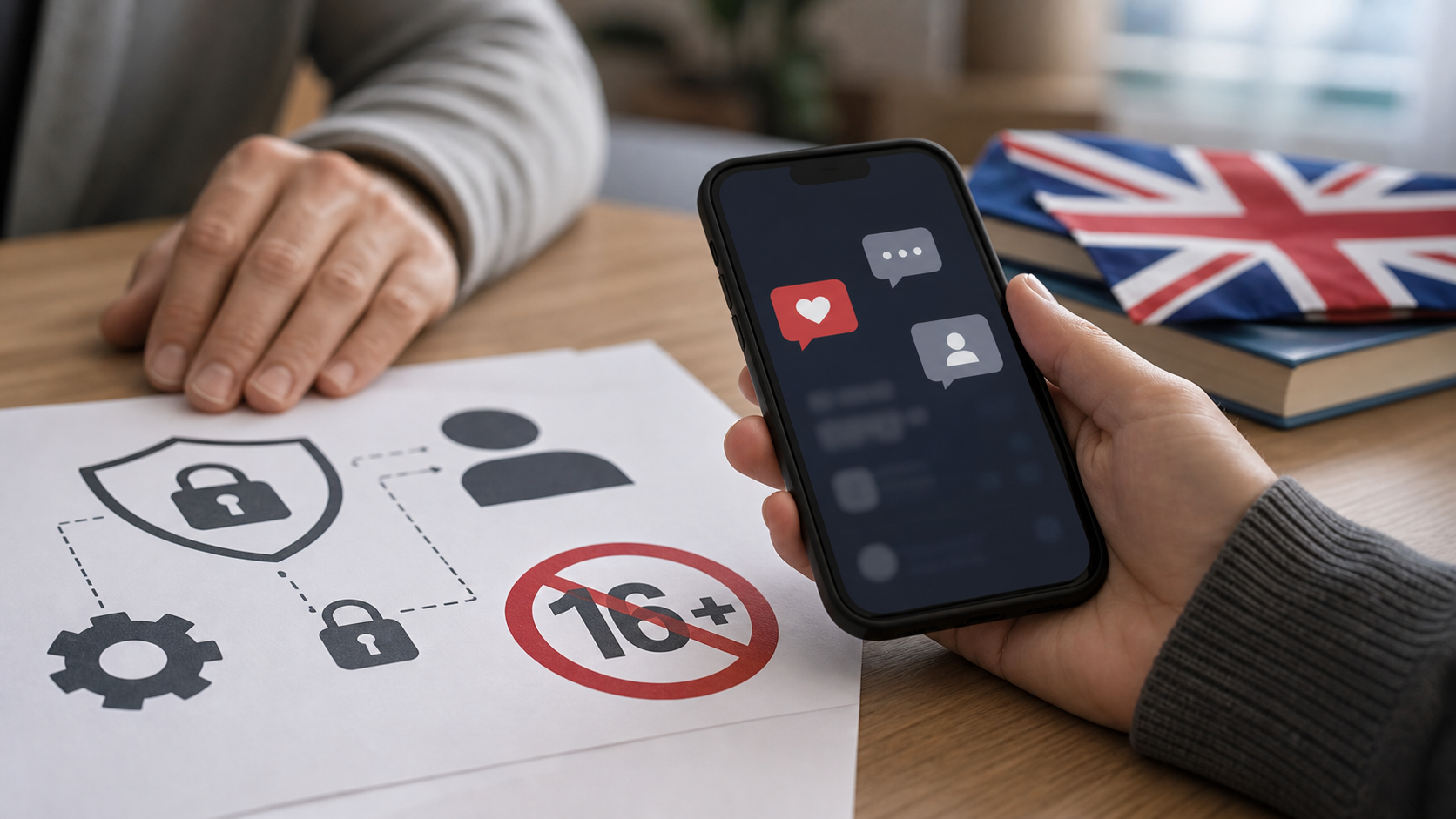
- Source
- NU.nl
- MOZOM headline
- Also British ban on social media for children under 16
- Original headline
- Also British ban on social media for children under 16
- Author
- Redactie NU.nl
- Date
- 15 juni 2026 om 10:04
- Subject
- UK plans to ban social media for children under 16, with possible extension to certain gaming and streaming platforms.
Summary of the original report
NU.nl reports via the RSS feed that the United Kingdom is introducing a ban on social media for children under the age of sixteen. According to the brief source information, the measure also applies to certain gaming and streaming platforms. The ban should come into effect next year. The core of the message is that digital access for minors is not only treated as a parental or platform choice, but as a subject of legislation. Because the full article text outside the feed was not accessible in this local check, this summary is limited to headline, date, source link and RSS description.
Striking in this message
The headline uses the word “ban,” putting the immediate emphasis on a hard limit rather than guidance, warning, or parental control. The formulation "children under 16 years of age" makes the subject protective and normative: it is not about ordinary users, but about a vulnerable group. The fact that gaming and streaming platforms are also mentioned broadens the frame of social media to a larger digital habitat. Attention is thus focused on protection and regulation, while the practical implementation remains less visible.
Consequences that are less visible
What is less visible is that in practice a ban on children is often only enforceable if all users have to prove their age. The headline focuses on the protection of minors, but the technical implementation may mean that adults also have to go through age verification, identity verification or additional verification. As a result, the measure shifts from child protection to a broader discussion about digital access, privacy and data collection. It also remains open who carries out these checks, what data is stored and whether anonymous use of platforms will become more difficult.
Possible message behind the news
A possible reading is that online safety for young people is increasingly translated into access control. Simply put, the message is about children, but the technology behind such a rule could mean that everyone has to prove their age. That does not necessarily have to be wrong, but it is a major social choice. The key question then becomes not only: how do we protect children, but also: how much identification of the entire population do we find acceptable to enforce this?
Neutral conclusion
The article is therefore not only about a British ban for children under sixteen, but also about the broader question of whether child protection can lead to mandatory age or identity checks for all platform users.