MOZOM vergelijkt
MOZOM compares: parliamentary inquiry into Corona Netherlands, learning lessons or public reckoning?
- Source
- Tweede Kamer, NOS/Nieuwsuur, Parlement.com en EenVandaag
- MOZOM headline
- MOZOM compares: parliamentary inquiry into Corona Netherlands, learning lessons or public reckoning?
- Original headline
- Public hearings by the Corona parliamentary inquiry committee this week revolve around curfews and unrest
- Author
- MOZOM-redactie
- Date
- 1 juli 2026 om 22:34
- Subject
- The parliamentary inquiry Corona in the Netherlands is holding public hearings about the approach to the corona crisis. This week the curfew and unrest are central, while many Dutch people are searching online for what this corona research can still yield for the Netherlands.
Summary of the original report
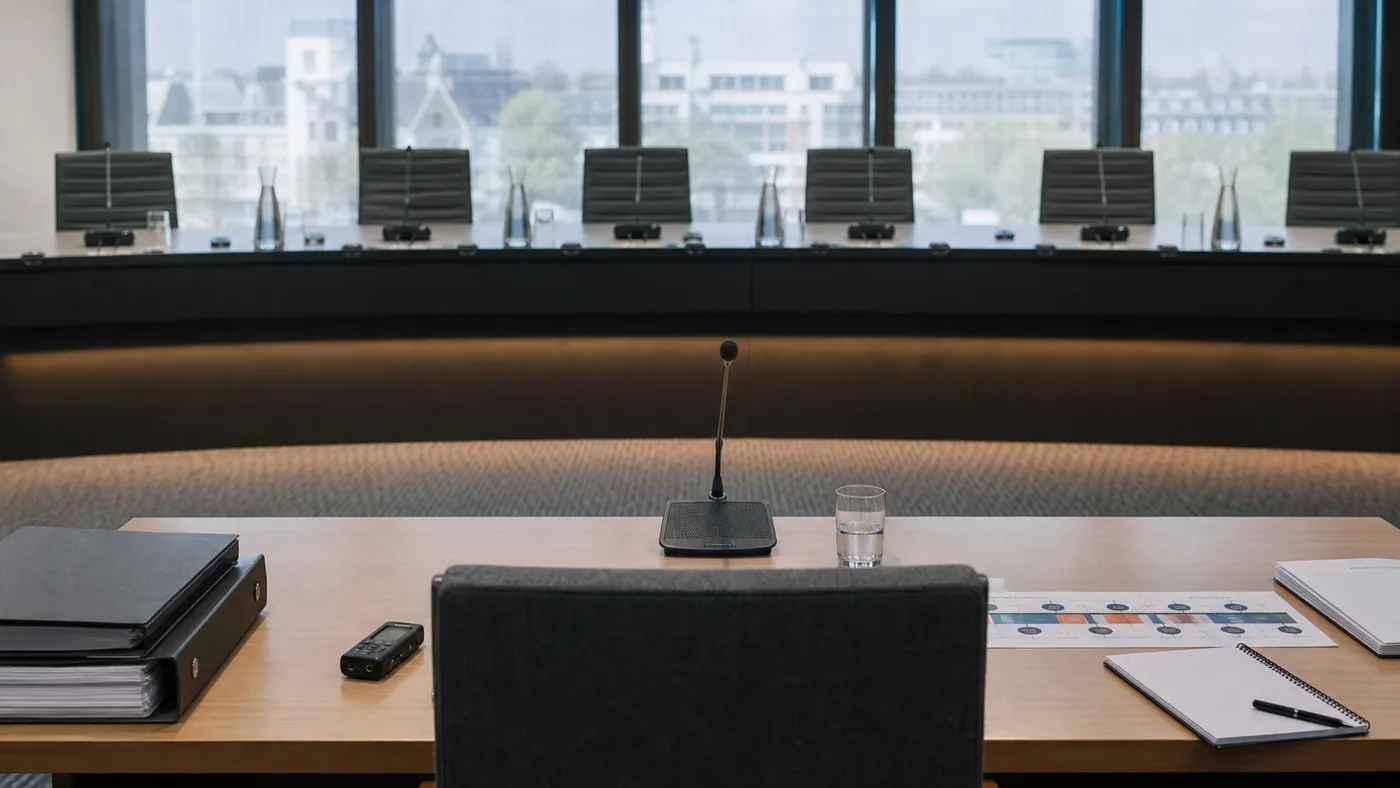
The House of Representatives reports that the public hearings of the parliamentary Corona inquiry committee have been taking place in the Inquiry Room since May 29, 2026. The committee will interrogate witnesses for nine weeks, always focusing on themes from the corona period. The fifth week of interrogations, from June 29 to July 3, revolves around the curfew and unrest. According to the House of Representatives, the committee wants to gain insight into what the cabinet did during the corona period and why it did it. The committee also looks at the role and functioning of the House of Representatives. NOS and Nieuwsuur emphasized that key players are heard under oath and that the interrogations can open old wounds. Parliament.com places the survey in the broader parliamentary process that has been running since the end of 2023. EenVandaag explains that a parliamentary inquiry is not intended as a tribunal, but as a way to keep politics focused and to learn lessons.
How do different sources present it?
The House of Representatives mainly presents the survey as official research: public hearings, hearing schedules, theme weeks, Debate Direct and a final report. NOS and Nieuwsuur choose a stronger line of tension: former Prime Minister Mark Rutte, Hugo de Jonge, Jaap van Dissel, old choices, threats, safety and the question of whether strict judgment will be taken. Parliament.com chooses the institutional line: institution, composition, planning and parliamentary context. EenVandaag chooses the explanation route: a survey is not a means of revenge but a heavy control instrument. The same process thus shifts from procedure to drama, from drama to constitutional law, and from constitutional law to public processing.
Where does the emphasis differ?
Anyone who has suffered damage, loss, exclusion or mistrust from the corona period can read the Corona parliamentary inquiry as final recognition. Anyone who looks at an administrative perspective mainly sees crisis decision-making under time pressure: healthcare capacity, OMT advice, lockdowns, curfew, education, corona admission ticket and vaccinations. Anyone who looks at democratic control sees the most difficult layer: how critical could the House of Representatives be while society simultaneously needed clarity and unity? As a result, this corona research in the Netherlands not only looks back, but also tests how a democracy corrects itself after emergency policies.
Original source research
MOZOM placed the official hearing agenda and House of Representatives notices alongside the news frames used by NOS, Nieuwsuur, Parlement.com and EenVandaag. In the primary source, the inquiry is mainly presented as parliamentary oversight: hearing weeks, themes, witnesses, public hearings and a final report. In the news layer, the emphasis shifts to key figures, tension, old wounds and possible reckoning. That source comparison shows that the inquiry is both an official learning instrument and a public processing of an old conflict.
Striking in this message
The difference between learning lessons and settling accounts is striking. Learning lessons sounds controlled, mature and future-oriented. Settlement sounds more personal and emotional: who knew what, who pushed through, who didn't listen, who was left out? The official language chooses learning and accountability. The public perception can be much harsher, especially around the curfew, the corona admission ticket and the way criticism was handled during the corona years.
Less visible context
What is less visible is that a parliamentary inquiry always comes late. At the time of crisis there is panic, time pressure and uncertainty. Years later there is more information, but also more emotion, more political distance and more need for confirmation of one's own right. That makes the interrogations powerful and risky at the same time. They can clarify where decisions came from, but also reactivate old camps: trust versus distrust, protection versus coercion, solidarity versus exclusion.
Possible message behind the news
A possible message is that the Netherlands not only wants to know whether the corona measures were medically defensible, but also whether the administrative culture was healthy enough: was criticism taken seriously, was the House well informed and did fundamental rights remain more than a footnote?
Neutral conclusion
The neutral conclusion: the Corona parliamentary inquiry is newsworthy because it makes an old file topical again. The fifth week of interrogations about curfews and unrest touches precisely on the painful core of the corona years: necessity, coercion, criticism and trust. For MOZOM this is not a simple question of guilt, but a framing question. Does the Netherlands become wiser from these interrogations, or does it mainly use the interrogations to confirm who was right at the time?
Source:
- Tweede Kamer: openbare verhoren parlementaire enquêtecommissie Corona
- Tweede Kamer: vijfde verhoorweek over avondklok en onrust
- Tweede Kamer: namen vijfde verhoorweek
- NOS liveblog over coronaverhoren met Schoof en Rutte
- Nieuwsuur: spanning rond corona-enquête loopt op
- Parlement.com: parlementaire enquêtecommissie Corona
- EenVandaag: geen tribunalen maar lessen trekken