
MOZOM-analyse
MOZOM analysis: steel warning also turns European climate pressure into an industrial survival debate
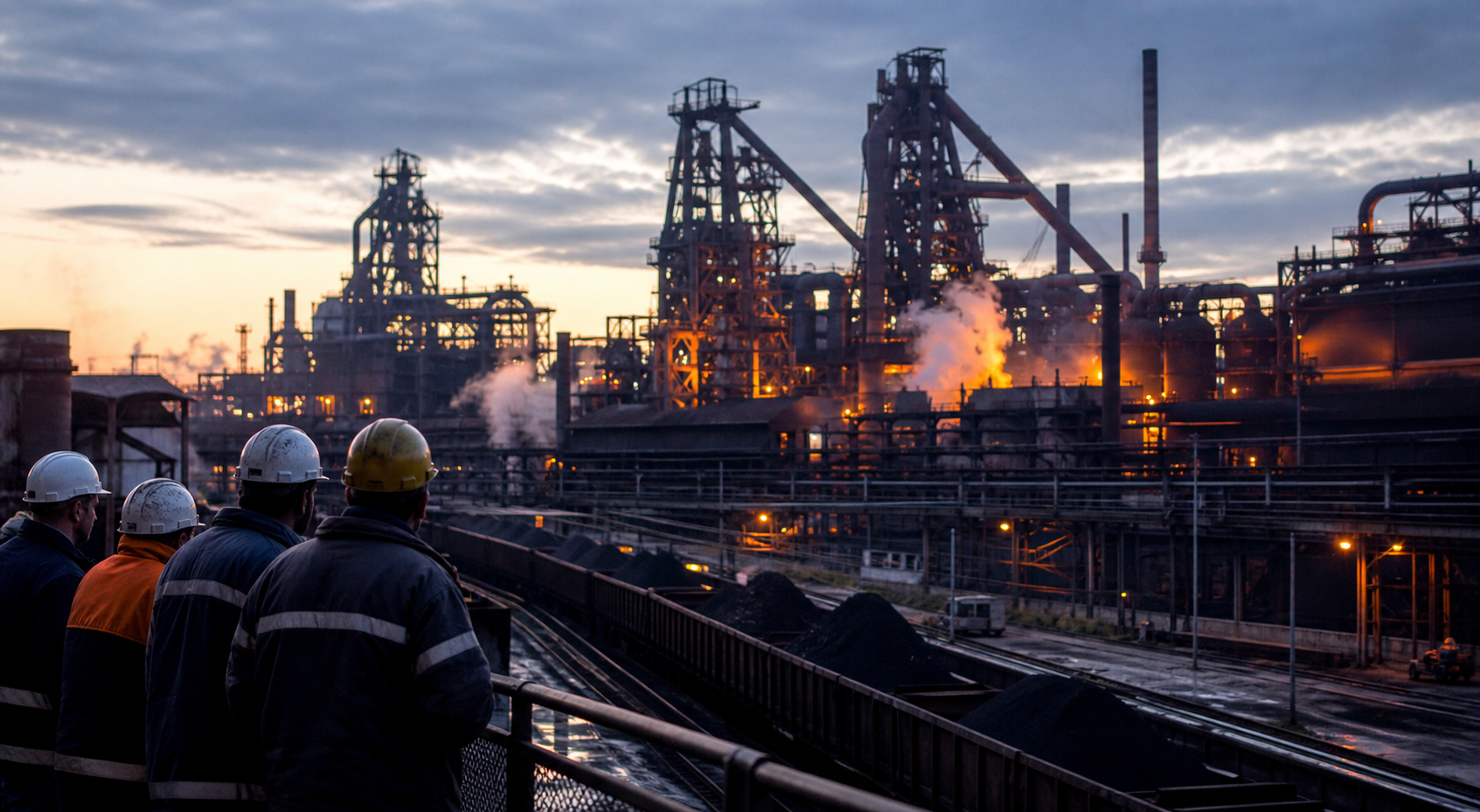
- Source
- De Telegraaf
- MOZOM headline
- MOZOM analysis: steel warning also turns European climate pressure into an industrial survival debate
- Original headline
- Steel producers warn the EU to succumb to the emissions trading system: 'Five million jobs and the foundation of industry at risk'
- Author
- Redactie De Telegraaf
- Date
- 17 juni 2026 om 18:59
- Subject
- De Telegraaf (NL) reports that European steel producers warn of rapid shrinkage of the sector if the EU does not adjust the emissions trading system, placing costs, jobs and strategic industry in direct conflict with climate policy.
Summary of the original report
De Telegraaf reports that representatives of the European steel industry are calling on the EU to quickly change the emissions trading system (ETS). According to the report, the sector could shrink by up to 40 percent without adjustment and the production costs of steel in Europe could increase by around 50 percent. In that reading, not only profitability comes under pressure, but also a much broader chain of employment and basic industry. The claim about five million jobs makes it clear that this does not only concern factories, but also suppliers, logistics and sectors that depend on European steel. The central clash in the message is therefore not simply steel versus climate, but the question of how quickly Europe greens without pushing production, investments and strategic industry outside the EU.
Striking in this message
It is striking that the message relies heavily on words such as collapse, foundation of industry and millions of jobs at stake. As a result, ETS does not read as a technical climate instrument, but as a direct threat to economic capacity. The debate is thus shifted from emission incentives and CO2 pricing to survival, loss and competitive disadvantage. This quickly gives the reader the feeling that Brussels is not only taxing pollution, but may also be weakening its own industrial base.
Less visible context
What remains less visible is that the ETS is precisely intended to take pollution into account financially and thus enforce cleaner production, even in sectors that have long been able to count on exceptional positions. At the same time, steel producers' concerns are not automatically idle: heavy industry in Europe competes with countries where energy, CO2 costs and environmental regulations are different. It is useful for international readers to clarify that ETS is the European system in which companies need emission rights and that steel, chemicals and other heavy industries have been a politically sensitive exception zone there for years. The real question underlying the message is therefore not only whether rules are strict, but whether Europe has a credible industrial path for sustainability without accelerated emissions transfer elsewhere.
Possible message behind the news
A possible message behind this news is that Europe is finding it increasingly difficult to present its green ambitions separately from industrial policy. In plain language: if steel in Europe becomes too expensive to produce profitably, climate policy will no longer feel like a future strategy to many readers, but a risk of self-weakening. Between the lines, this creates the impression that Brussels not only has to prove that sustainability is necessary, but also that the price does not prematurely demolish the European production base.
Neutral conclusion
The article thus shows how ETS is shifting in public discourse from a climate measure to a stress test for European industry. The key question then becomes not whether greening will continue, but whether Europe can sustain that transition economically without losing its own industrial foundation.