
MOZOM-analyse
MOZOM analysis: Iranian football in Tehrangeles shows how sport for the diaspora can be a sense of home and a regime question at the same time
- Source
- NOS.nl
- MOZOM headline
- MOZOM analysis: Iranian football in Tehrangeles shows how sport for the diaspora can be a sense of home and a regime question at the same time
- Original headline
- Tricky point in 'Tehrangeles': to cheer or not to cheer for the Iranian team?
- Author
- Redactie MOZOM
- Date
- 21 juni 2026 om 19:46
- Subject
- NOS describes how the Iranian community in Los Angeles has a divided view of the Iranian football team during the World Cup.
Summary of the original report
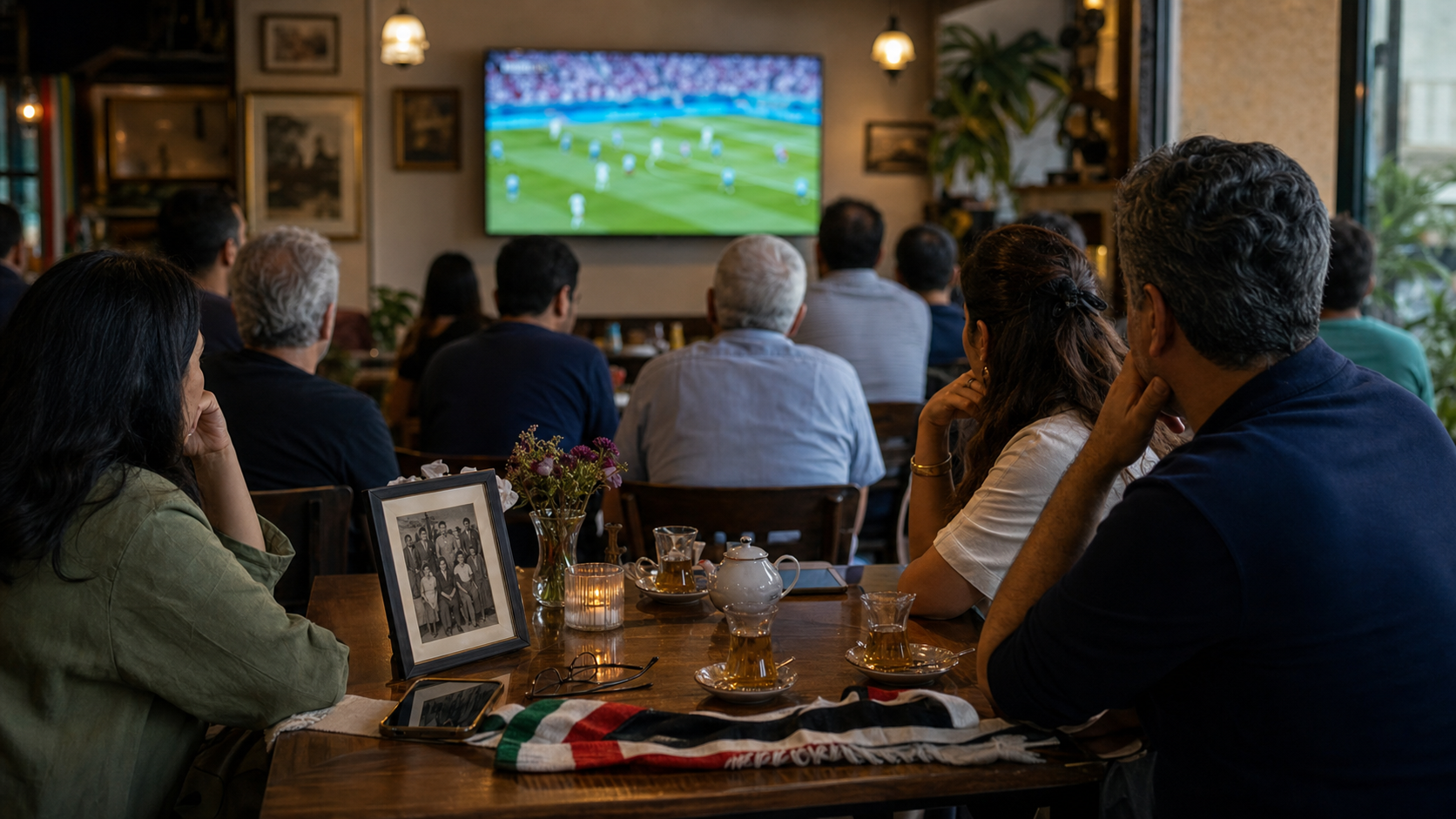
NOS outlines the Westwood district in Los Angeles, also called Tehrangeles, where many Iranians and Americans with Iranian background live. Around the World Cup, sporting solidarity collides with aversion to the regime. Some refuse to watch, others support players or use alternative symbols to separate identity from the state.
Striking in this message
The question of whether to cheer or not to cheer is a strong one because it makes the conflict personal. It is not about geopolitics in abstract terms, but about a café, a screen, an anthem and the question of what loyalty means.
The broader framework
Less visible is that diaspora identity often consists of multiple layers: language, family, memory, trauma, politics and sport. A match can therefore be a celebration, protest and moment of mourning at the same time.
Possible message behind the news
A possible message is that sport does not automatically connect when the national symbol itself is controversial.
Neutral conclusion
The Tehrangeles story shows that a team can carry more than sporting expectations. For many diaspora communities, the question of who speaks for the country is never neutral.