
MOZOM-analyse
MOZOM analysis: suspension of tram drivers in Milan shows how quickly everyday supervision shifts from safety to informal power over passengers
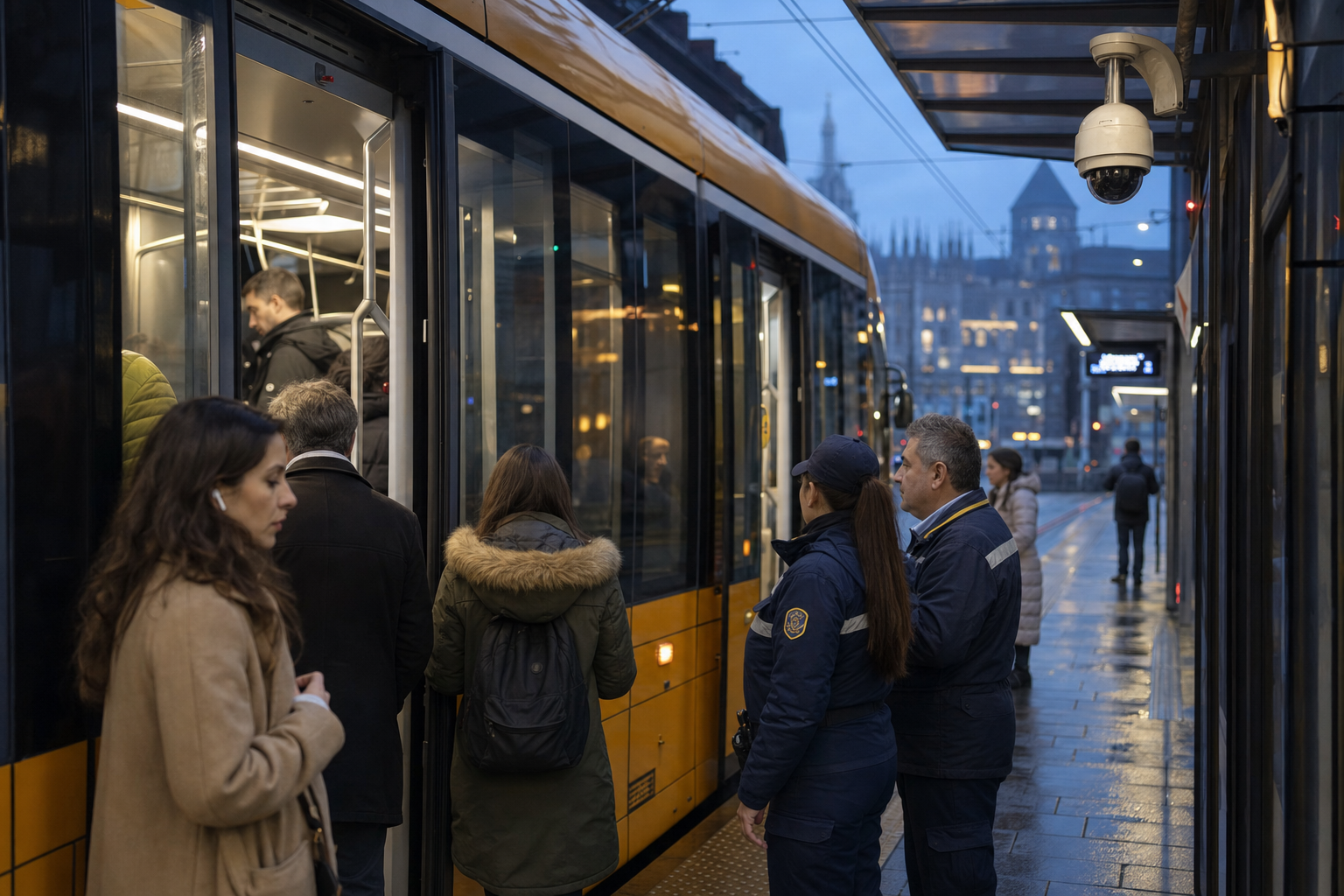
- Source
- NOS.nl
- MOZOM headline
- MOZOM analysis: suspension of tram drivers in Milan shows how quickly everyday supervision shifts from safety to informal power over passengers
- Original headline
- Milan tram drivers suspended for sharing camera images of female passengers
- Author
- Redactie NOS.nl
- Date
- 19 juni 2026 om 22:07
- Subject
- NOS reports that several tram drivers in Milan have been suspended for allegedly sharing camera images of female passengers via a group app, turning a local incident into a broader question about supervision, workplace culture and privacy in public transport.
Summary of the original report
NOS writes that the Milanese transport company has suspended several male tram drivers because they allegedly shared camera images of female passengers in a group app. In a direct sense, this is a disciplinary and possibly legal privacy case within public transport. But beneath that first layer lies a broader issue that is at play in many cities: CCTV is usually defended as protecting staff and travelers, while much less visible is what happens when employees or systems start treating access to those images as informal property. This shifts the topic from a single incident to the question of how strict supervision, internal culture and data protection in public infrastructure are really separated.
Striking in this message
It is striking that the headline immediately focuses on the suspension of drivers and the sharing of images. That makes the story concrete and personal, but also quickly steers the reading toward violation and shame. Less visible in that first formulation is that this is not only about individual behavior, but also about a systemic question: who gets to watch, under what control and with which practical barriers against abuse?
The broader framework
For international readers, it helps to briefly clarify that Milan has a large urban tram network where CCTV is normally part of the daily security infrastructure. That is precisely why the case is more relevant than a local gossip incident. She touches on a broader European tension surrounding public surveillance: citizens often accept cameras as protection, but at the same time expect access to remain strictly functional and controllable. As soon as images circulate informally, the meaning of security shifts to social vulnerability and institutional failure.
Possible message behind the news
A possible message behind this news is that the real unrest is not just in what some employees are alleged to have done, but in the realization of how quickly an everyday camera system can shift from protection to informal power. In plain language: people board a tram with the idea that cameras are there for safety, not to become part of an internal group chat. It is precisely that difference that makes these types of messages felt more widely than just the local details.
Neutral conclusion
The article thus shows that these Milan suspensions are not just an incident on public transport. They also provide a sharp reminder that trust in supervisory systems depends on whether institutions really functionally limit, control and sanction access.