
MOZOM-analyse
MOZOM analysis: petrified neighborhoods make heat a social problem
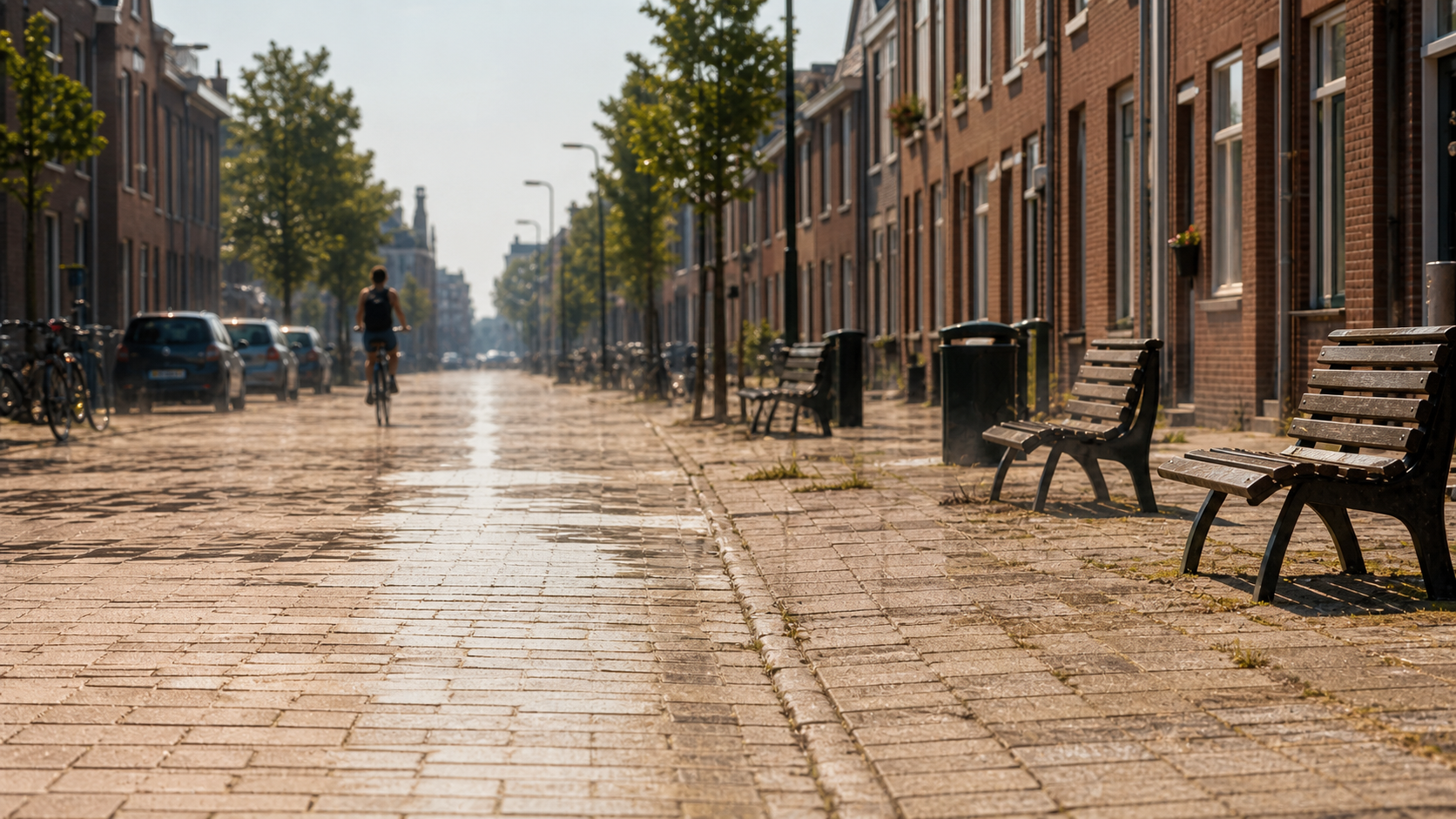
- Source
- NOS.nl
- MOZOM headline
- MOZOM analysis: petrified neighborhoods make heat a social problem
- Original headline
- Petrified neighborhoods are becoming increasingly hot, with almost a million Dutch people suffering
- Author
- Redactie NOS
- Date
- 16 juni 2026 om 08:00
- Subject
- Heat stress in urban neighborhoods and calls for more green policy.
Summary of the original report
NOS.nl reports that more than 800,000 Dutch people live in highly urbanized neighborhoods with too little greenery. This makes them extra vulnerable to heat. A broad coalition of social organizations wants national green standards and more support for municipalities. The message revolves around neighborhood design, climate adaptation and public health. The parties involved are residents, municipalities, social organizations and the central government. The central message is that heat plays out unevenly depending on the living environment.
Striking in this message
The words the victim and petrified neighborhoods give the message a social and slightly accusatory character. The emphasis is not on individual preparation, but on the organization of neighborhoods. This shifts heat from a private problem to administrative responsibility.
Less visible context
Less visible is how past choices have an impact: parking pressure, housing construction, maintenance costs and lack of space for trees. Greening sounds simple, but affects ownership, management, infrastructure and priorities. It is also relevant which residents have the least influence on their living environment.
Possible message behind the news
A possible message is that climate adaptation is not just about big plans, but about the street where people live. Those who have little greenery receive heat back more quickly. For the casual reader, the lesson is simple: shade and trees are not luxury, but protection. The political question is who pays for it and where the space comes from.
Neutral conclusion
The article is not just about warm neighborhoods, but about the question of whether the living environment becomes a form of protection or an additional risk.