
MOZOM-analyse
MOZOM analysis: return of Vietnamese man from South Sudan shows how migration policy is increasingly tested on the border between state power and administrative derailment
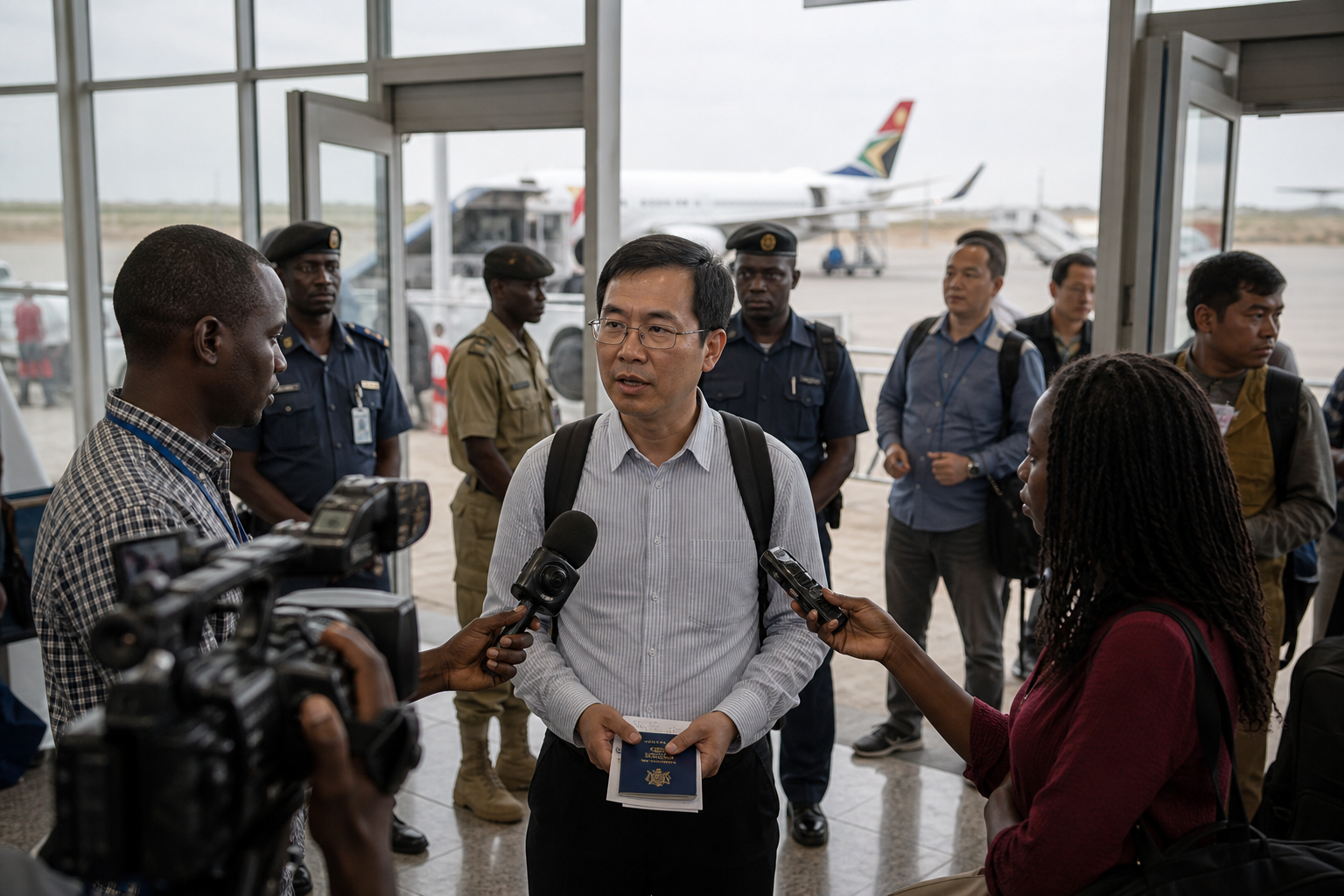
- Source
- AP News
- MOZOM headline
- MOZOM analysis: return of Vietnamese man from South Sudan shows how migration policy is increasingly tested on the border between state power and administrative derailment
- Original headline
- Vietnamese man deported from US to South Sudan is repatriated after months in detention
- Author
- AP News
- Date
- 19 juni 2026 om 17:33
- Subject
- AP News reports that a Vietnamese man deported from the United States to South Sudan has finally been repatriated after months of detention and uncertainty, putting a new twist on a controversial deportation process.
Summary of the original report
AP describes how a Vietnamese man who was previously deported from the United States to South Sudan was finally able to return after months in detention. This means that the case does not end as an ordinary return operation, but as an example of how fragile and controversial some deportation processes have become. In a direct sense, it concerns one man and one procedure. But beneath that individual story lies a broader administrative reality: when a state deports someone to a country with which the connection is indirectly, temporarily or legally vulnerable, migration enforcement shifts from an administrative measure to a test of international coordination and legal protection. This makes the issue bigger than just immigration. She also touches on the question of how much uncertainty a government is allowed to create when the formal goal is removal, but the actual outcome turns out to be months of space, detention and diplomatic improvisation.
Striking in this message
It is striking that the headline focuses strongly on repatriation after months in detention. This immediately gives the reader a sense of long-term uncertainty and places the deportation not as a completed government action, but as a process that went off the rails and had to be corrected. In this way, attention shifts from pure enforcement to the administrative aftermath. The news is then not only about departure or return, but about the question of what happens when migration policy formally continues but practically gets stuck in an intermediate zone of responsibility.
Less visible context
For international readers, it is useful to clarify that South Sudan is a young and vulnerable state where security, detention conditions and administrative capacity have been under pressure for some time. That is precisely why a case like this takes on extra weight: not only because someone has been moved, but because the chosen destination itself raises questions about protection, shelter and legal position. What remains less visible is that deportations to third countries are often presented as strict policy, while in implementation they quickly become dependent on opaque agreements, emergency solutions and the willingness of multiple governments to take over responsibility.
Possible message behind the news
A possible message behind this news is that governments are increasingly keen to demonstrate that they can deport, but that such demonstrations of control become vulnerable as soon as the practice turns out to be more complicated than the political signal. In plain language: sending someone away is different from demonstrating that the system subsequently works in an orderly, safe and legally sustainable manner. Between the lines, the image emerges that not only the migrant, but also the state itself can end up in an intermediate zone of improvisation.
Neutral conclusion
The article thus shows that the repatriation of this Vietnamese man is more than the conclusion of one migration case. It is also a signal that a tough deportation policy is only really convincing if it is not only legally possible, but also remains humane, diplomatic and practical.