
MOZOM-analyse
MOZOM analysis: heavy World Cup suspension for Zwane shows how one violation can immediately change the story of an entire tournament
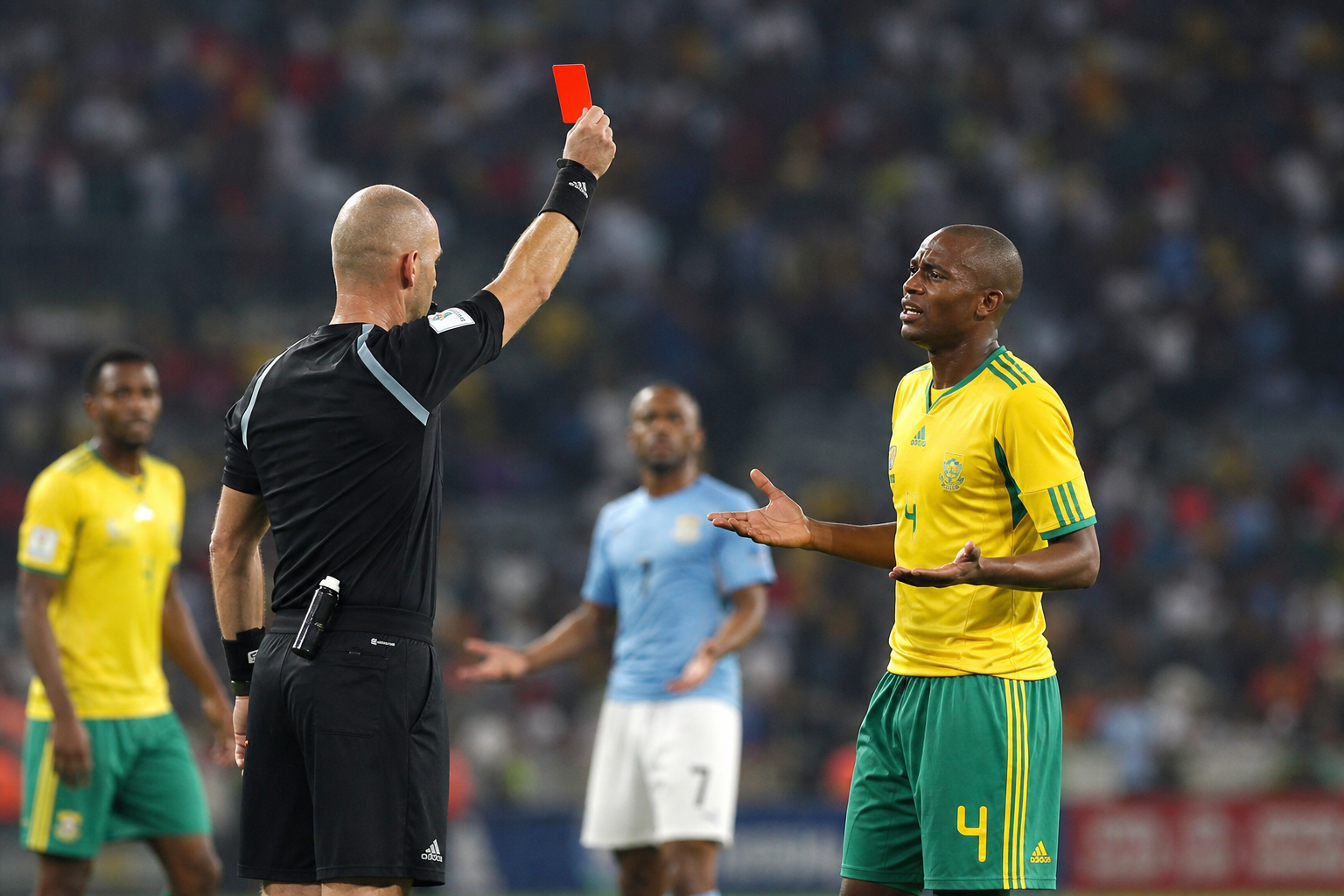
- Source
- RTL Nieuws
- MOZOM headline
- MOZOM analysis: heavy World Cup suspension for Zwane shows how one violation can immediately change the story of an entire tournament
- Original headline
- South African Zwane suspended 3 matches after being sent off in the opening World Cup match
- Author
- Redactie RTL Nieuws
- Date
- 19 juni 2026 om 14:07
- Subject
- RTL Nieuws reports that South African midfielder Themba Zwane will receive a three-match suspension after being sent off in the opening game of the World Cup. Behind that sports news lies the question of how discipline, symbolism and tournament pressure together make one incident bigger than just an error on the field.
Summary of the original report
RTL Nieuws reports that South African midfielder Themba Zwane has been suspended for three matches by FIFA after being sent off in the opening game of the World Cup. At first glance, that seems like a classic sports report about fouls and penalties. But especially at a world tournament, such a decision is bigger than the moment itself. An opening match immediately creates the first public impression of a team: is it combative, undisciplined, unlucky or simply lacking? As soon as a heavy suspension is added, the story shifts from match analysis to character judgment and tournament damage. Not only does a team miss an important player, it also loses some of its tactical stability and moral space. The significance of the penalty is therefore not only in the number of matches, but in the fact that the sanction turns an individual mistake into a national sporting story about control, frustration and survival.
Striking in this message
The headline is compact and hard: name, penalty and reason are directly next to each other. That makes the news clear, but it also immediately draws the reader to guilt and consequences. There is little room left for doubt about context, match flow or provocation; the disciplinary fact dominates everything. This has a strong effect in tournament sports, because a red card quickly symbolizes loss of control. In this way, the suspension becomes not only a regulatory outcome, but also a frame within which the player and his team are provisionally assessed.
Background that often remains out of view
For international readers, it is useful to clarify that three matches at a World Cup is a severe sanction, precisely because the tournament is short and the group stage offers little room for recovery. What is less visible is that discipline at major tournaments always has communicative value: FIFA not only punishes an incident, but at the same time shows millions of viewers which standard must be monitored. Underlying this type of news is therefore the tension between sporting justice and tournament story. What is a disciplinary decision for officials immediately becomes a broader statement for the public and media about temperament, professionalism and the credibility of a team on the highest stage.
Possible message behind the news
A possible message behind this news is that major sporting tournaments are unforgiving to players and teams who lose their control in a single moment. In plain language: at a World Cup a mistake is rarely kept small, because the punishment has a direct impact on the line-up, reputation and chances of survival. Between the lines, this creates the impression that the tournament is not only decided by quality, but also by who remains the most disciplined under maximum pressure.
Neutral conclusion
This article shows that Zwane's suspension is more than a sports law detail. It is also an example of how one foul at a World Cup can instantly shift the perspective on a player, a team and their subsequent tournament story.