
MOZOM-analyse
MOZOM compares: Japan-India cooperation 2026, defense pact or China signal?
- Source
- AP, Ministry of External Affairs India en Japan MOFA
- MOZOM headline
- MOZOM compares: Japan-India cooperation 2026, defense pact or China signal?
- Original headline
- India and Japan deepen defense and economic cooperation in the Indo-Pacific
- Author
- Paul Giezen
- Date
- 2 juli 2026 om 18:45
- Subject
- India and Japan presented closer cooperation on defense, maritime security, economic security, AI and semiconductors on July 2, 2026, with China as a clear but partly unspoken backdrop.
Summary of the original report
AP reports that Indian Prime Minister Narendra Modi and Japanese Prime Minister Sanae Takaichi presented closer defense and economic cooperation on July 2, 2026. According to reports, this includes maritime security, exchanges regarding military technology, a Japanese naval communications antenna, supply chains, AI and semiconductors. China responded critically to the references to the Indo-Pacific and warned against bloc formation. Official Indian and Japanese information places the same development more neutrally in existing bilateral relations, economic cooperation and Japan's concept of a Free and Open Indo-Pacific.
Own source research
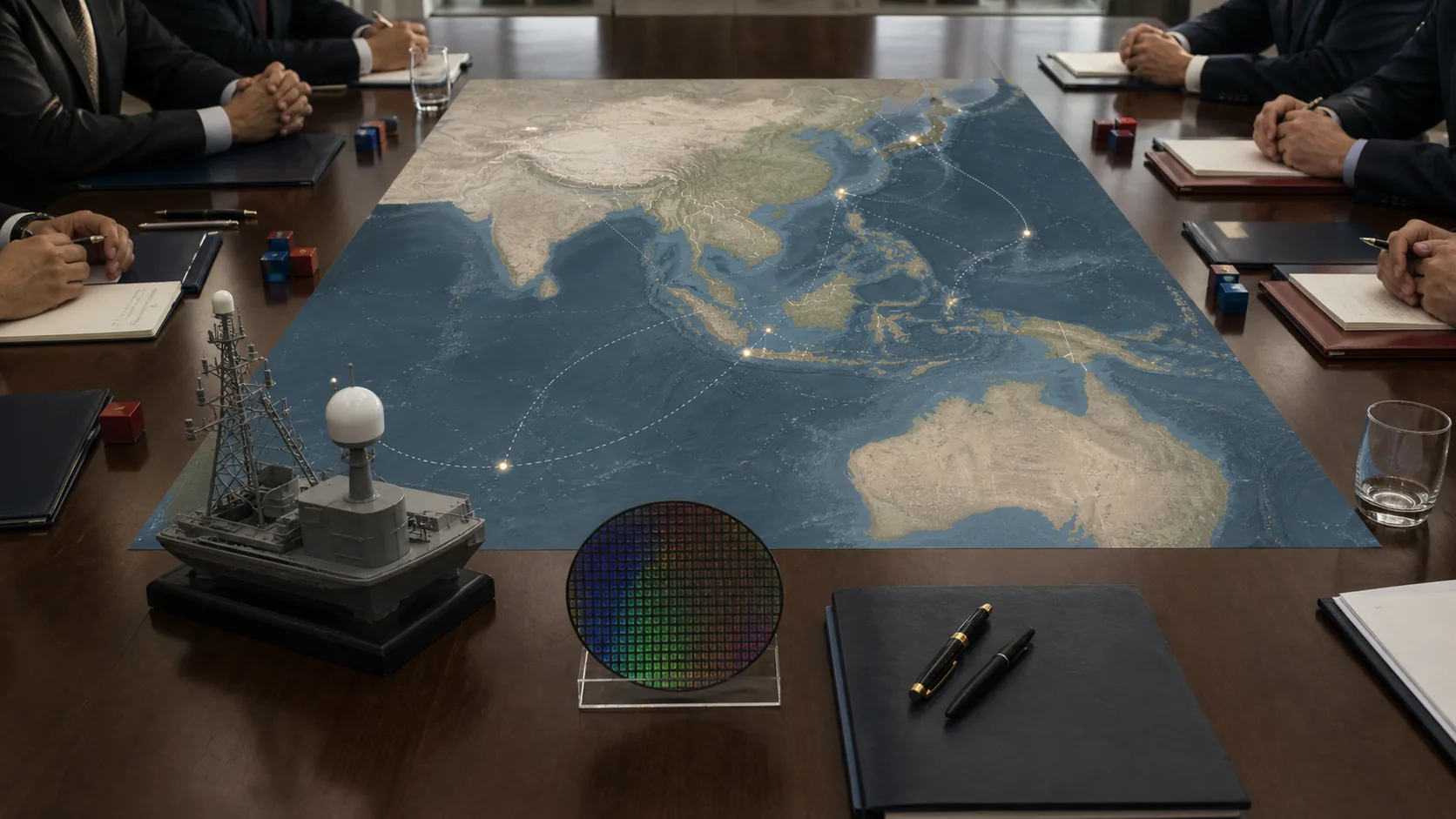
MOZOM has placed three layers next to each other. First layer: the AP layer, in which the new agreements are linked to China, regional tension and defense cooperation. Second layer: the official India-Japan layer, which emphasizes bilateral relationship, investment, technology and stability. Third layer: Japan MOFA's Indo-Pacific layer, which focuses on freedom of navigation, rule of law and connectivity. The own MOZOM layer: what is striking is not one individual agreement, but the bundling. When AI, chips, shipping, defense and diplomacy fall into one framework, economic modernization simultaneously becomes a security strategy.
Striking in this message
The soft language surrounding hard interests is striking. Words like cooperation, stability and openness sound neutral. But in practice they are about routes, access, standards, military communications, technological dependence and the question of who determines the rules in Asia.
Less visible context
What is less visible is that India and Japan do not have the same position. Japan is a close ally of the United States. India tries to maintain strategic autonomy and works with multiple power blocs at the same time. That makes the cooperation important, but also sensitive: it must deter China without pushing India completely into an American-Japanese camp.
Possible message behind the news
One possible message is that the new power struggle in Asia is not only with ships and bases, but also with chips, cables, AI standards and trade routes.
Neutral conclusion
The neutral conclusion: the Japan-India cooperation of July 2, 2026 is actually a deepening of bilateral ties. But as a news layer, it shows how economy, technology and defense in the Indo-Pacific are increasingly becoming one file. The question is not only what Japan and India agree to together, but who will gain more weight in the regional order as a result.