Rubriek

Politics

Politics: MOZOM analyses with source attribution, context, interpretation and framing.

Politics

73 articles

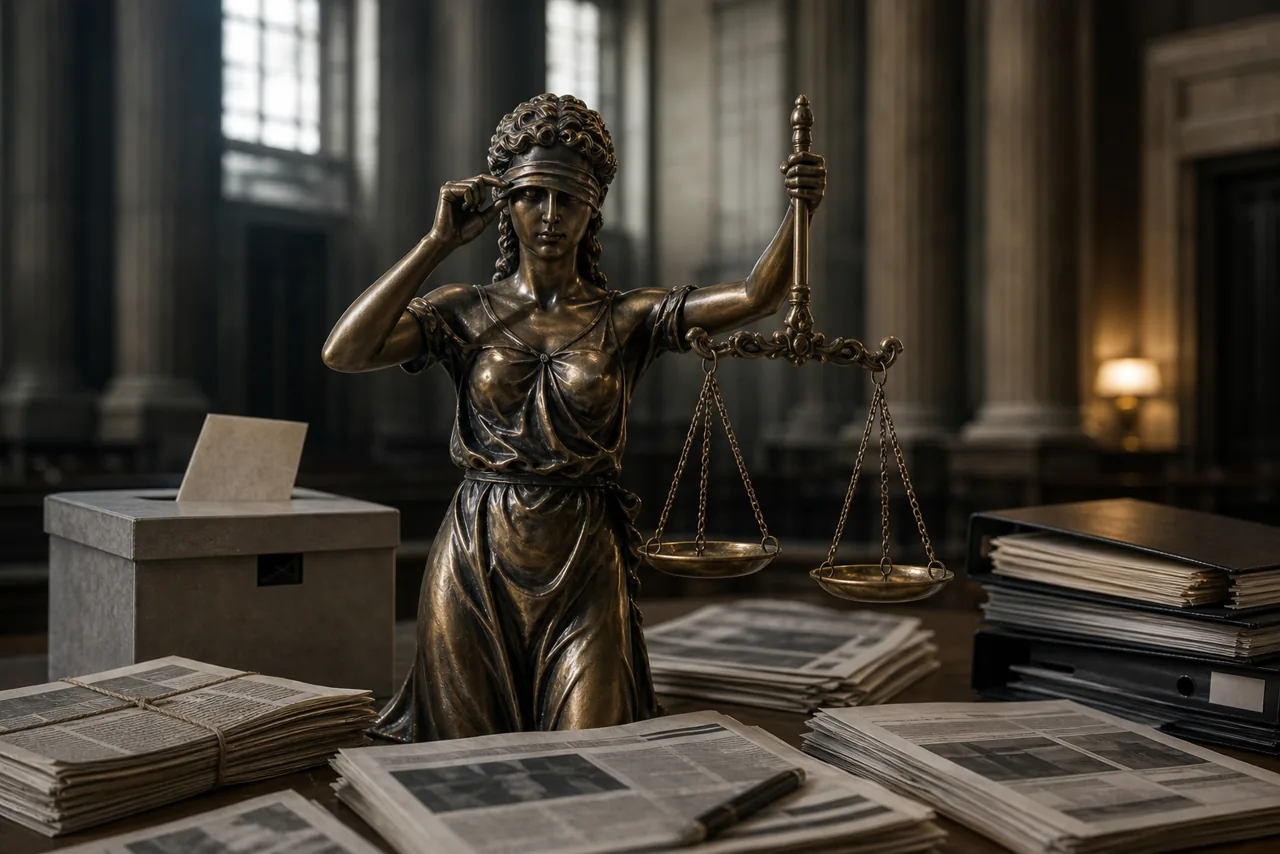
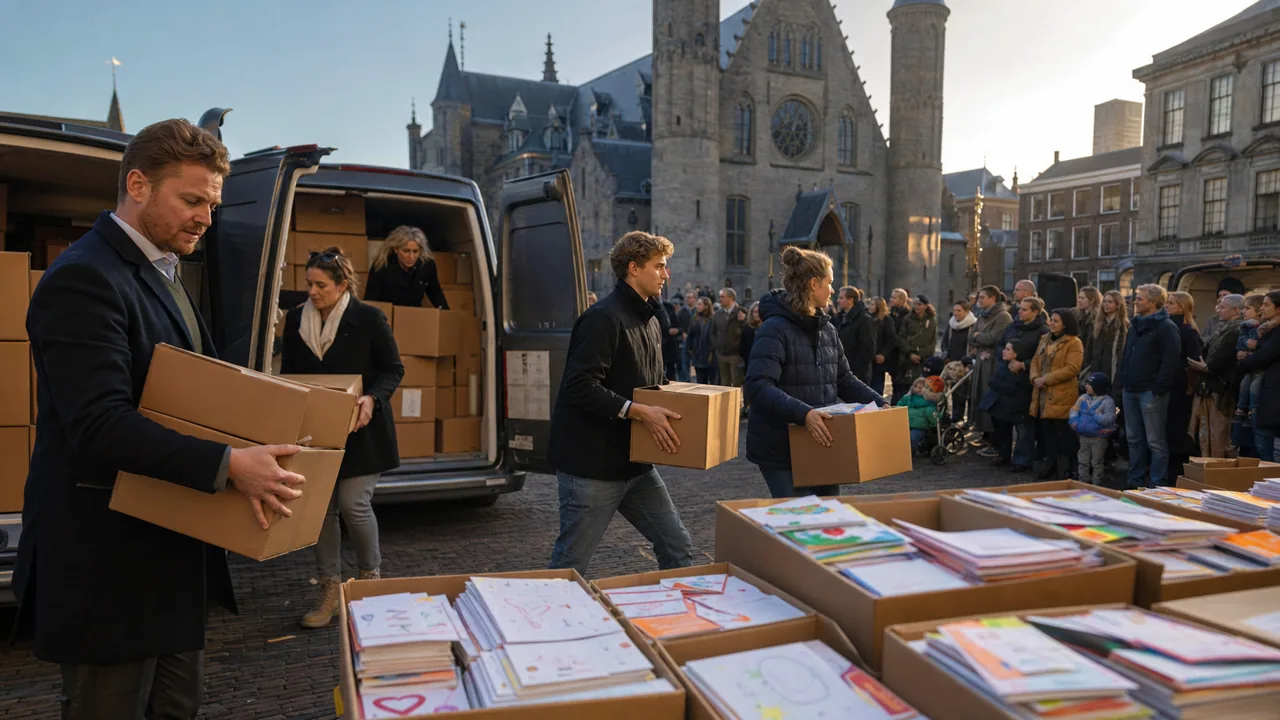
Textless political caricature of anonymous executives and builders around the building plans of the Binnenhof, with public euro banknotes disappearing symbolically into briefcases and coat pockets.
Tweede Kamer, Algemene Rekenkamer, Rijksvastgoedbedrijf, Rijksoverheid, CDA, VolkerRail en Openbaar Ministerie 2026-09-23

Nearly €2.8 billion for the Binnenhof: Is there a conflict of interest, or just the appearance of one?

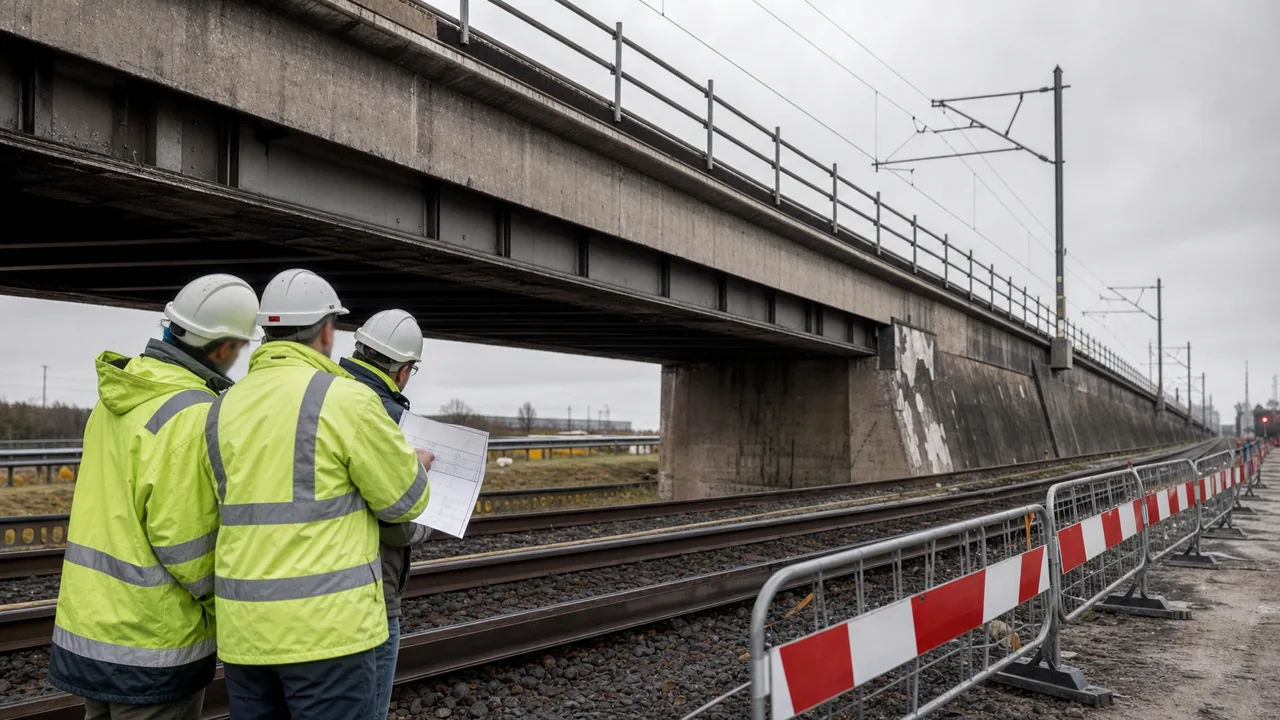
The renovation of the Binnenhof began with an estimate of €475 million and has now reached approximately €2.79 billion. The contracts were awarded one-on-one for security reasons, and part of the work is billed at actual cost. In addition, there are political network connections between some of the companies involved. This justifies strict oversight, but it is not yet proof of corruption or influence.

Politics Read analysis
Textless editorial cartoon: Politicians show concerned citizens a gigantic war shadow while simultaneously pushing files, money, and weapons through a door; a real drone in the background serves as a reminder of real security risks.
Tweede Kamer, NAVO, AIVD/MIVD, Estse inlichtingendienst, Poolse regering, Duitse regering en openbaar ministerie, Europese Raad, Europese Commissie en SIPRI 18 september 2026 om 12:00

Does an enemy image make it easier to push through billions in spending and new rules?

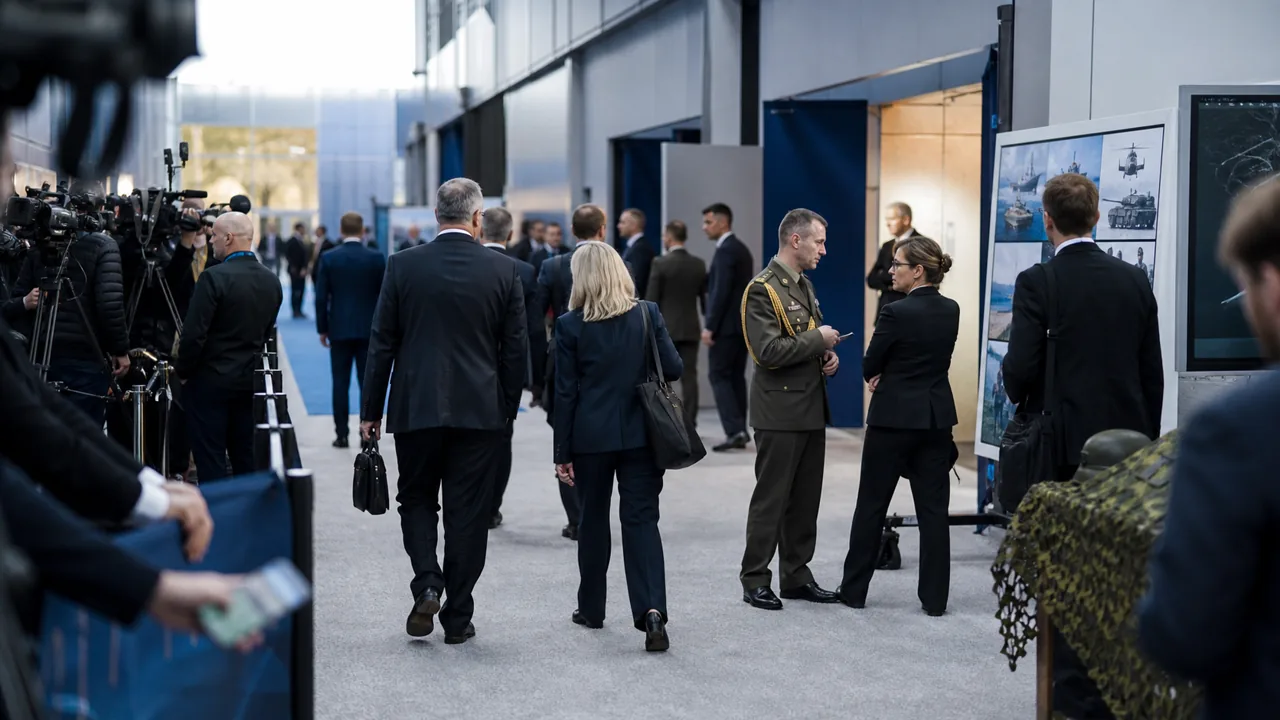
A warning of war can encourage citizens to prepare. Such a warning can also increase political support for government spending of billions of euros and for new powers. On September 17, 2026, during a debate in the Dutch House of Representatives, Prime Minister Rob Jetten stated that, in his opinion, Russia would not stop at Ukraine. Publicly available information suggests: sabotage and provocation, a potential military capability in a few years, or a concrete plan to invade a NATO country. MOZOM analyzes statements, incidents, and decisions, placing them side-by-side.

Politics Read analysis

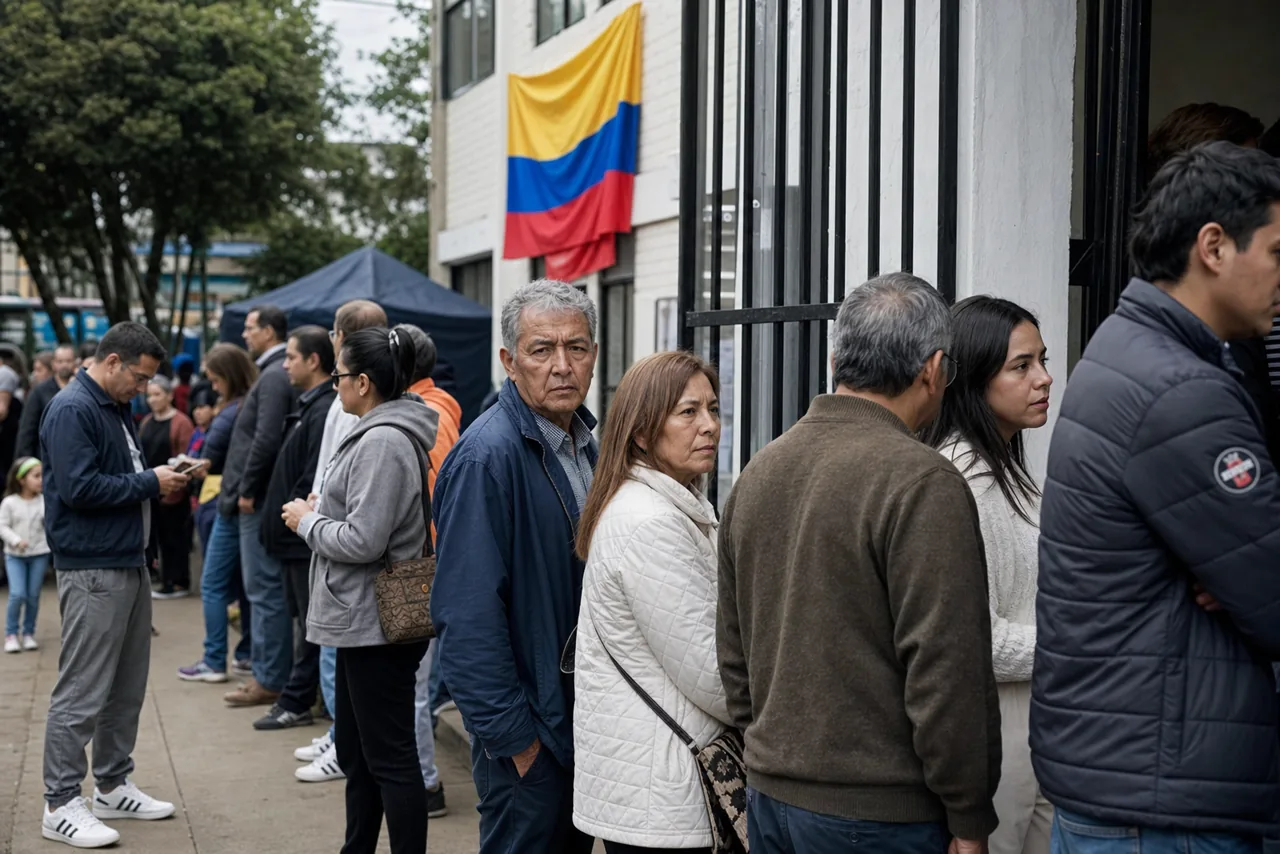
Editorial caricature of voters at the Diet of Saxony-Anhalt, a results board with 44 percent and established politicians behind a brick Brandmauer.
Landeswahlleiter Sachsen-Anhalt, Wahlrecht.de, ARD/Infratest dimap, Tagesschau, DW, AP, Reuters, The Guardian, AFP, El País, Al Jazeera en Japan Times 7 september 2026 om 12:00

The voter has spoken: AfD wins Saxony-Anhalt, the Brandmauer remains standing

With around 44 percent of the votes, the AfD has achieved an unprecedentedly clear victory in Saxony-Anhalt. The result gives the party a strong political mandate, but no automatic right to government power. As long as other parties rule out any collaboration, the Brandmauer will remain standing. The central question is therefore not only who won, but also how the media and established parties deal with a result that they politically reject.

Politics Read analysis

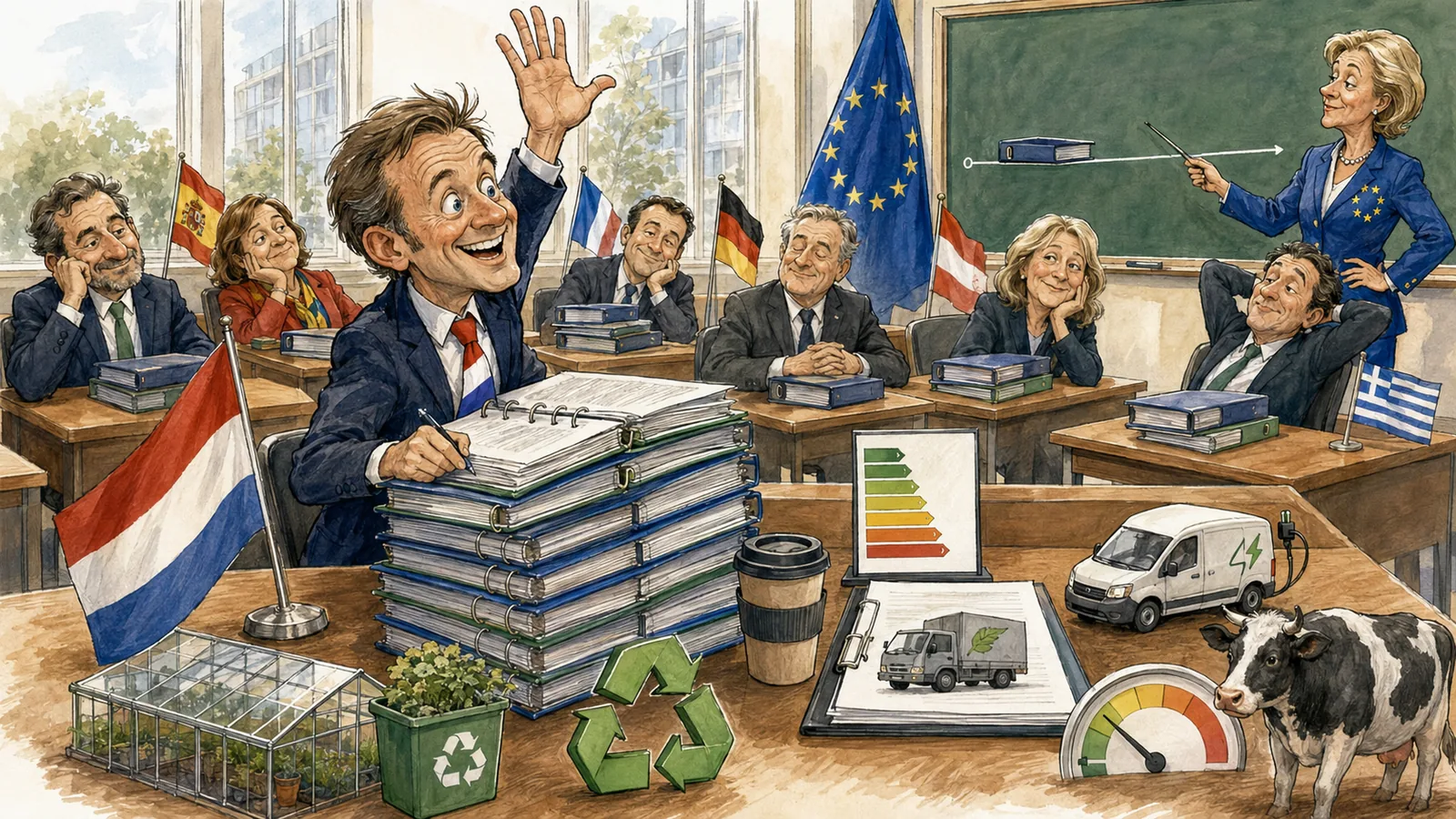
Caricature of a European class in which the Netherlands enthusiastically piles up additional climate and environmental regulations at the front, with symbols for agriculture, transport, energy and recycling.
Europese Commissie, Eurostat, OESO, CBS, Rijksoverheid, Tweede Kamer, Belastingdienst, RVO en PBL 4 september 2026 om 17:00

Netherlands, the best child in the class?

The Netherlands implements many climate and environmental policies agreed in Brussels. But The Hague does not always stick to the European minimum. Companies also have to deal with national CO2 taxes, mobility reports, an energy saving obligation, a ban on the use of energy-inefficient offices and local zero-emission zones. In addition, accountable standards for ammonia and greenhouse gases are being prepared for farmers. Is the Netherlands really the best child in the European class, or is the government using European goals as a reason for its own accumulation of rules?

Politics Read analysis

Realistic editorial illustration of a budget scale with Dutch household costs on one side and international support packages and euro coins on the other side
Kiesraad, Nederlandse Grondwet, Miljoenennota, Financieel Jaarverslag van het Rijk, Algemene Rekenkamer en parlementaire stukken 17 augustus 2026

Deceived voters? How the Ukraine addendum led to a multibillion-euro bill

The Netherlands does not have an unlimited treasury. Anyone who allocates billions to one purpose cannot simultaneously use those same billions for tax relief, housing, healthcare or debt reduction. In 2025, the government spent €8.37 billion on international support for Ukraine and arrangements for Ukrainian displaced persons in the Netherlands, according to the Annual Financial Report. This was not an automatic obligation under the association agreement that the Netherlands voted on in 2016, but a later political choice. Precisely for this reason, the budget question deserves a more honest formulation: not only 'how much does support cost?', but also 'which domestic priority has been given less space as a result?'

Politics Read analysis
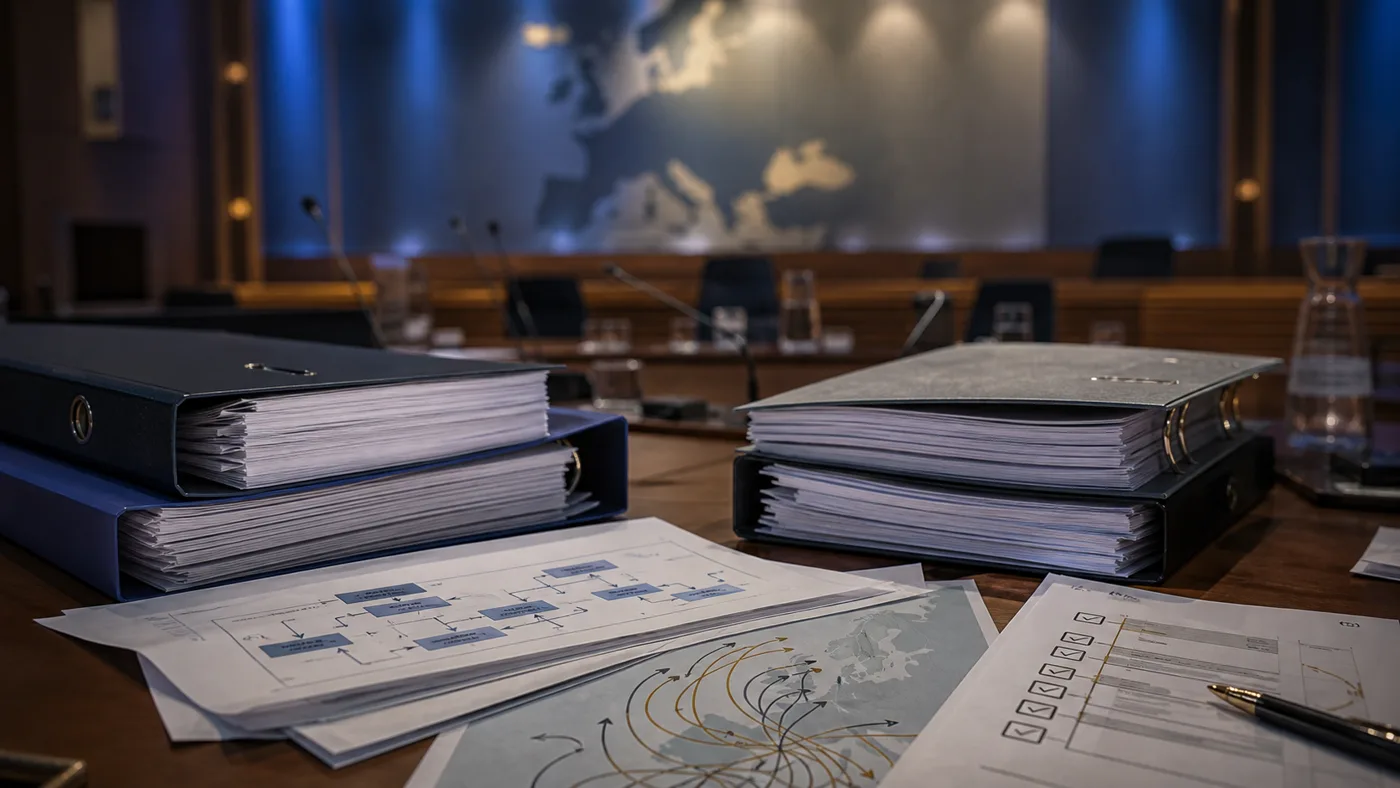
Realistic editorial photo of residents voting separated by glass from a council chamber with an empty mayor's chair and chain of office
VNG, BMC Onderzoek, Rijksoverheid, Gemeentewet, Kiesraad en CBS 11 augustus 2026 om 09:39

The voter votes, the Crown appoints: 71 percent of the mayors come from three governing parties

The Netherlands elected new municipal councils on March 18, 2026, but no new mayors. Residents vote for council members; a confidential committee from the council assesses applicants; the council recommends candidates; the Minister of the Interior nominates and the Crown appoints. The latest national party division of the Association of Dutch Municipalities, measured in January 2025, reveals a second tension. VVD, CDA and PvdA together provided 71 percent of the mayors, while the political landscape is now much broader and more fluid. Is that undemocratic, or is it the price of a mayor who must stand above the parties?

Politics Read analysis
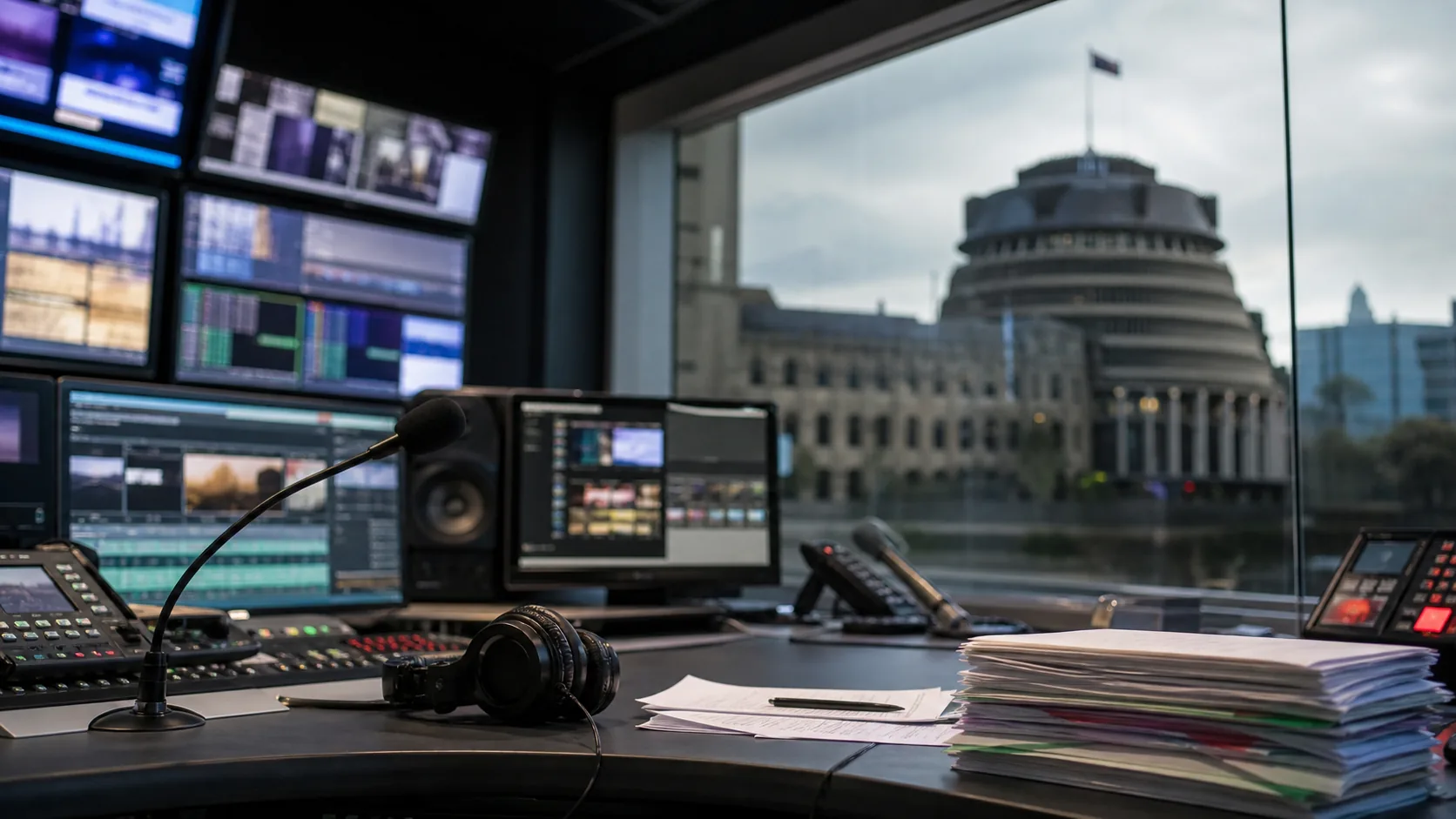
Editorial caricature of George Orwell next to a modern citizen monitored by cameras, smartphone, news feeds and digital payments, while the years 1984 and 2026 are contrasted
George Orwell, de Orwell Foundation, Europees recht, ECB, FTC, JRC, Pew Research Center en onafhankelijk media- en zoekonderzoek 9 augustus 2026 om 09:00

Are we living in 2026 or 1984?

George Orwell was the pseudonym of Eric Arthur Blair (1903-1950), an English novelist, essayist, critic and journalist. His two best-known books are Animal Farm from 1945 and Nineteen Eighty-Four, usually written as 1984, from 1949. Orwell was a democratic socialist and himself wrote that his serious work since 1936 had been against totalitarianism and in favor of democratic socialism. Simply calling him a forecaster goes too far: he built his dystopia from propaganda, dictatorship, war and mass communication that he had experienced in his own time. Yet he can be called a visionary in the more limited sense that he saw clearly how technology, language and information together can strengthen power.

Society Read analysis
Realistic editorial AI image of an ancient desert city with a column of fire and a smoky sky as a symbolic reference to Sodom and Gomorrah.
Statenvertaling, Etymologisch Woordenboek, EUDA, gemeenten Amsterdam, Parijs, Brussel, Londen, Dublin, Berlijn, Barcelona, Zweedse politie, Belgische politie en Franse politie 3 augustus 2026 om 06:59

Freedom Without Order: Why Sodom and Gomorrah Is Returning as a Frame for European Cities

Sodom and Gomorrah is a heavy phrase. Too heavy to paste carelessly onto a modern city. But that is exactly why it is interesting that this old imagery keeps returning when people look at European city centres and see the same pattern: wealth beside poverty, freedom beside nuisance, nightlife beside insecurity, tolerance beside failing enforcement.

Society Read analysis
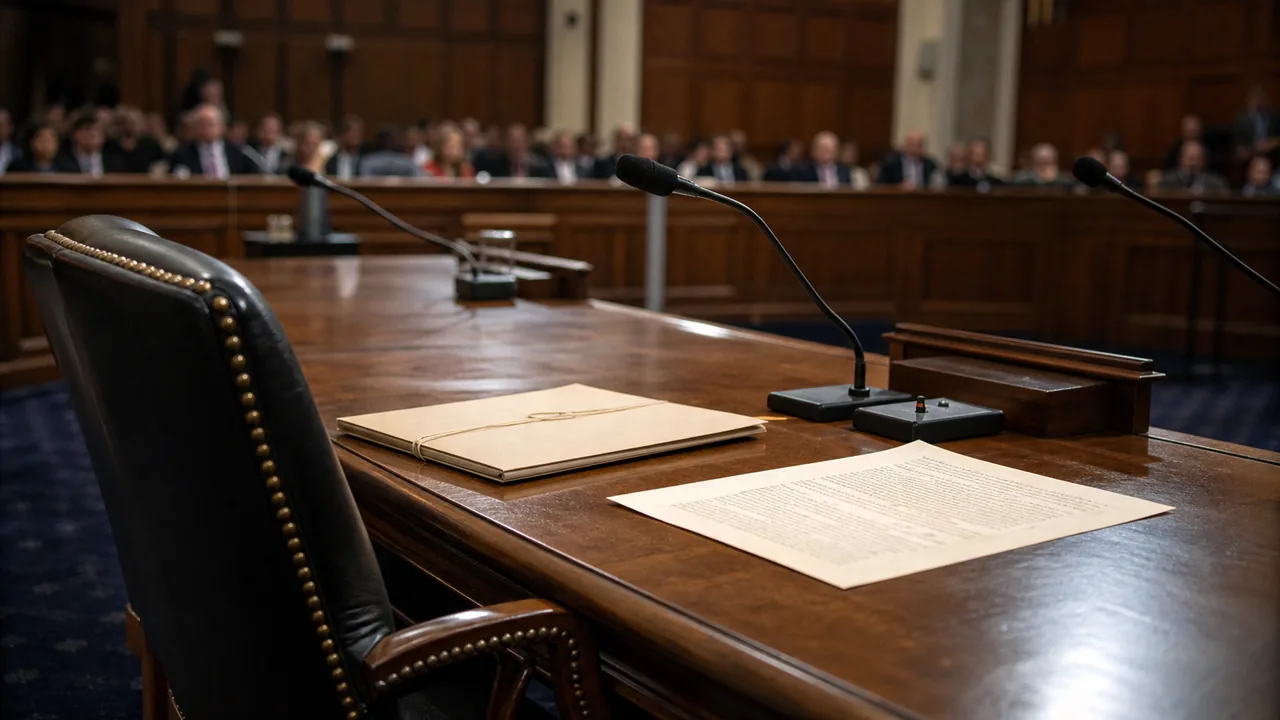
Illustrative editorial AI photo of an empty witness chair with microphones and documents in a U.S. hearing room, used for an article about Fauci, a pardon and the Fifth Amendment.
HSGAC, DOJ, ODNI, AP, The Guardian, STAT, CNN, NineForNews, De Andere Krant en Tscheldt 31 juli 2026 om 06:22

After a Pardon, Fauci Stayed Silent More Than 100 Times: Why Did He Need the Fifth?

Anthony Fauci received a pardon. Yet he stayed silent. At a Senate hearing on July 29, 2026, the former U.S. health adviser invoked the Fifth Amendment more than one hundred times. That does not prove guilt. But it sharpens the legal question: if old federal exposure was broadly forgiven, what criminal risk was still left?

Politics Read analysis
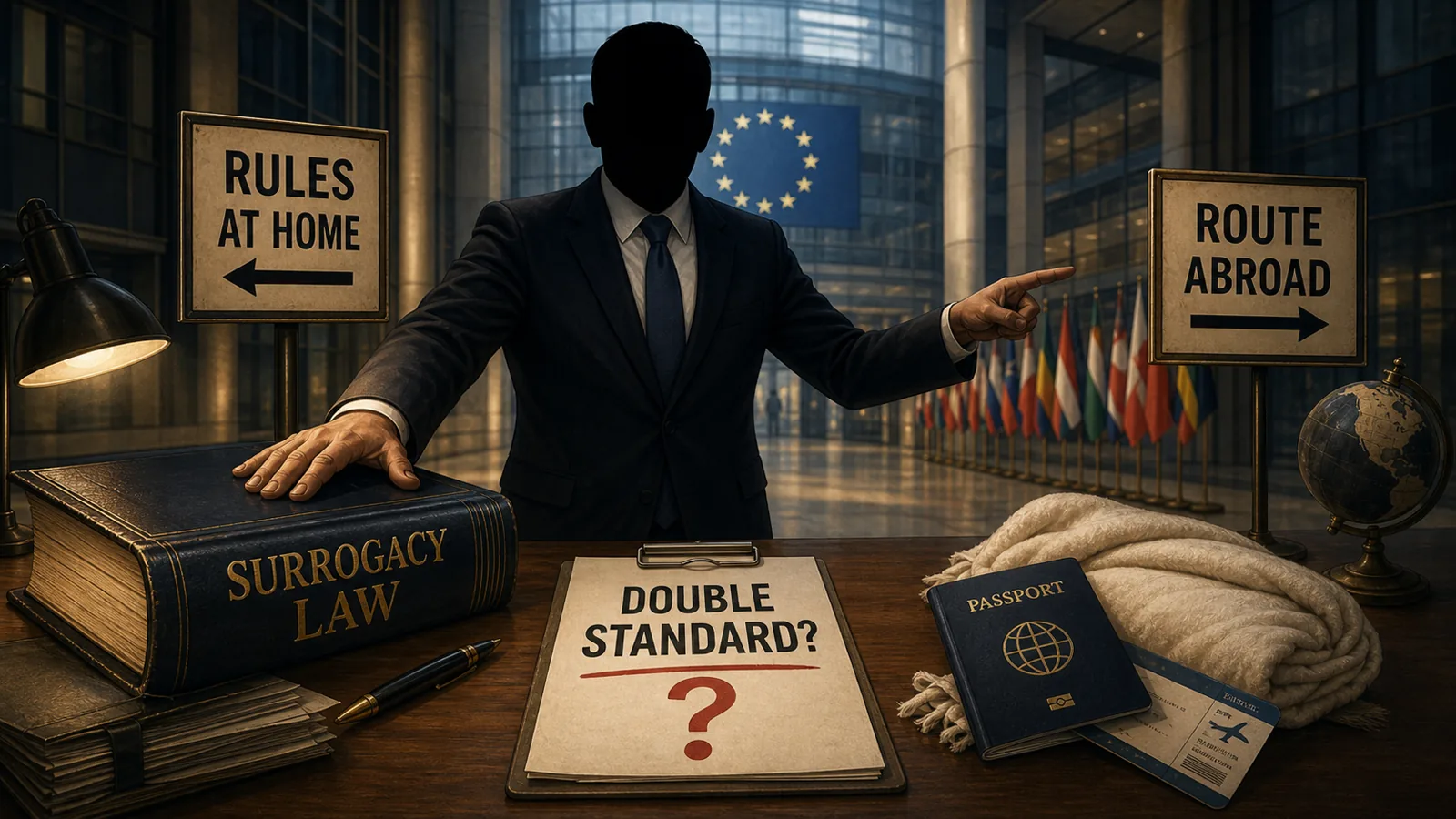
Editorial caricature of a politician without a recognizable face between a law book on surrogacy, a rules board at home and a route abroad board, as an image of the discussion about double standards surrounding surrogacy.
NOS, Tagesschau, BR, ZEIT, Duitse wetgeving, Duitse grondwet en culturele verwijzing 23 juli 2026 om 22:55

Do as I say, not as I do? Spahn, surrogacy and the CDU rule for ordinary citizens

The Jens Spahn affair is not just about a private decision by a politician. It touches on a much larger question: can a politician defend a rule that is strict for ordinary citizens in his own country, while he himself makes possible, via a foreign route, exactly what is politically and legally rejected within Germany? Legally, this is not automatically punishable. Politically it is explosive.

Politics Read analysis
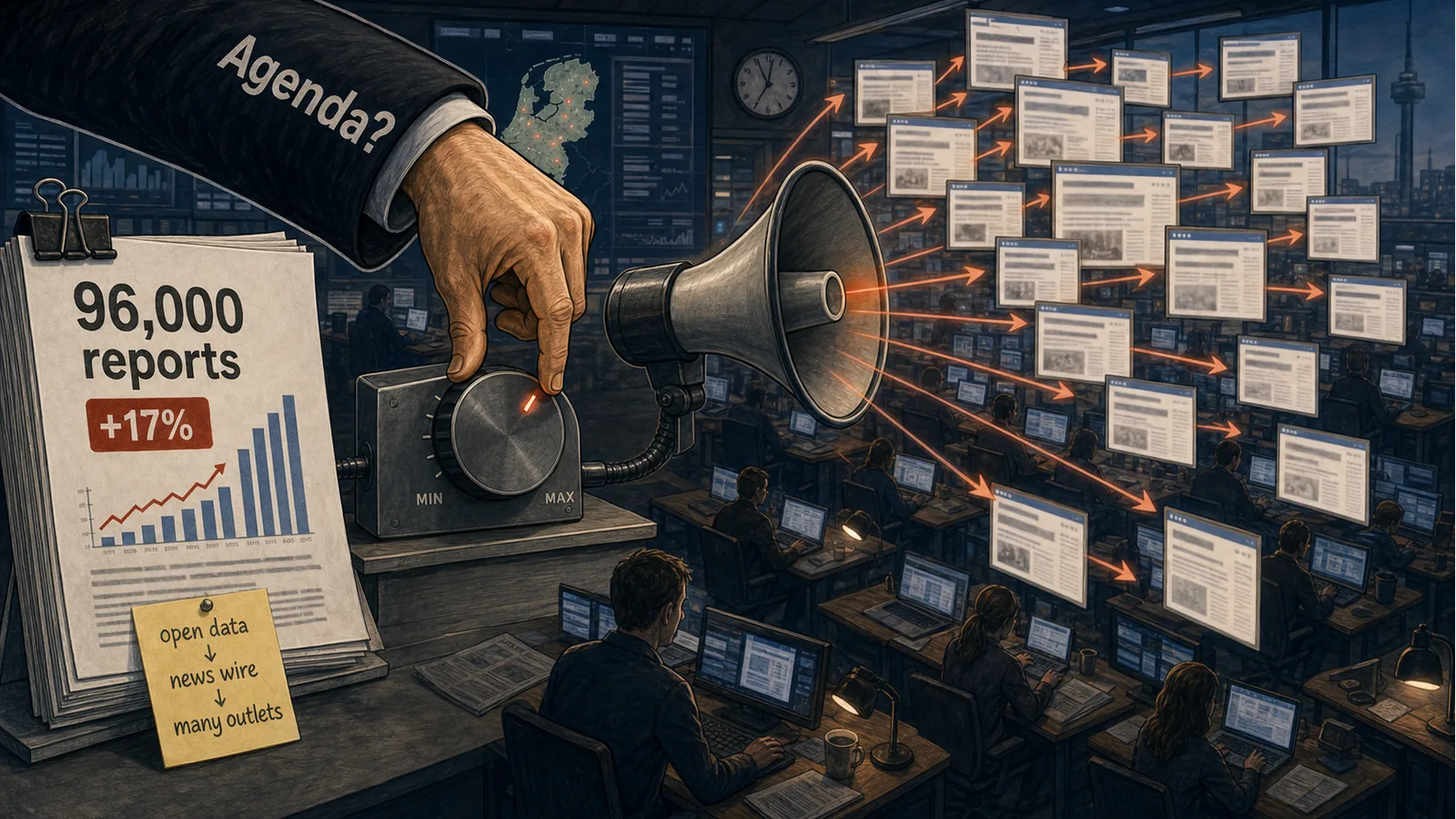
Editorial caricature of an anonymous hand that amplifies a police figure via a news megaphone to many editors, as an image of the joint media wave surrounding a data report.
Politie-open-data, data.overheid.nl, ANP, RTL Nieuws, NU.nl, L1, Het Parool, De Limburger, Binnenlands Bestuur, Hart van Nederland, Reformatorisch Dagblad, Omroep Flevoland, RTV Utrecht, RTV Midden Holland, De Nieuwsbode, Gemeente.nu, FOK, GeenStijl, regionale doorplaatsingen en aggregators 17 juli 2026 om 16:42

One figure, 33 outlets: how a police data point became a media wave

The subject is confused or misunderstood behavior, but the real MOZOM question here is in the distribution. Within a short time, the same core report appeared on national news sites, regional titles, local referrals, trade media and aggregators: more than 96,000 police reports in six months, 17 percent more than last year. That's not just an isolated news item. It is a visible news cluster. The question is therefore not only what the police counted, but especially how such a figure is presented almost everywhere at the same time.

Domestic Read analysis
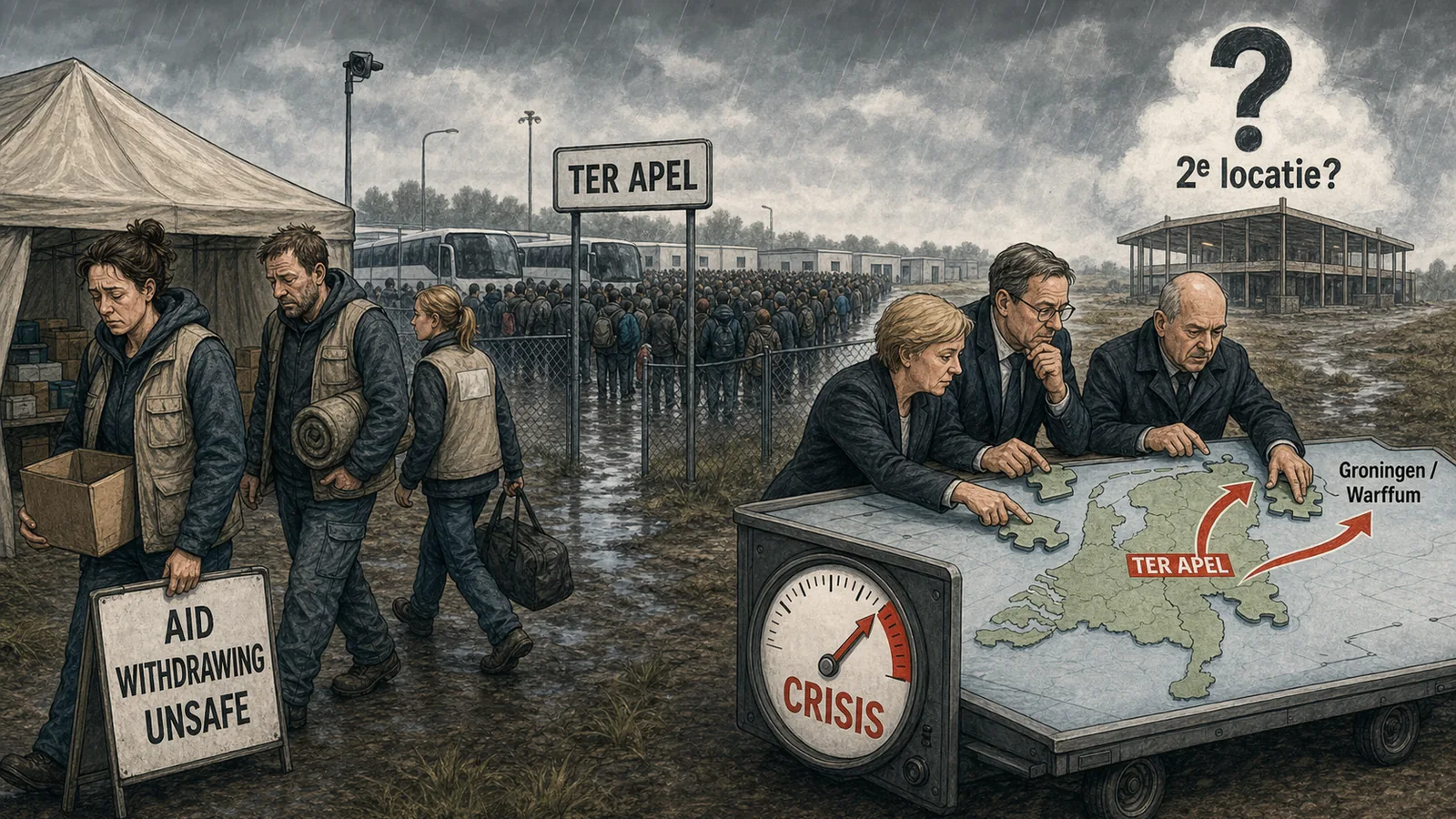
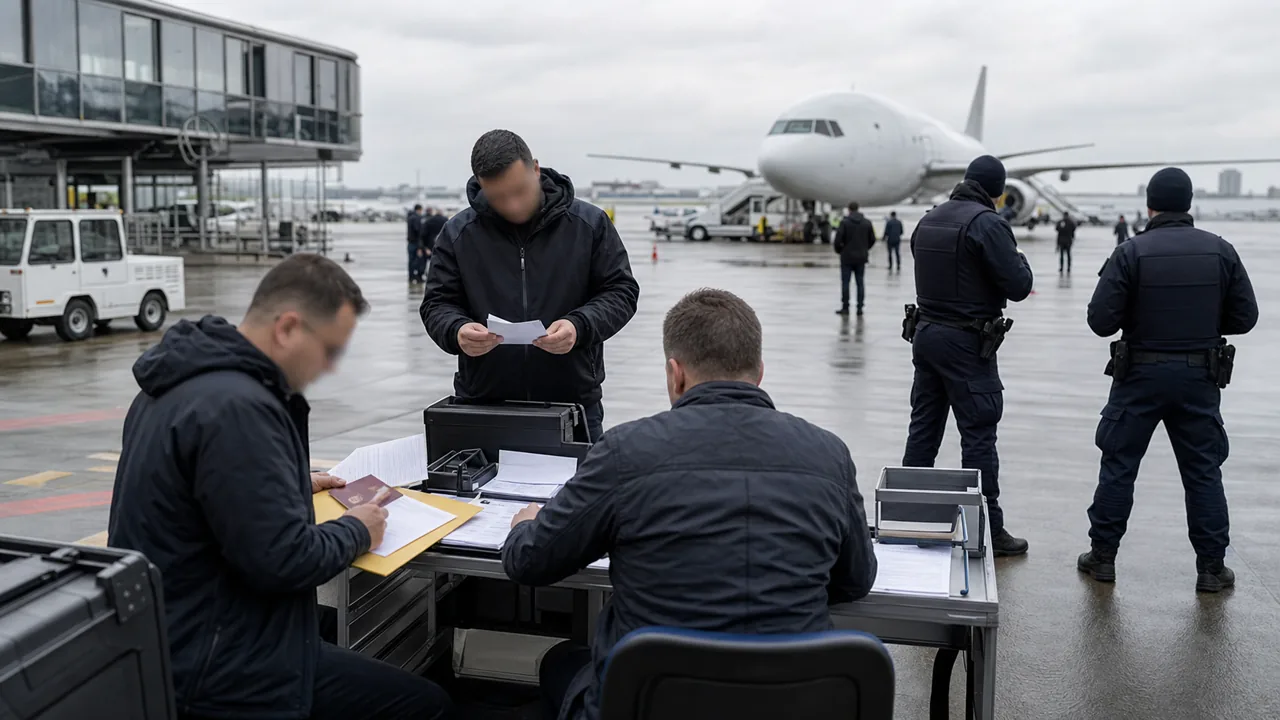
Editorial caricature by Ter Apel with care workers leaving, a crisis meter and administrators pointing to Groningen and Warffum on a map as an image of whether crisis pressure leads to a second reception location.
NU.nl, Rode Kruis, Rijksoverheid, COA, VluchtelingenWerk, Gemeente Groningen en Gemeente Het Hogeland 16 juli 2026 om 06:28

Ter Apel as a means of pressure: administrative failure or crisis that makes a second location acceptable?

When aid organizations withdraw from Ter Apel because it is no longer safe, reception policy suddenly becomes a public crisis. Not only for asylum seekers, but also for local residents, care providers, police, municipalities and the cabinet. The sharp question is not only why things go wrong again. The question is also whether such a crisis, whether intentionally or unintentionally, can be used politically to make additional reception locations or a second registration structure acceptable.

Domestic Read analysis
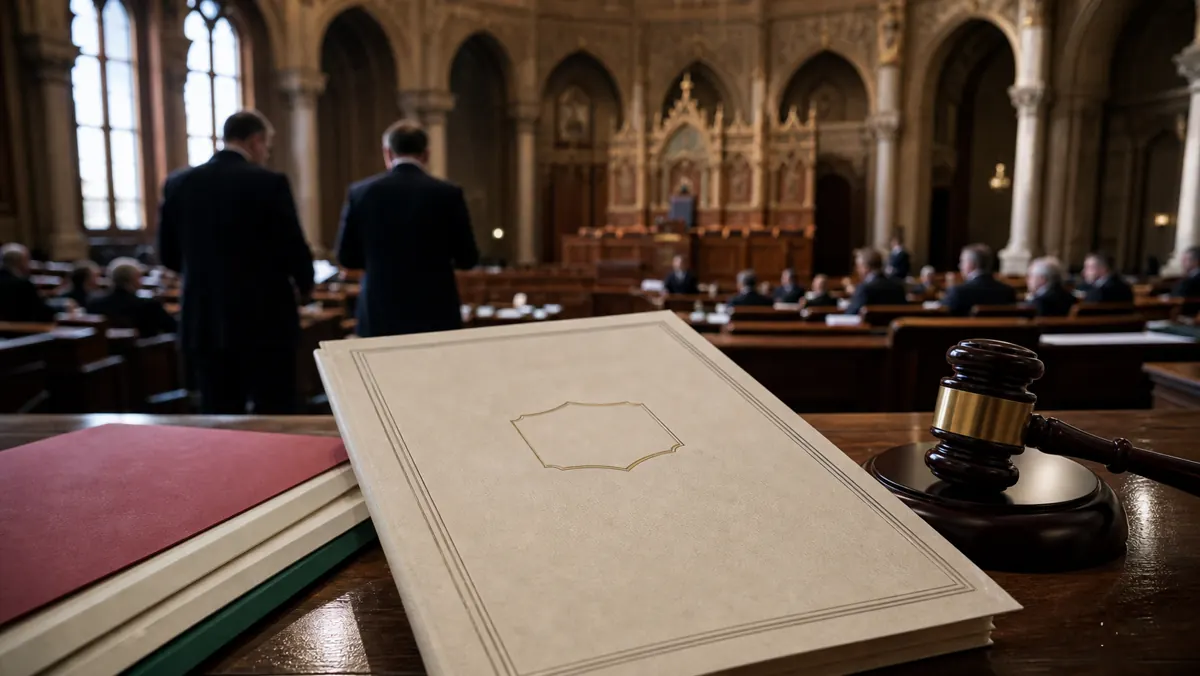
Realistic editorial AI visual of a Hungarian parliamentary and legal setting with a blank constitutional map and gavel, as an image of the constitutional amendment surrounding the impeachment of the president.
NU.nl, Hongaarse regering, AP, Human Rights Watch, Le Monde, The Guardian en Amnesty-context 13 juli 2026 om 19:12

Hungary puts pressure on president via constitution: restoration of the rule of law or new power logic?

Hungary has approved a constitutional amendment that could end the term of President Tamás Sulyok. Sulyok was elected in 2024 under Viktor Orbán's then Fidesz majority. The new Prime Minister Péter Magyar and his Tisza majority present the intervention as part of the restoration of the rule of law after years of institutional party control. But it is precisely this reasoning that makes the news sensitive: if a new two-thirds majority can remove old positions of power through the constitution, a route will also be created by which future non-partisan office holders can be removed more quickly.

Politics Read analysis

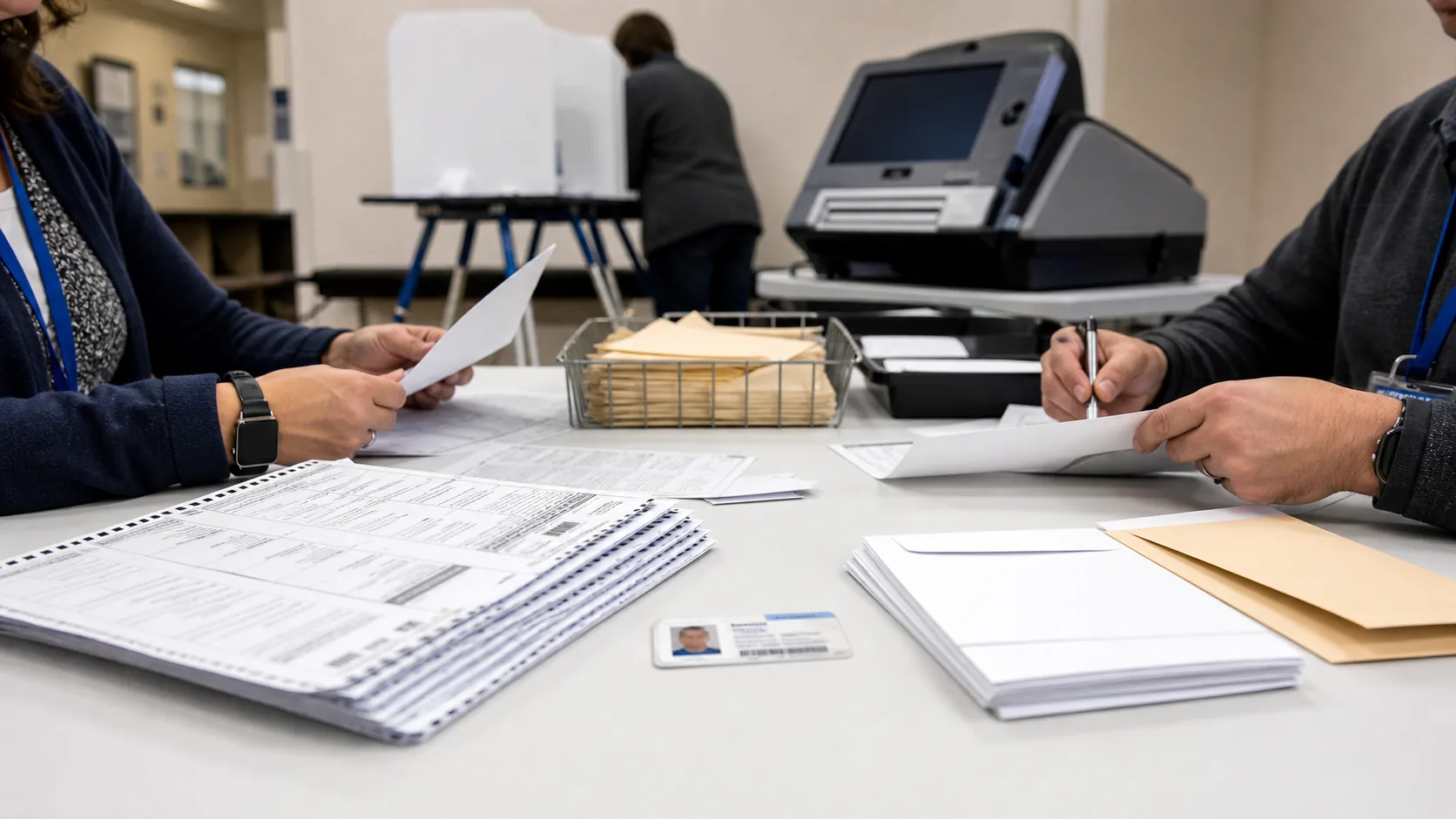
AI image of a US polling place with paper ballots, envelopes, a non-readable ID card and a ballot scanner illustrating election security and control.
White House, EAC, AP, Votebeat, federale rechtbank, BPC, Heritage en Pew Research Center 10 juli 2026 om 16:47

Trump and the EAC: more secure elections or more political control over the electoral process?

Donald Trump says he wants to make American elections more secure by tightening eligibility controls, treating postal votes more critically and bringing election authorities more in line with his integrity policy. That goal is not strange in itself: an election is only fair if only authorized voters vote and every valid vote counts. The weak spot is in the method. Emptying an independent, bipartisan commission just before the midterms does not automatically make elections more secure; it shifts trust from institutional balance to trust in the president.

Politics Read analysis
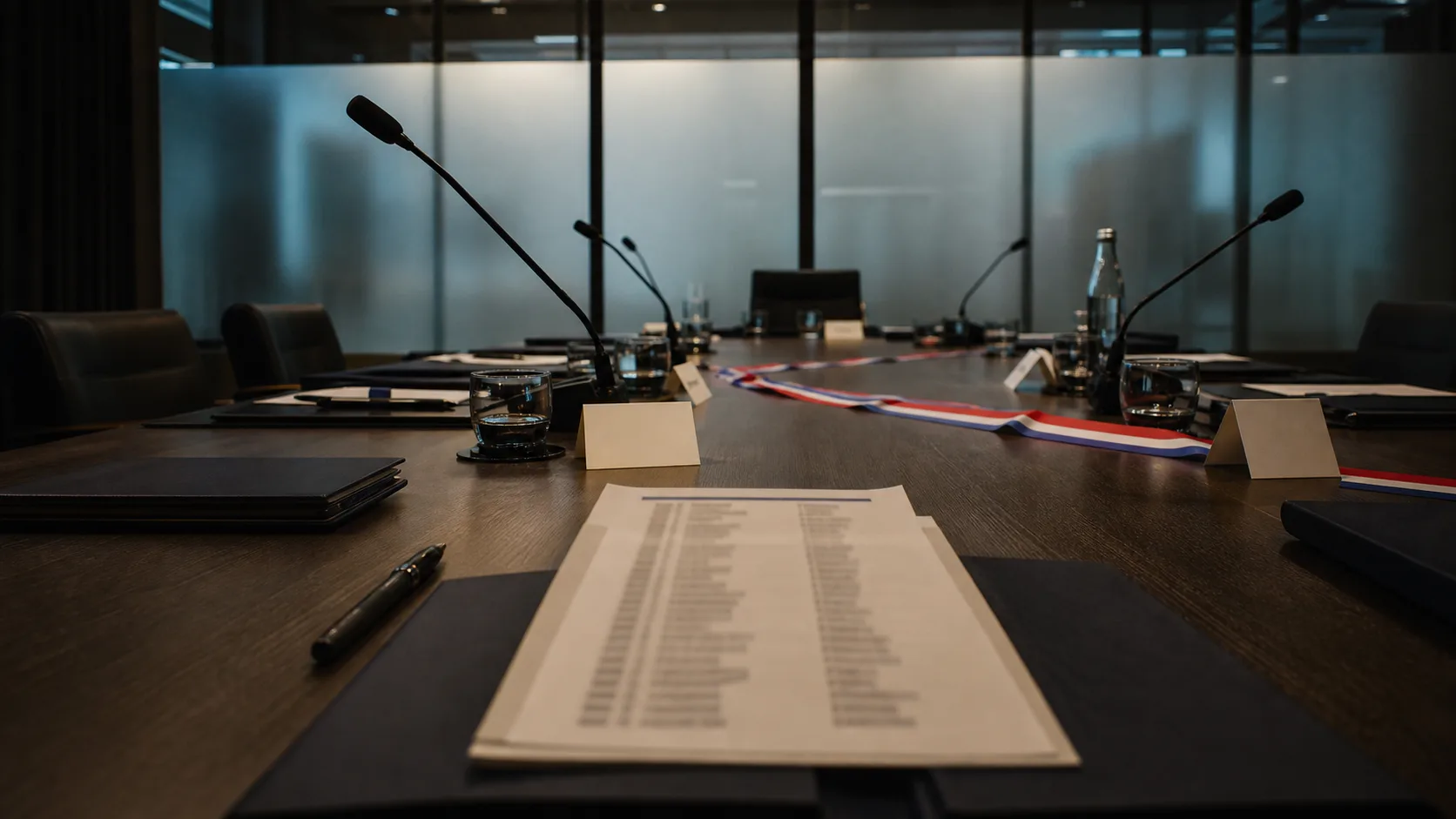
AI image of a private conference table with microphones, folders and a blurred participant list as an illustration of Room control at the Bilderberg conference.
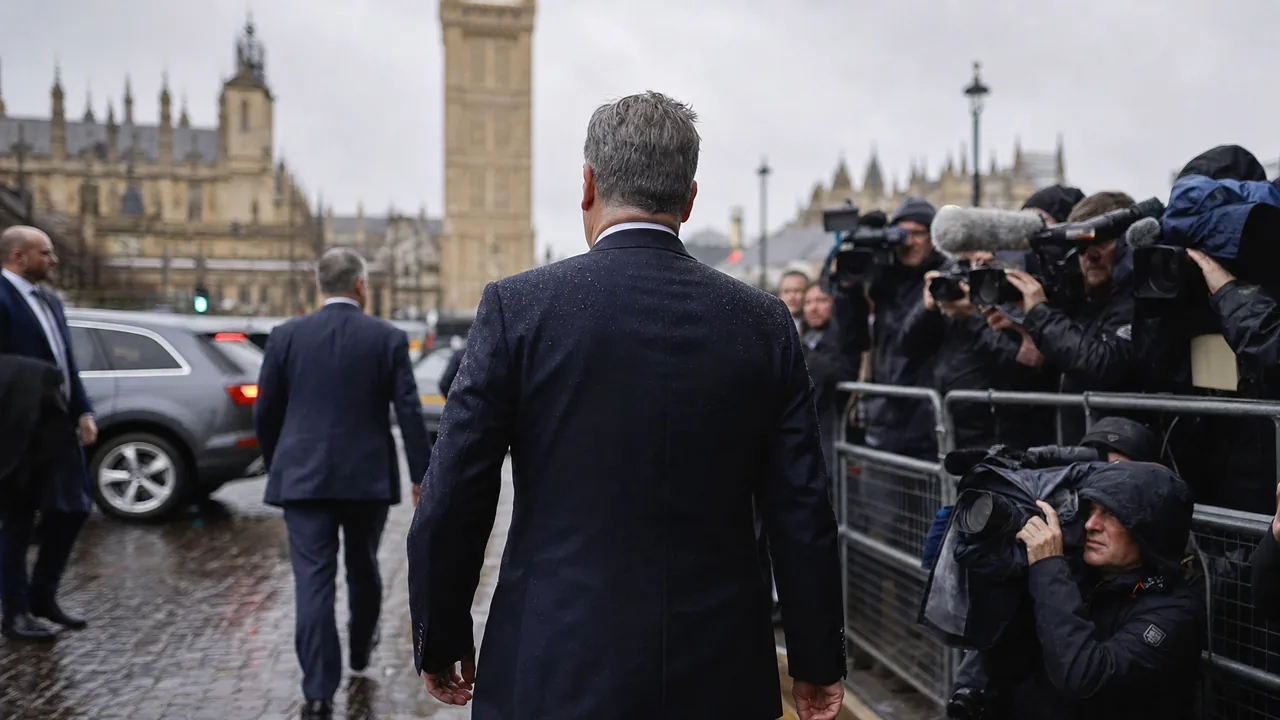
Tweede Kamer, Bilderberg Meetings, Chatham House en artikel 68 Grondwet 2 juli 2026 om 13:30

Bilderberg Conference 2026, Chatham House Rule or evasive answer?

The Bilderberg Conference 2026 is not a hidden event: the official list of participants is online and mentions Rob Jetten as Prime Minister. That is precisely why the answer to the parliamentary questions is difficult. The Chatham House Rule normally protects who said what, but is less convincing as a shield against a factual question: did the King, Queen and Prime Minister represent the Netherlands, yes or no?

Politics Read analysis

AI image of an empty parliamentary hearing room with microphone, files and timeline as an illustration of the Corona parliamentary inquiry in the Netherlands.
Tweede Kamer, NOS/Nieuwsuur, Parlement.com en EenVandaag 1 juli 2026 om 22:34

parliamentary inquiry into Corona Netherlands, learning lessons or public reckoning?

The parliamentary inquiry into Corona Netherlands is visible again, because the corona hearings this week are about the curfew and the unrest. Those are exactly the words people are looking for now: corona policy, fundamental rights, enforcement, criticism and the question of whether the House of Representatives was sharp enough. The MOZOM question is therefore: will this be a fair learning process, or mainly a belated public settlement?

Politics Read analysis

AI image of parliamentary files and procedure cards in a European meeting room as an illustration of the EU Asylum and Migration Pact.
NOS, Eerste Kamer, Raad van State, Rijksoverheid en Raad van de EU 1 juli 2026 om 17:28

EU migration pact, language of control or shift in sovereignty?

The migration pact has been discussed publicly. It was voted on, there were parliamentary documents and there were warnings. Yet a large package can feel socially small when the presentation is mainly about faster screening, shorter procedures and more control. The less visible question is: how much national space shifts to European rules and lower implementation?

Politics Read analysis

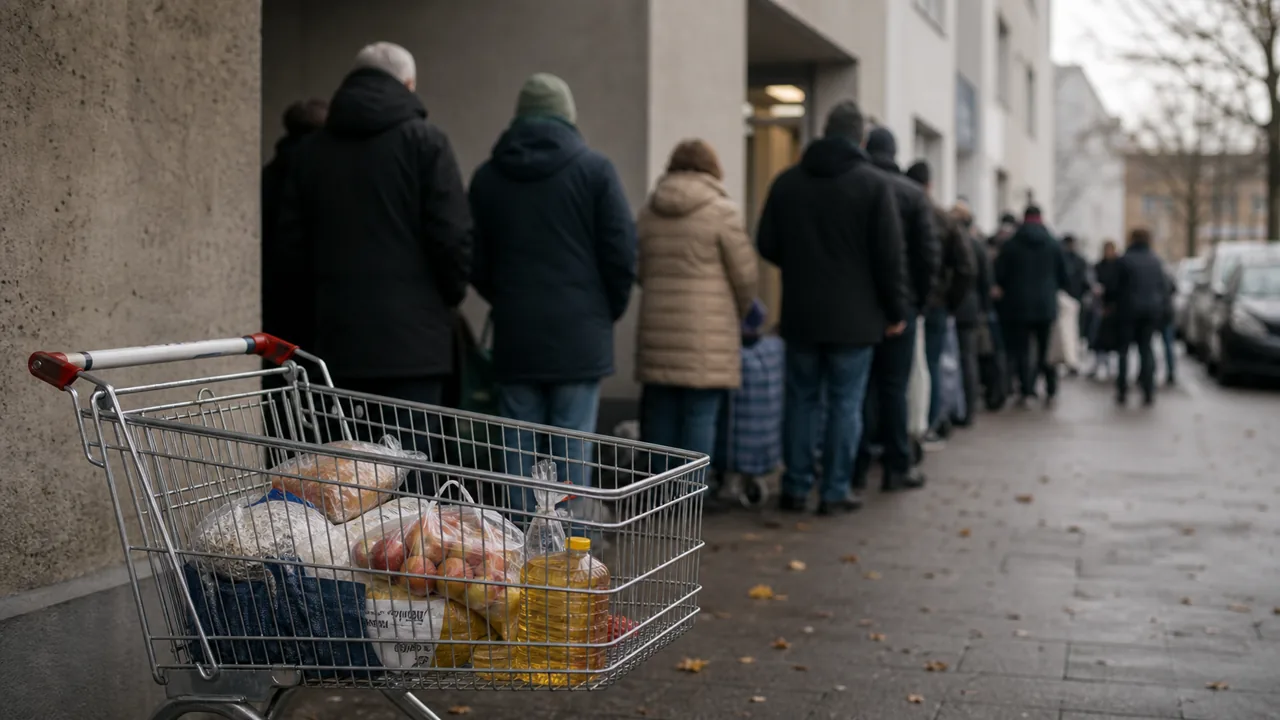
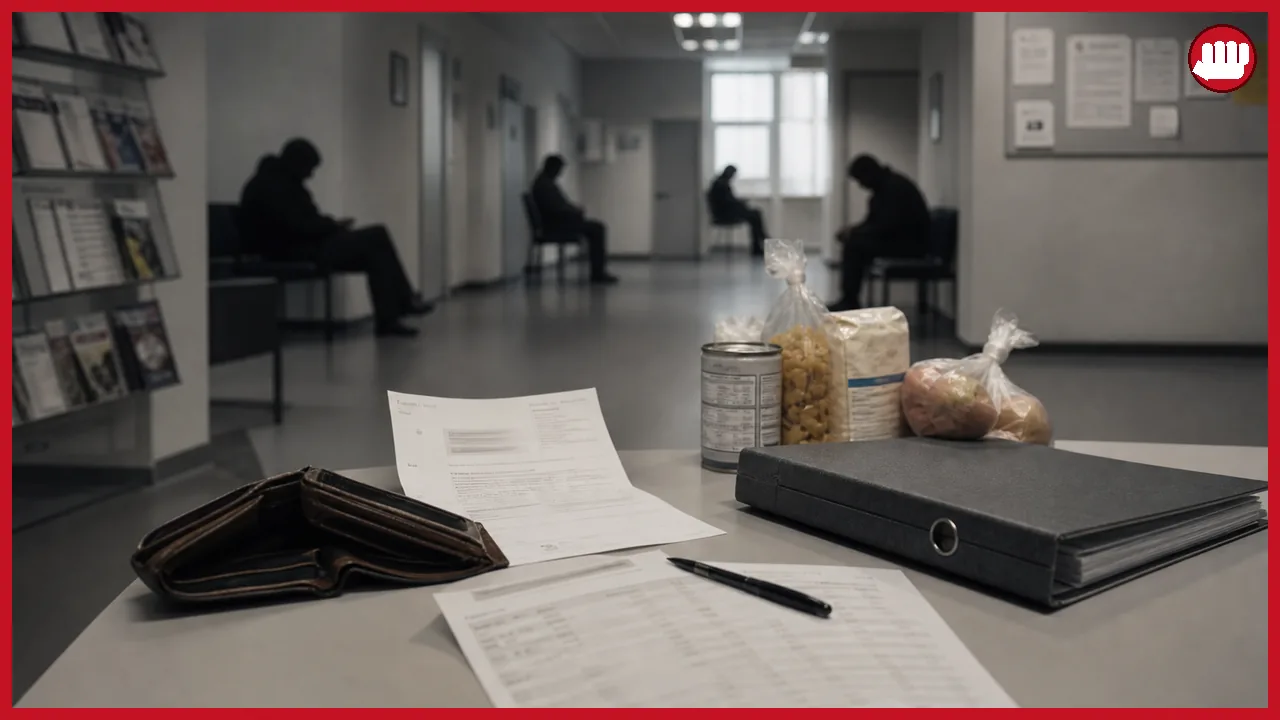
AI photo of an austere German waiting room with empty wallet, papers, basic groceries and anonymous waiting people, with red MOZOM-is-angry border and fist.
BMAS, Bundesregierung, Bundestag, Handelsblatt/dpa, CHIP en AfD-Bundestagsfraktion 30 juni 2026 om 22:27

MOZOM is angry: in the new Grundsicherung, the weakest are being targeted the hardest

MOZOM is angry because a familiar pattern is once again becoming visible: the weakest people are dealt with the hardest, precisely because they are the least able to defend themselves. The German government is selling the new Grundsicherung as more responsibility, more work and more honesty. But for people who are ill, mentally stuck, older, in debt, providing informal care or who have barely survived for years without a diagnosis, the same language can turn into fear of existence. Then it no longer sounds like help finding work, but as pressure on people who are already on the brink.

Society Read analysis

AI photo of a Dutch kitchen table with pay slip, rent letter, public transport card, parcel box and household administration as an image of changes as of July 1.
MOZOM vergelijkt 28 juni 2026 om 19:35

July 1 rules, purchasing power or cost shifting?

From July 1, it is not one large file that will change for Dutch households, but a whole row of small rules at the same time. That is precisely why the framing is interesting. You can see it as a purchasing power correction, because the minimum wage, state pension and benefits also increase. You can also read it as a cost shift, because rent, energy, package costs and services simultaneously press on the other side of the household budget.

National Read analysis

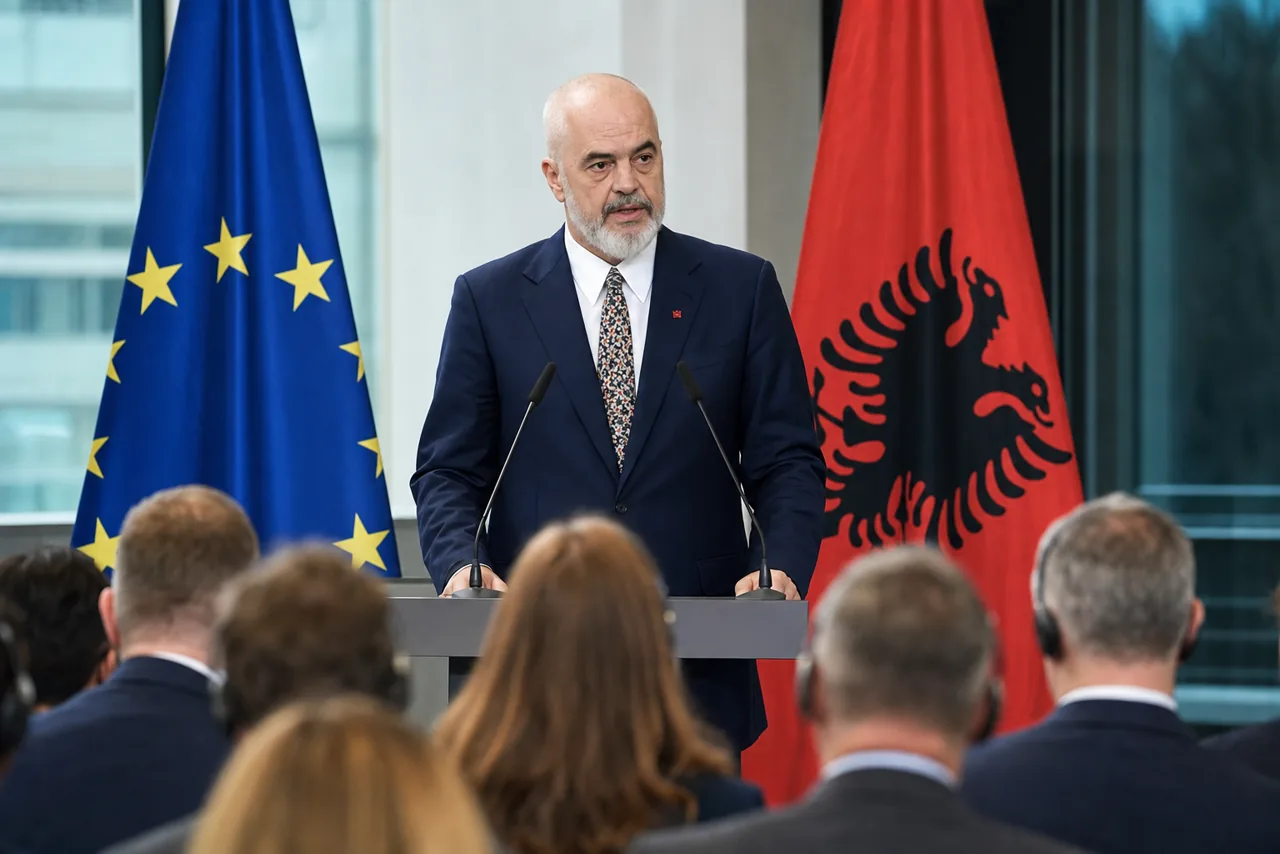
AI photo of a realistic European conference setting in Berlin with Edi Rama at a pulpit, EU and Albanian flags and press present as an image of his call on Europe.
Euronews 19 juni 2026 om 20:58

call from Edi Rama shows how Europe likes to repeat its great historical language, but it is much more difficult to decide who can follow it politically today

The visible news is that Edi Rama is calling on Europe for a new Helmut Kohl moment, but the deeper layer is that such historical comparisons mainly reveal who likes to continue to describe Europe as a project of courage and expansion, while the actual willingness to really welcome new countries is much more difficult.

Politics Read analysis
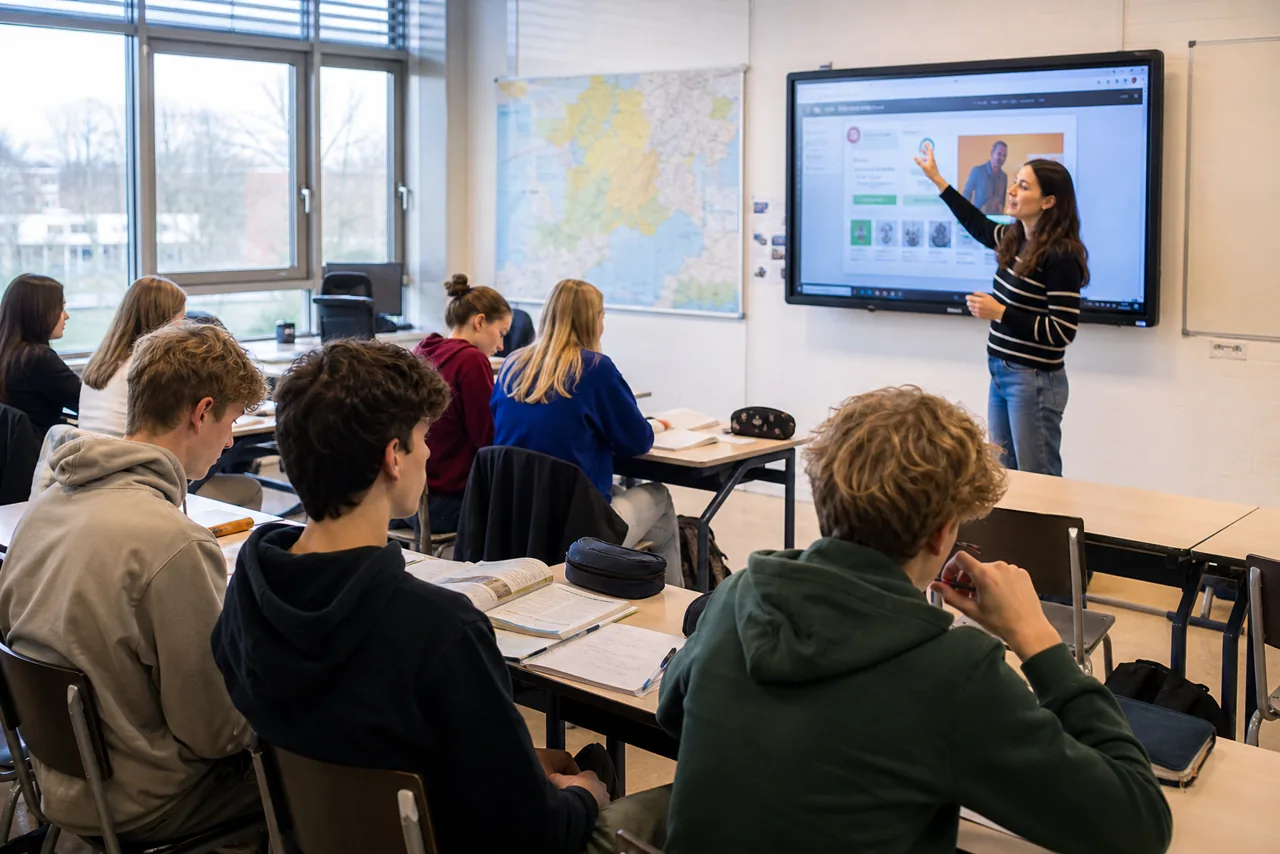
AI photo of a realistic Dutch high school class during a language lesson with teacher, students and teaching materials as an image of new emphasis on language education.
NU.nl 19 juni 2026 om 19:49

new emphasis on language education shows how learning disadvantage only becomes a top political priority once declining figures start to count as a system warning
The visible news is that the government is pushing language education forward after disappointing results, but the deeper layer is that learning disadvantages only really become a top administrative priority when they are no longer read as a local school problem but as a national performance crisis.

Politics Read analysis