
Rubriek

Media

Media: MOZOM analyses with source attribution, context, interpretation and framing.

Media

28 articles

Illustrative editorial AI photo of researchers at a crater in Polish agricultural areas, as an image for research into a rocket incident and media language.
AP, The Guardian, NU.nl, Rzeczpospolita, Reuters, PAP en NATO 30 juli 2026 om 16:22

If 'probably' already makes you guilty

In war language, sometimes the most dangerous word is not 'evidence', but 'probable'. Around a missile strike near Tarnawa-Kolonia, Poland is talking about indications of a Russian Kh-101, while the investigation is still ongoing. Journalistically, the tension is exactly there: a caveat in the headline can be legally correct, but in the reader's mind the main thing that remains is who seems to be guilty.

Media Read analysis

Editorial caricature of a newsroom with a large news filter machine, with some news cards coming into the spotlight and a sensitive Paris card ending up in a shadow tray.
Reuters via The Guardian, AFP/CBS, Die Zeit, WELT, Sueddeutsche Zeitung, Le Parisien, Berliner Zeitung, Tagesschau-search en ARD/Medienstaatsvertrag-context 28 juli 2026 om 08:07

What is going on?

What is going on? That question is journalistically justified when a violent incident in Paris is reported by Reuters, AFP, French media and several German mainstream titles, but is not yet visible as its own online message at the largest German public news service. That doesn't prove censorship. It does require explanation.

Media Read analysis
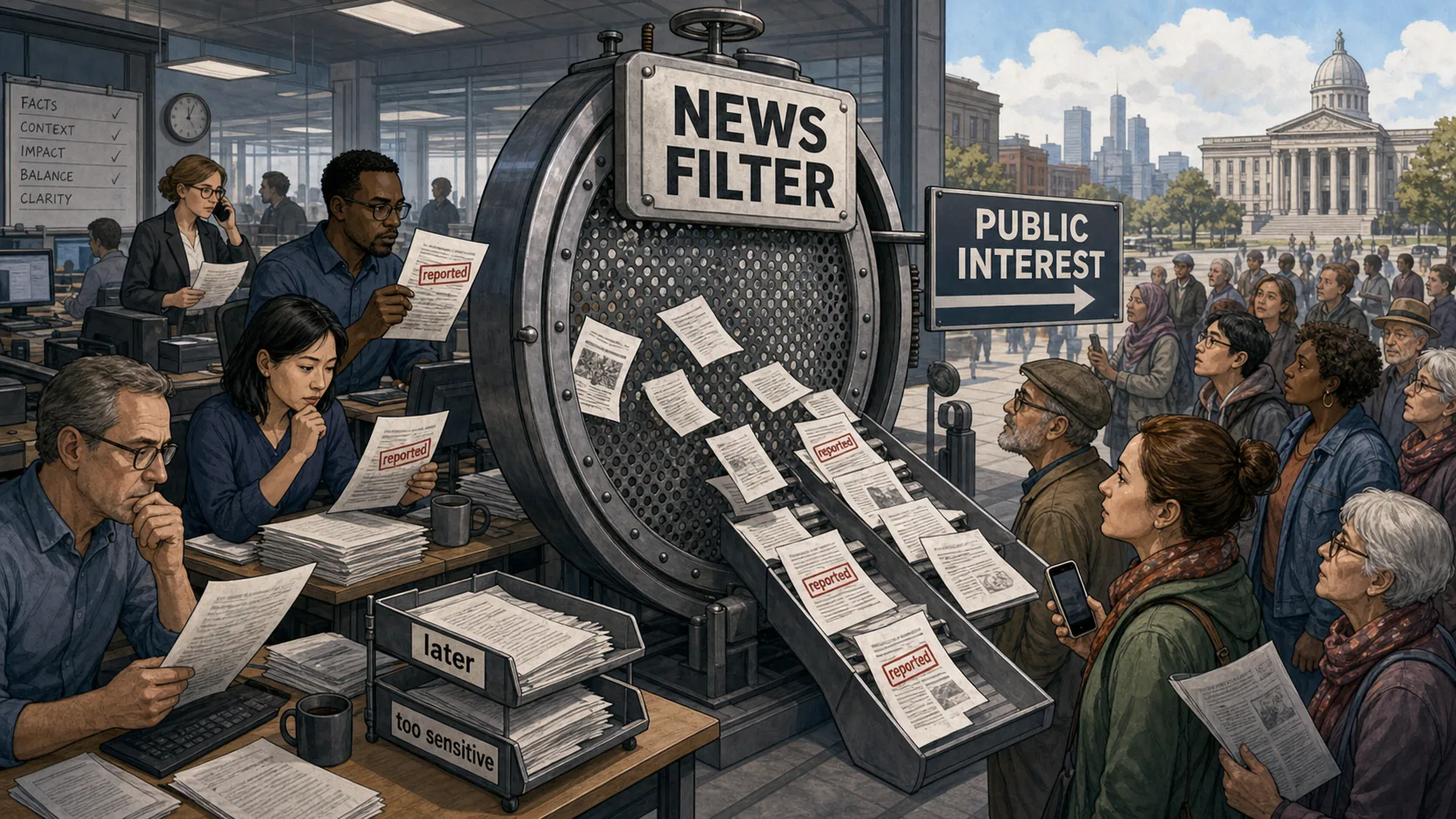
Editorial caricature of a news filter in an editorial office where some pieces are allowed through and others are left in later and too sensitive bins while readers wait outside for the full picture.
SPJ, Reuters Trust Principles, BBC Editorial Guidelines, The New York Times/Iraq-context, Rotherham inquiry, Washington Post, PBS, Meta/Facebook-context, WHO, DOJ, AP en House Oversight 27 juli 2026 om 00:20

Journalism should inform, not shield

Journalism does not have to give every point of view equal airtime. Editors have to choose, weigh, check and sometimes not publish. But there is a line between selection and foreclosure. When relevant facts, documents or perspectives only become visible after years of being treated as unreliable, too sensitive or too risky, the citizen does not receive a more complete picture, but a pre-filtered reality.

Media Read analysis

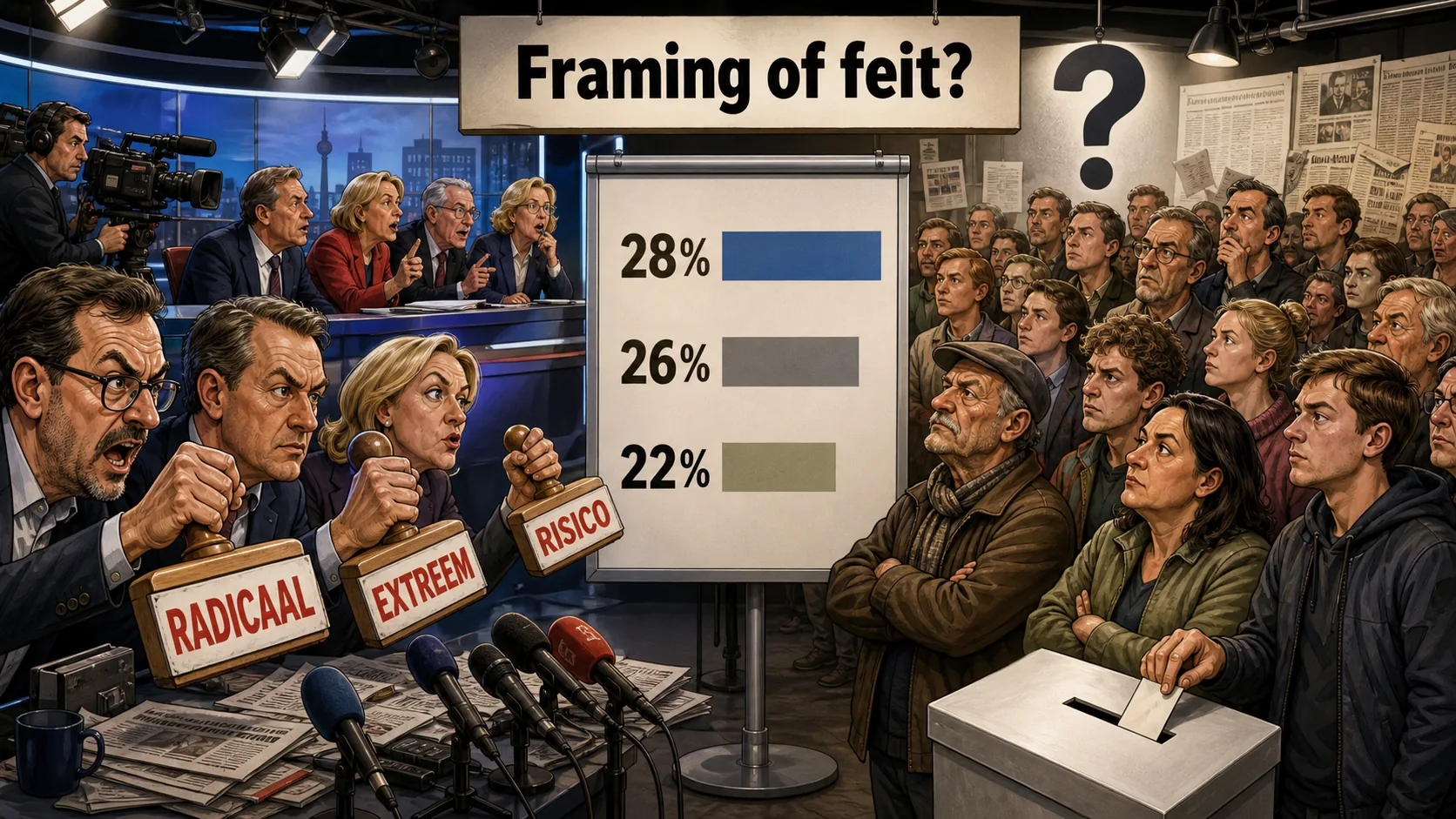
Editorial caricature in which journalists hold radical, extreme and risk stamps in front of a poll board and a large group of voters at a ballot box.
NOS, NU.nl, AD, Tagesschau, ZDF, Der Spiegel, Verfassungsschutz-context, Reuters, Wahlrecht en Politico Poll of Polls 26 juli 2026 om 09:35

AfD at the top in polls: watchdog journalism or framing against a voter bloc?

Anyone who only looks at the headlines often sees AfD through the same lens: radical, extreme, danger to democracy, Brandmauer, Verfassungsschutz. Anyone who looks at the polls will see that AfD is around the top of the party landscape in Germany. This raises an uncomfortable journalistic question: do the media rightly warn about a party that is seen as a risk by security services and political opponents, or does repeated use of labels create a frame in which millions of voters are mainly treated as a problem?

Media Read analysis
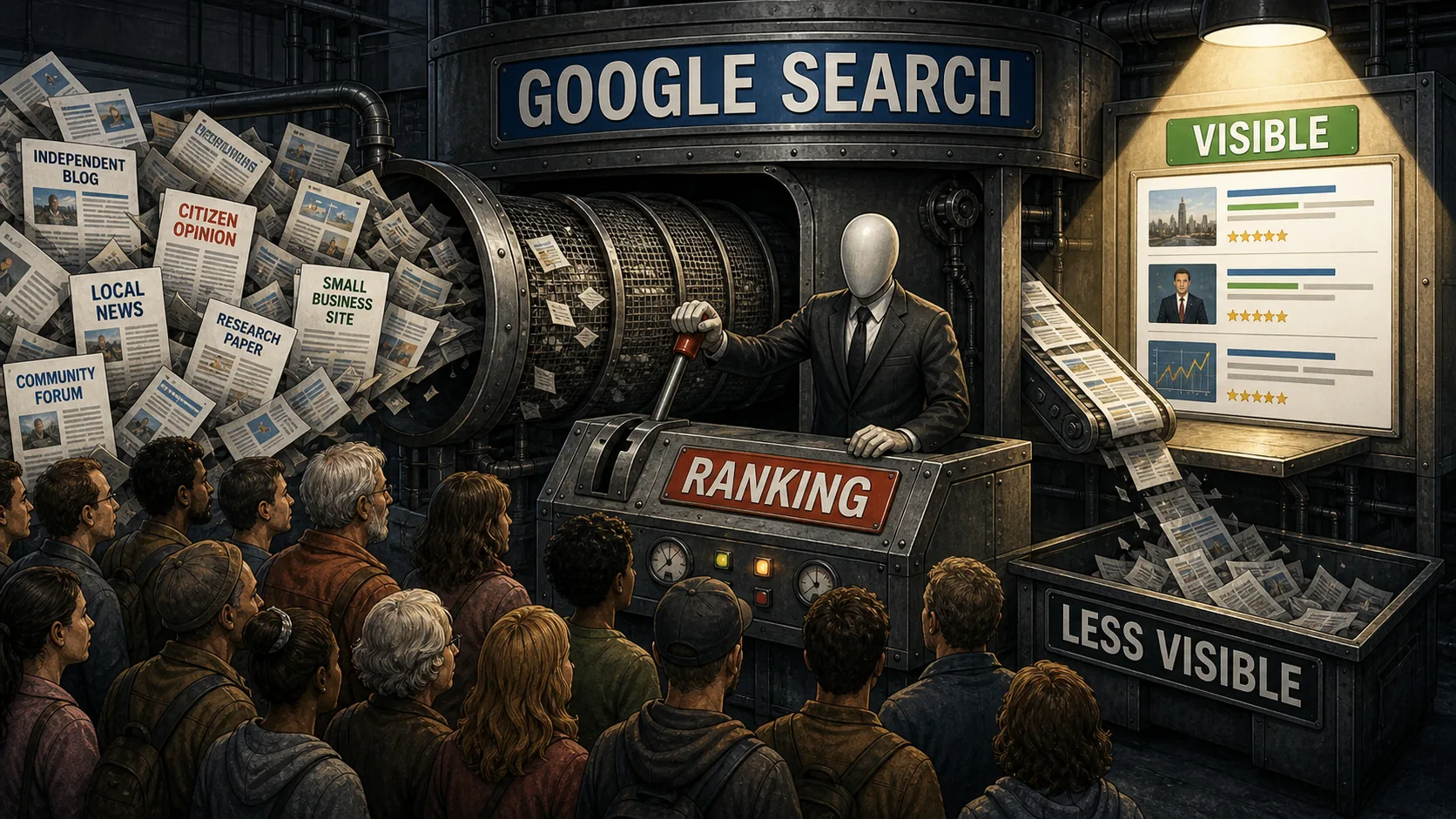
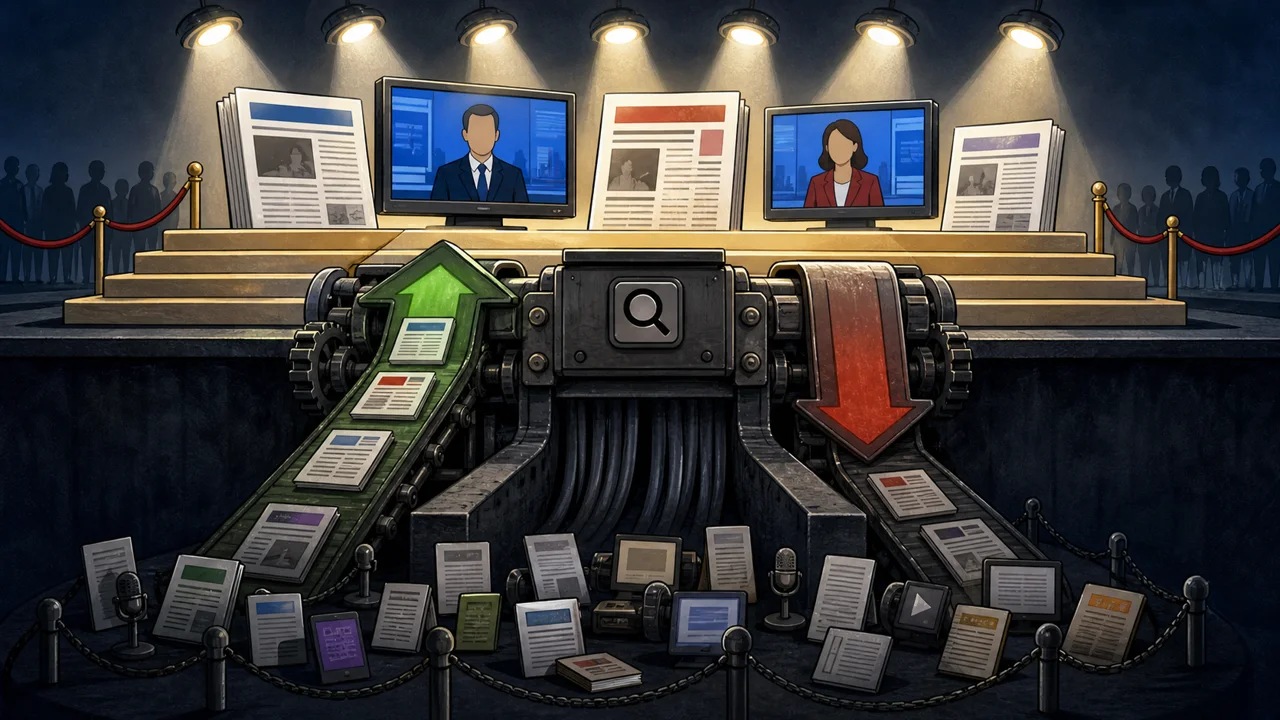
Editorial caricature in which a Google Search filter engine ranks information: some sources become visible in the light, while other opinions end up in a 'less visible' bin.
Google, U.S. Department of Justice, Europese Commissie, EUR-Lex, PNAS, Nature, Freedom House en UNSW 19 juli 2026 om 10:20

Google as gatekeeper: when search is no longer a neutral access to the internet

Google is not a public library nor a neutral judge. It is a commercial company that is the front door to information for millions of citizens. That does not automatically make the search engine malicious, but it does make it democratically sensitive. Whoever decides what is at the top does not literally determine what people are allowed to think, but rather which facts, sources and opinions become visible first.

Media Read analysis
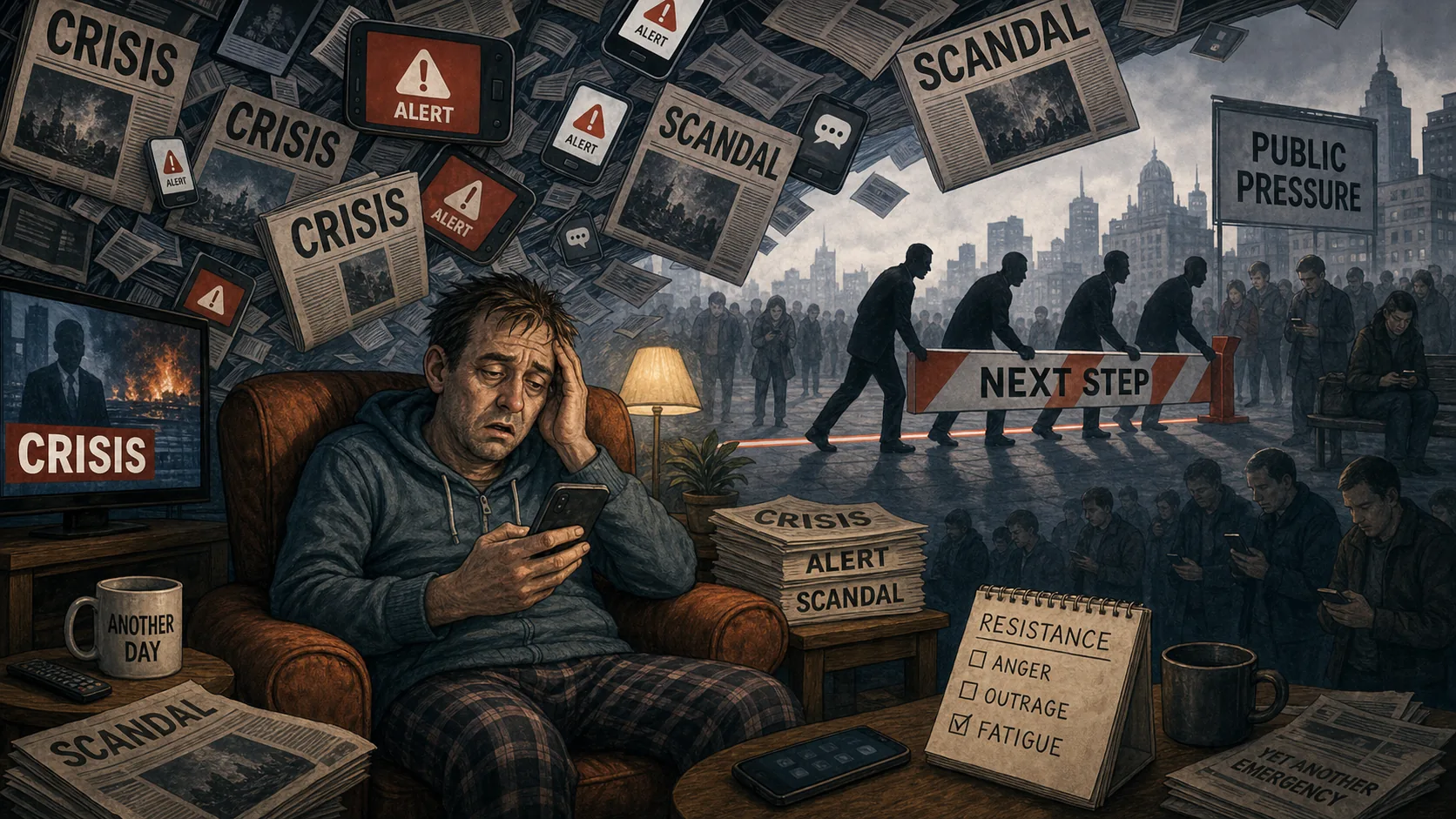
Editorial caricature of an exhausted citizen under a deluge of crisis news, while anonymous power figures push a 'next step' line in the background.
Reuters Institute, Pew Research Center, WHO Europe, RAND, National Affairs, PMC/NIH en APA 18 juli 2026 om 23:33

When news makes people numb: how permanent crisis weakens public resistance

Not only silence can protect power. Noise can do that too. When citizens are affected day after day by crisis, scandal, war, threats, corruption, migration, climate, security and new emergency measures, another risk arises: people become numb. Not because they don't care, but because a permanent threat without a perspective for action becomes psychologically untenable.

Media Read analysis
AI image of an anonymous British activist figure in front of a screen with an Ireland map, platform locks and muted media messages illustrating Tommy Robinson, deplatforming and Irish migration unrest.
Meta, GOV.UK/EUR-Lex DSA-context, The Guardian, BuzzFeed News, The Independent, ISD, LSE, ABC, NOS en RTL Nieuws 12 juli 2026 om 16:16

Tommy Robinson: deplatforming, media frame and the blind spot around Irish migration unrest

Tommy Robinson is no ordinary political commentator who happens to get little airtime. He is an extra-parliamentary activist with a criminal record, a tough anti-immigration message and a long history of platform bans. But that is precisely why his case is relevant. When someone is simultaneously demonstrably deplatformed, portrayed as a risk by politicians and, in Irish migration unrest, mainly appears through the frame of extremism and disinformation, a broader question arises: is violence being contained, or is the underlying migration debate also being made smaller? That question becomes more acute because Ireland not only had riots, but also large anti-immigration marches in which thousands of people marched peacefully.

Media Read analysis

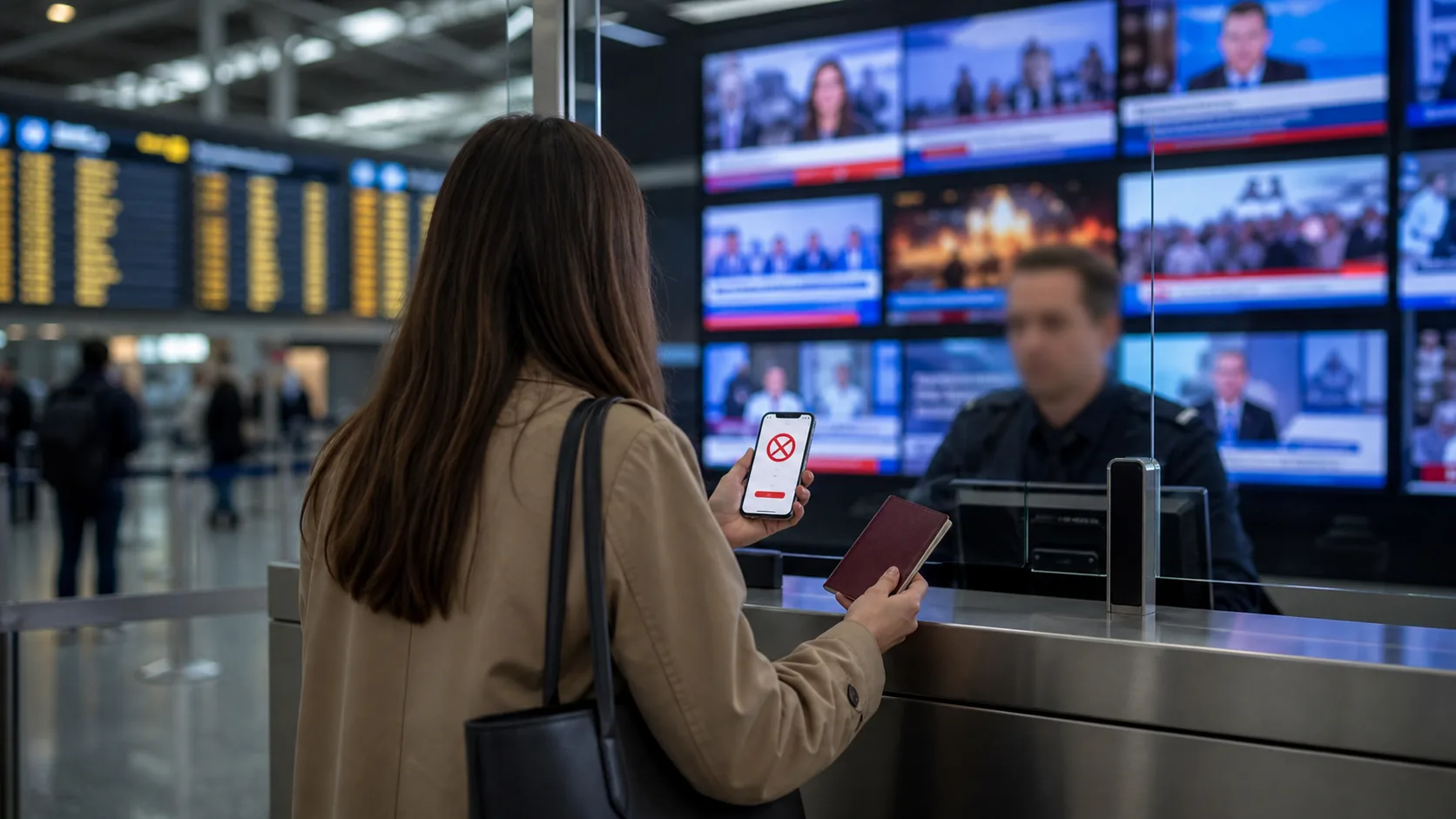
AI image of an anonymous woman at a UK border control with a refused digital travel authorization on her phone and media screens in the background.
UK Parliament, GOV.UK, DutchNews, The Guardian, The National Desk en EWTN 12 juli 2026 om 04:00

Eva Vlaardingerbroek and the British ETA ban: public order or media frame

Eva Vlaardingerbroek is newsworthy, but not because it has been proven that she has been banned from several countries. The hard point is narrower and therefore more interesting: her British electronic travel authorization, the ETA, has been withdrawn or refused, according to several reports, on the basis that her presence would not be in the public interest. Then the real battle begins: is this a normal border measure, a political signal, or above all a media frame that tells the reader in advance what to think of her?

Media Read analysis
Editorial caricature in which large established media blocks are at the top of the spotlight while smaller alternative sources are pushed into the shadows by a ranking machine.
Google, Europese Commissie, Nature, PNAS, Stanford, Science en aanvullende platformkritiek 10 juli 2026 om 01:35

Google's echo chamber: authority, consensus or deplatforming through ranking?

Google's echo chamber is not a hard, proven 'hide dissent' button. The better question is more subtle: What happens when a search engine heavily weights reliability, authority, links from prominent websites, and institutional consensus? Then a system intended to protect quality can simultaneously strengthen established networks and push alternative media or deviating interpretations into the background.

Media Read analysis

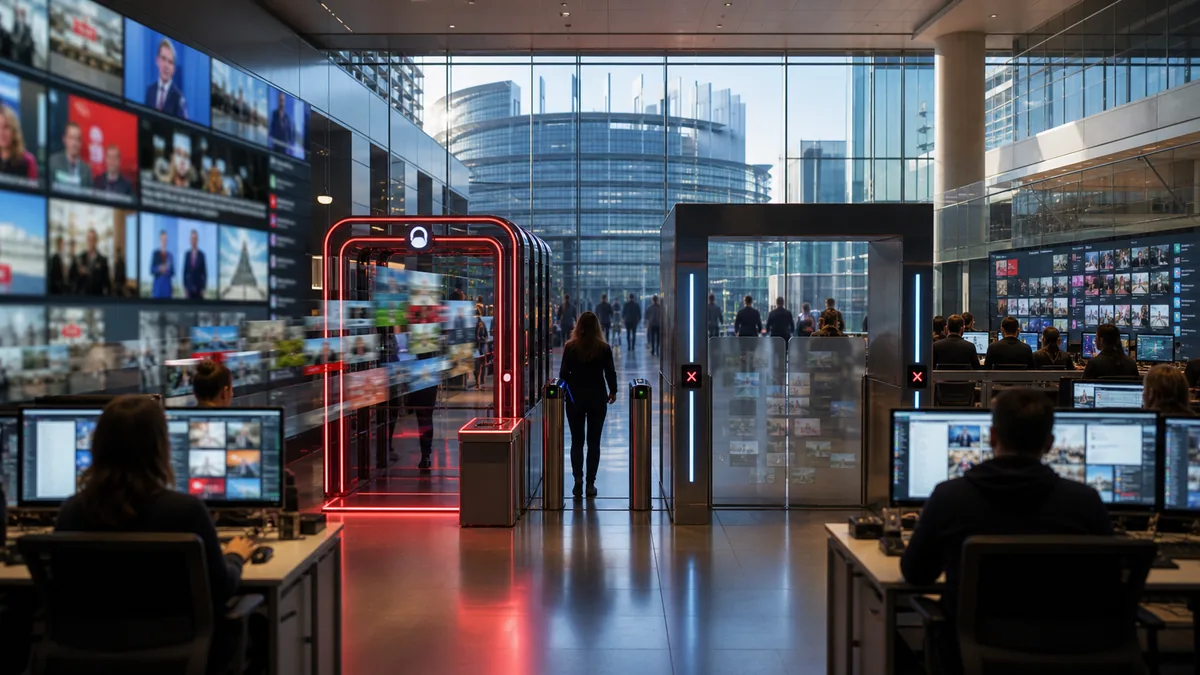
AI image of a modern European newsroom with digital platform gates and abstract news feeds illustrating the European Media Freedom Act and platform power.
Europese Commissie, EUR-Lex, Europees Parlement, EU-Handvest/FRA, ARTICLE 19/MFRR en EDRi 8 juli 2026 om 01:06

MOZOM analyses: European Media Freedom Act, media freedom or platform gatekeeper?

The European Media Freedom Act is sold in Brussels as protection of press freedom and media pluralism. But the most exciting question is not in the title of the law. This lies in the practical distribution of reach: who is treated by large platforms as professional media with additional rights, and who remains an ordinary user who has little countervailing power in moderation, ranking and visibility?

Media Read analysis

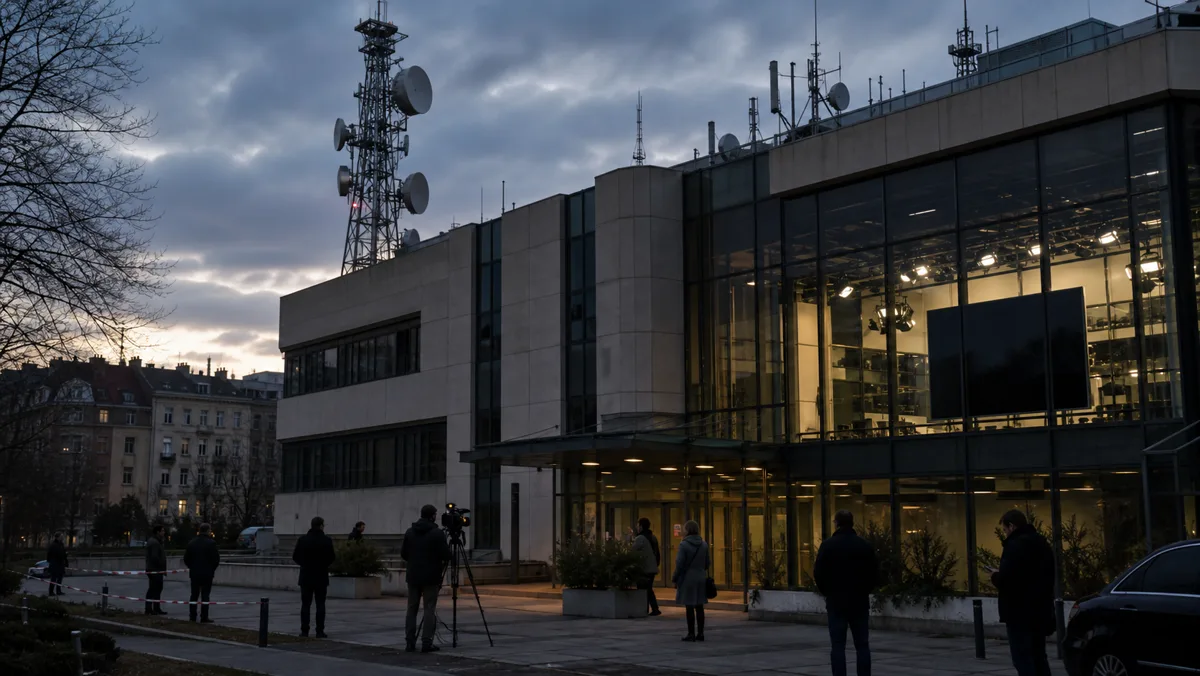
AI image of an anonymous public broadcasting building with antennas, dark screens and people at a distance illustrating Hungarian public media and EU media law.
NU.nl, The Guardian, Euronews, Daily News Hungary/Telex, OSCE, Europese Commissie, EU EMFA, CPJ, RSF en Reuters Institute 7 juli 2026 om 23:47

MOZOM analyses: Hungary's public broadcaster M1/Kossuth, media reform or political intervention?

In Budapest, M1 did not continue with a normal news broadcast on Tuesday afternoon, but on black. Hungary's public news channel and Kossuth Radio temporarily suspended their news functions while the new government of Péter Magyar says it will reform the state media formed by Viktor Orbán. This news thus touches on a difficult question: when does clearing propaganda itself become a political intervention in the media and freedom of expression?

Media Read analysis

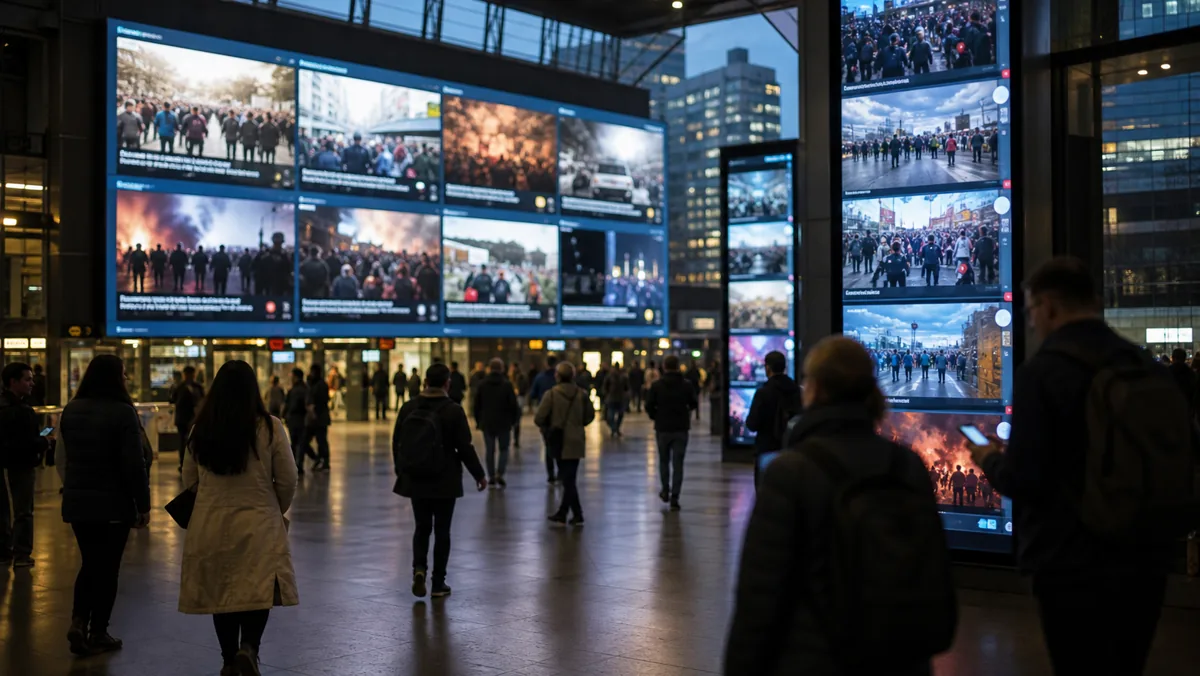
AI image of a public space with large digital news feeds and anonymous passers-by as an illustration of migration framing on Google News and YouTube.
MOZOM-onderzoeksdossier, Europese Commissie, DSA Transparency Database, YouTube-beleid en Google DSA-transparantie 5 juli 2026 om 16:48

MOZOM investigates: Google News, YouTube and migration framing, coincidence or system?

Anyone who only collects a few examples will quickly get into a yes-or-no discussion about media framing. That is why MOZOM has expanded the search: thousands of results from open web media, Google News, European regions and YouTube search layers have been compared. The outcome is journalistically solid, but legally precise: there is a measurable pattern in migration framing, but no evidence yet that Google or YouTube consciously censors or demonstrably violates the DSA.

Media Read analysis

AI image of a public space with digital search and news panels where some results are prominently visible and others fade into the background.
Google, Europese Commissie, Reuters Institute, AllSides, PNAS en Nature 4 juli 2026 om 08:23

MOZOM analyzes: search engines, deplatforming and right-wing news, made untraceable or suppressed by ranking power?

Search engines deplatforming right news is not a simple 'hide right' button. The power is more subtle. Whoever is at the top seems normal. Whoever is on page two hardly exists for many readers. Those who are seen as reliable, original or authoritative are given room to breathe. Anyone who is read as spam, low quality, peripheral source or risky information will sink. This may be justified in the case of deception. But the same logic can also shift political visibility without anyone literally deleting an article.

Media Read analysis
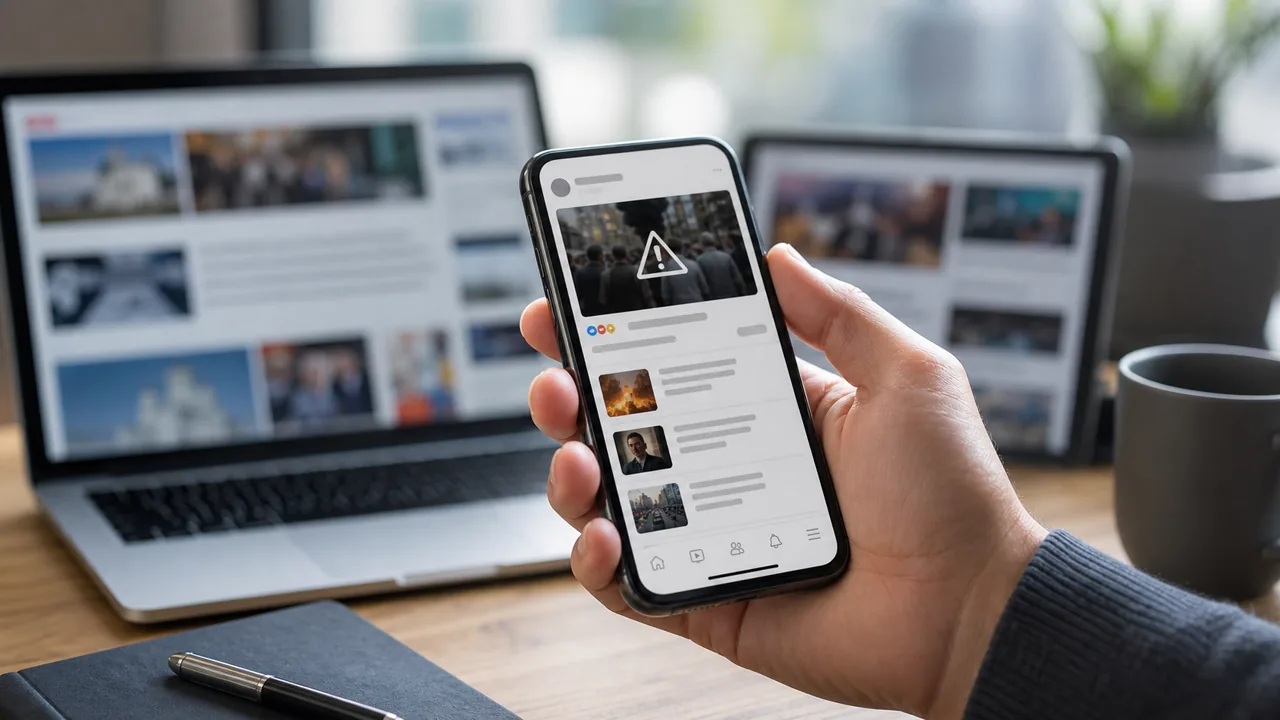
AI image of a European newsroom with screens, newspapers, smartphones and an abstract map of Europe illustrating media concentration.
ACM, Reuters Institute, Euromedia Ownership Monitor, Europese Commissie, DPG Media, RTL Group, Bertelsmann en Axel Springer 2 juli 2026 om 14:20

Bertelsmann, Van Thillo and European media power, monopoly or concentration?

A European news monopoly is too harsh to say. There is no one owner who controls all European media. But if you compare the recent movements, you will see something different: the door to news, audience and advertising money is becoming narrower. In the Netherlands, DPG Media around Christian Van Thillo is now part of RTL Netherlands in addition to newspapers and NU.nl. Bertelsmann remains a major European TV and streaming power through RTL Group. Axel Springer added the Telegraph in 2026 to a portfolio that includes Politico, Business Insider, Bild and Welt. And above that media layer lie Google, social video and AI summaries as additional gateways.

Media Read analysis
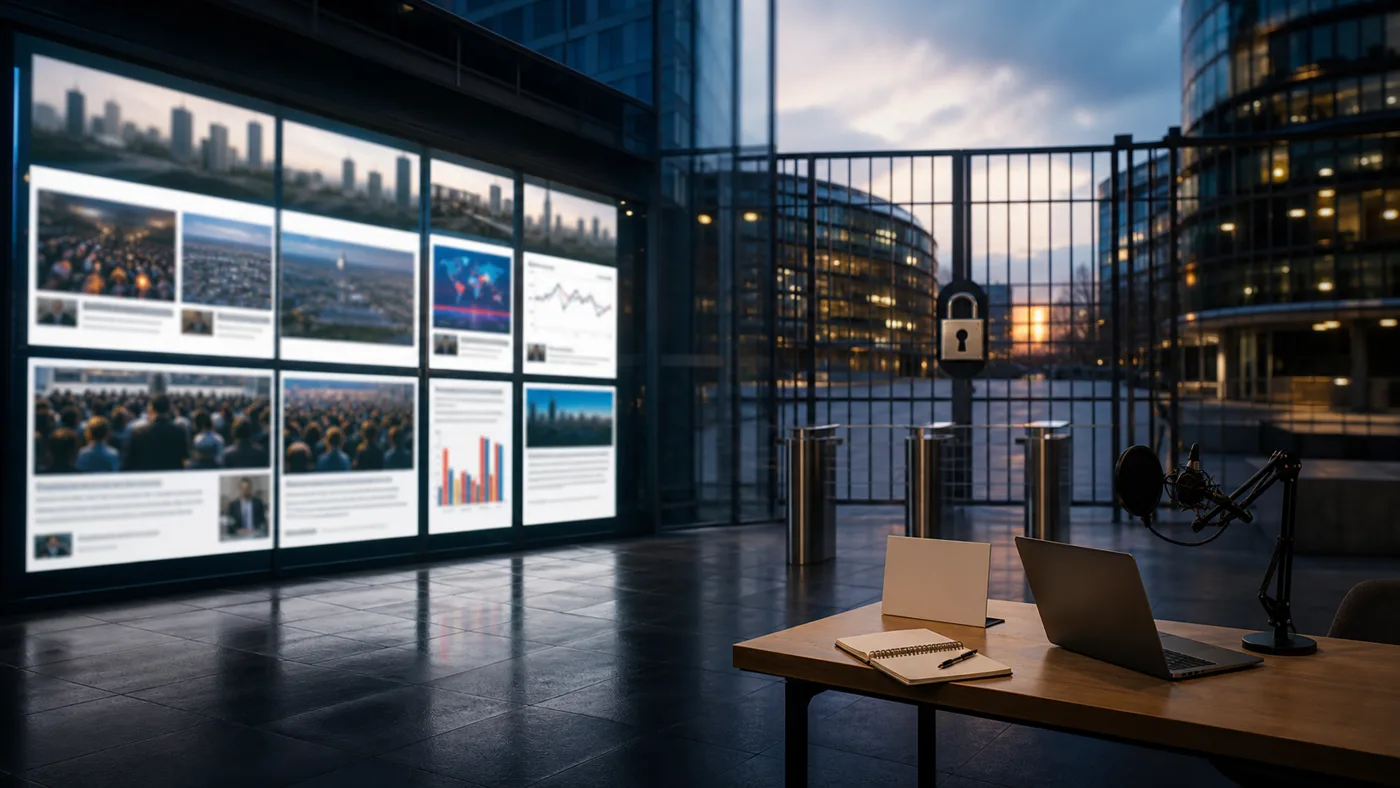
AI image of a small editorial table opposite large digital news screens and a closed gate as an image of EU rules for political advertising and visibility of newcomers.
Europese Commissie, Raad van de EU, Google, Meta en Liberties 1 juli 2026 om 22:14

EU political advertisements, transparency or threshold for newcomers?

Political advertising in the EU is officially more strictly regulated to show citizens who is paying, who is being targeted and why a message appears. That sounds like democratic hygiene. But when major platforms respond by closing political and social advertisements completely, a second question arises: who can buy reach if they are not already big?

Media Read analysis