
MOZOM-analyse
MOZOM analyses: EU CBAM 2026, carbon border tax or industry protection?
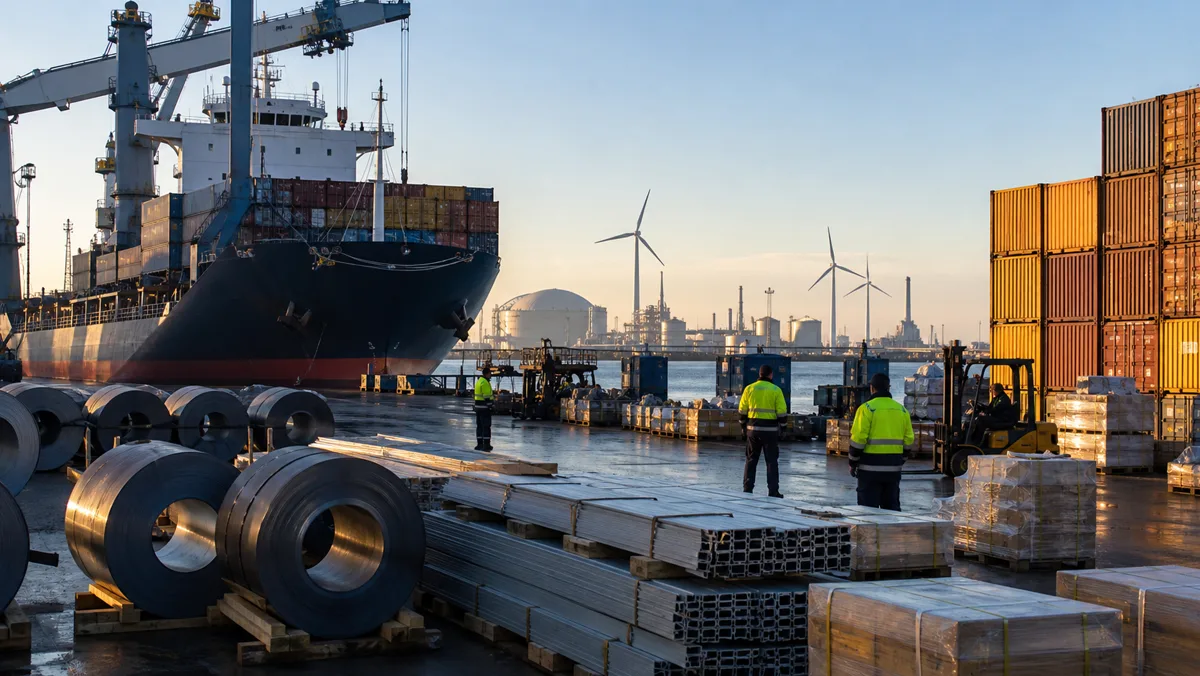
- Source
- Europees Parlement, Europese Commissie, EU CBAM en ETS-context
- MOZOM headline
- MOZOM analyses: EU CBAM 2026, carbon border tax or industry protection?
- Original headline
- MEPs strengthen the EU's carbon border adjustment mechanism and close loopholes
- Author
- the MOZOM.nl editorial team
- Date
- 7 juli 2026 om 04:14
- Subject
- MOZOM investigates why the new EP step around CBAM is not just climate administration, but also about import control, rules of origin, online trade, downstream products and European industry protection.
Summary of the original report
The European Parliament's Environment Committee has adopted its position on changes to the Carbon Border Adjustment Mechanism (CBAM). The committee voted with 56 votes in favor, 11 against and 12 abstentions in favor of stricter rules to prevent circumvention and limit carbon leakage. MPs support expansion into downstream products: finished steel and aluminum goods such as fasteners, wire, springs and household goods. According to the EP line, this expansion must be based on transparent, quantitative methods. The committee also wants that artificial minor processing of goods cannot be used to avoid CBAM, that the true origin value can be applied to patterns of circumvention, and that online sales cannot be split per package below thresholds. At the same time, the commission adopted a position for a temporary decarbonization fund, with support from 2027 to 2029, intended to help European producers and downstream users when competitors outside the EU do not pay a comparable carbon price. Parliament is expected to adopt the negotiating mandate in the September plenary session; this is therefore not yet a definitive law.
Own source research
MOZOM has placed four layers next to each other. Layer one is the product range: CBAM shifts from basic raw materials to finished products that include steel and aluminum. Layer two is the origin layer: if standard values per country or region are used, the EU actually determines how foreign production chains are valued. Layer three is anti-circumvention: small operations, split online shipments and rerouting become managerial risks, not just logistics choices. Layer four is the temporary decarbonization fund: revenues or value from the CBAM system will become not only a climate correction, but also support for European production. MOZOM's own layer is that CBAM becomes an intersection of climate policy, customs policy, industrial policy and geopolitical competition.
Striking in this message
The term 'loopholes' is striking. That sounds technical and almost obvious: you have to close loopholes. But as soon as a policy document determines which operation is still normal business behavior and which operation becomes circumvention, the power shifts to controllers, methods and threshold values. The 'equal carbon price' frame remains neat, but the practical effect concerns who gets to redefine the rules of global trade.
Less visible context
It is less visible that CBAM coincides with the phasing out of free emission allowances within the EU ETS. European heavy industry will therefore receive less protection in the old system and more protection via the border. Proponents call this fairer, because imports must bear the same carbon costs. Critics can see it as a complex trade fence that mainly affects countries with weaker measuring capacity. Online trade is also becoming more important: if small shipments are viewed per package, a large flow of imports can appear administratively small.
Possible message behind the news
A possible message is that CBAM is no longer just a climate instrument at the border. The sharper reading: as soon as the EU regulates product chains, origins, online shipments and export support at the same time, climate policy also becomes a form of economic border power.
Neutral conclusion
The neutral conclusion: the EP Environment Committee wants to expand CBAM, tackle circumvention more stringently and set up a temporary decarbonization fund, but the negotiating mandate has yet to be determined in plenary. The MOZOM lecture: this is newsworthy because a technical CO2 instrument is visibly changing in a broader discussion about industry, trade and power at the European border.