
MOZOM-analyse
MOZOM analyzes: OPEC+ oil production August 2026, market stability or market share?
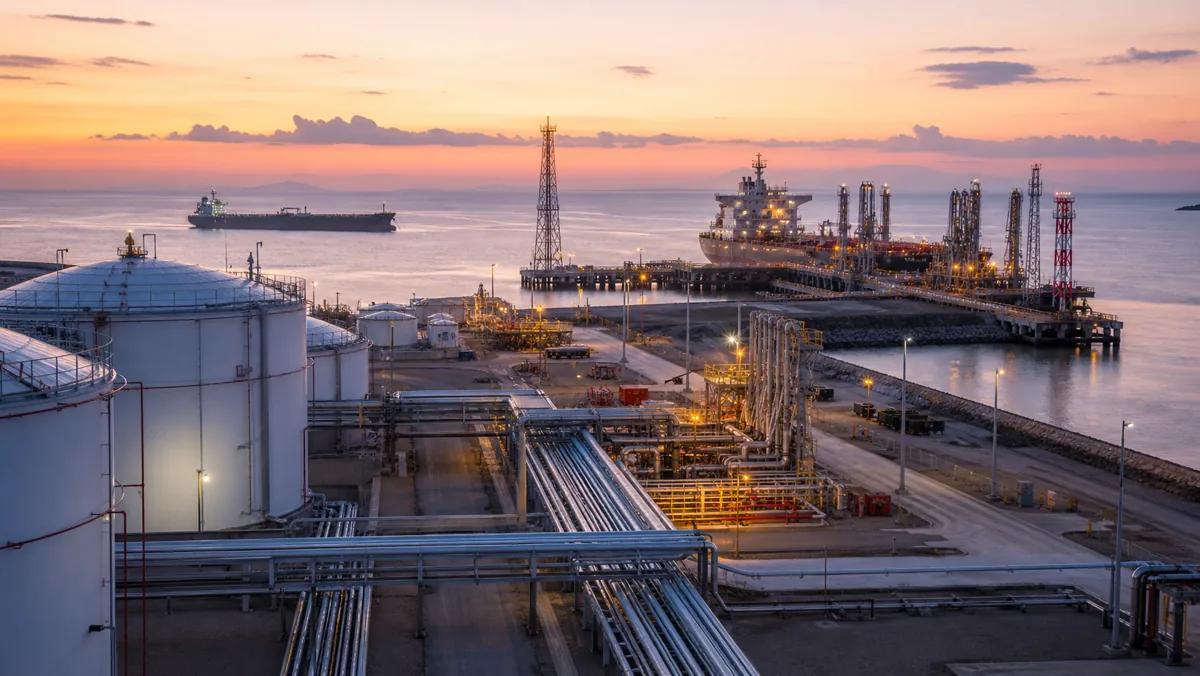
- Source
- OPEC, IEA Oil Market Report juni 2026, EIA Short-Term Energy Outlook en OPEC World Oil Outlook 2026
- MOZOM headline
- MOZOM analyzes: OPEC+ oil production August 2026, market stability or market share?
- Original headline
- OPEC+ will have seven countries produce an additional 188,000 barrels per day again in August 2026, while demand, stocks and prices remain vulnerable
- Author
- Paul Giezen
- Date
- 5 juli 2026 om 17:34
- Subject
- MOZOM investigates what the OPEC+ decision of July 5, 2026 on 188,000 barrels per day of additional oil production in August says about market stability, market share and the weakness in oil forecasts.
Summary of the original report
OPEC reported on July 5, 2026 that Saudi Arabia, Russia, Iraq, Kuwait, Kazakhstan, Algeria and Oman met virtually and decided to implement a production adjustment of 188,000 barrels per day in August 2026. This involves a further partial return of the voluntary reductions announced in April 2023. OPEC emphasizes that this return can be gradually adjusted, paused or reversed as market conditions change. OPEC also refers to compensation for overproduction since January 2024 and to monthly reviews; the next meeting is scheduled for August 2, 2026. The broader context makes the decision more sensitive. The IEA Oil Market Report of June 2026 expects a decline in global oil demand by 1.1 million barrels per day by 2026 and sees global oil supplies declining sharply. In the Short-Term Energy Outlook, the EIA expects Brent prices to remain high as long as global oil flows and inventories do not normalize. In the World Oil Outlook 2026, OPEC itself paints a long-term picture in which global oil demand will continue to grow to 124 million barrels per day towards 2050.
Own source research
MOZOM read the decision in three layers. Layer one is the headline fact: seven OPEC+ countries are putting another 188,000 barrels per day back into the market by August 2026. Layer two is the control clause: OPEC uses words like gradual, flexible, pause, reversal and compensate at the same time. This means that the increase is not only supply policy, but also a signal to the market that producers continue to manage the tap politically. Layer three is the forecast clash: IEA and EIA mainly look at short-term stress, inventories, demand drop and price recovery, while OPEC emphasizes structural growth demand for oil in its World Oil Outlook. MOZOM's own layer is that 'market stability' has two meanings here. For consumers, stability means predictable affordability. For producers, stability often means a price level that remains high enough to protect revenues and investments.
Striking in this message
It is striking that a small increase takes on great political weight. 188,000 barrels per day is not a tidal wave on a global scale. But because the move comes after months of disruption, inventory pressure and geopolitical uncertainty, the decision acts as a signal: OPEC+ wants to show that it is measuring the return to more production itself. This means that the word stability moves forward, while the word market share lags behind.
Less visible context
What is less visible is that a production target is no guarantee for physical barrels in the right place. Production capacity, export logistics, refining capacity, shipping insurance, sanctions, stock levels, drop in demand and currency together determine whether extra oil actually reduces price pressure. Moreover, OPEC+ policy is not a loose button. It works through expectations. Markets are reacting not just to oil being shipped today, but also to the belief that producers could raise, pause or reverse again next month.
Possible message behind the news
A possible message is that OPEC+ is stabilizing the oil market by cautiously reducing supply. The critical counter-reading is that the same caution shows how much control producers want to keep over price expectations.
Neutral conclusion
The neutral conclusion: seven OPEC+ countries will increase their production path by 188,000 barrels per day in August 2026 while keeping the option open to pause or scale back if circumstances change. The sharper MOZOM reading: this is not a purely technical market report. It's a power signal. OPEC+ gives the market a little more oil, but mainly keeps a hand on the tap.