
MOZOM-analyse
Eva Vlaardingerbroek and the British ETA ban: public order or media frame
- Source
- UK Parliament, GOV.UK, DutchNews, The Guardian, The National Desk en EWTN
- MOZOM headline
- Eva Vlaardingerbroek and the British ETA ban: public order or media frame
- Original headline
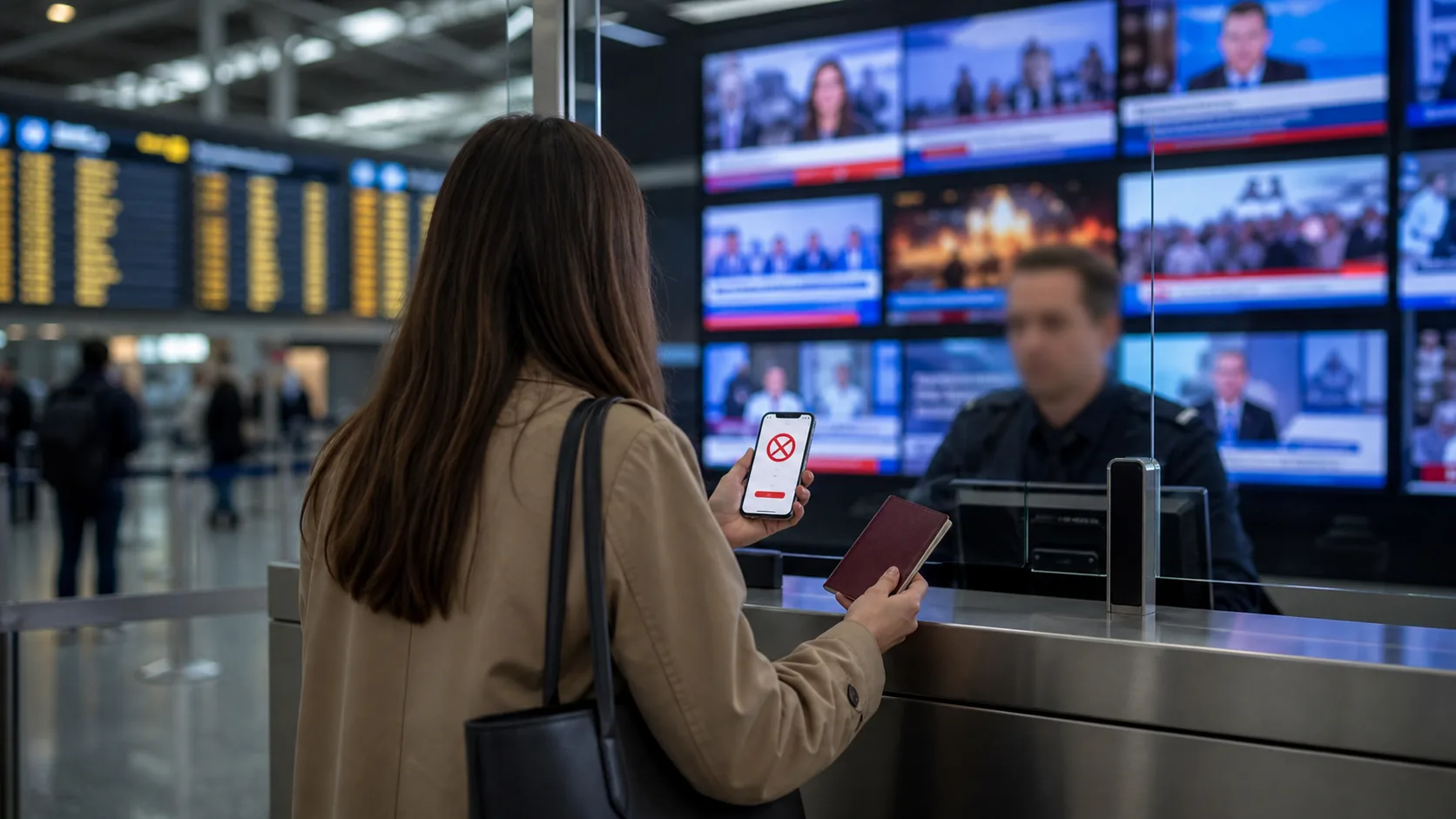
- A withdrawn British travel permit is simultaneously read by the media as a security measure, political censorship and a battle for labels
- Author
- Paul Giezen
- Date
- 12 juli 2026 om 04:00
- Subject
- MOZOM investigates the British ETA issue surrounding Eva Vlaardingerbroek: what has been legally established, how do different media frame her, and why is the formula 'not conducive to the public good' sensitive when political speakers are affected.
Summary of the original report
The British issue revolves around the ETA, a digital permission to travel to the United Kingdom for people who normally do not need a visa. According to GOV.UK, an ETA is not a visa or permission to actually enter; it is prior permission to travel. DutchNews, The Guardian, The National Desk and EWTN reported in January 2026 that Vlaardingerbroek lost her ETA or could no longer travel to the United Kingdom without a visa. The British government did not provide any substantive explanation of its individual case in a parliamentary response dated February 3, 2026, but did write that someone can still apply for a regular visa after refusal or cancellation of an ETA. That detail is important: legally this is not the same as a lifelong formal country ban, but practically it can take someone out of the fast-track visa-free travel system.
Own source research
MOZOM found no solid source basis for the broader claim that Vlaardingerbroek has a formal entry ban in several countries. The verifiable core is the British ETA issue. UK Parliament confirms a parliamentary question was asked about her blocking and the Home Office responded on February 3, 2026 that it does not discuss individual cases. GOV.UK confirms that an ETA is only permission to travel, that refusal cannot be challenged through a regular ETA appeal, and that the individual can then attempt a visa route. That makes the matter less absolute than the word 'ban' suggests, but not unimportant. Precisely a digital travel permit can make political exclusion more administratively invisible: no public trial, no full debate about evidence, but an administrative gateway that closes.
Striking in this message
It is striking how quickly the label determines the conclusion. Call Vlaardingerbroek an extreme right-wing agitator, and the refusal seems to be a defensible security measure. Call her a conservative Catholic commentator, and the same refusal seems like political censorship. The question for a reader is not whether labels should never be used, but whether they replace research. A news report must first explain what has happened legally and only then assess which political context is relevant.
Less visible context
What is less visible is that the British ETA fits into a broader shift towards advance digital travel control. The traveler is not only assessed at the border, but before he is allowed to board. This can increase safety, but it also shifts power to databases, risk signals and broad administrative criteria. This is efficient for regular travelers. For controversial political speakers, it could mean restricting access to a country before a judge or public debate has fully seen the arguments.
Possible message behind the news
One possible message is that the UK is protecting its borders from extremist influence. The critical MOZOM reading is that digital travel control adds a new layer of administrative power, in which political reputation and media frames can weigh without the citizen seeing exactly how much.
Neutral conclusion
The preliminary conclusion: an article about Eva Vlaardingerbroek is newsworthy if it does not get stuck in admiration or disgust. The actual core is the British ETA issue, not a proven series of country bans. The bigger question is whether a broad public policy formula, combined with digital travel authorization and hard media frames, can practically exclude political speakers before the public knows the rationale.
Source:
- UK Parliament: written question HL13756 about Eva Vlaardingerbroek
- GOV.UK: Electronic travel authorisation caseworker guidance
- Home Office: Electronic Travel Authorisation factsheet April 2026
- GOV.UK: Suitability, non-conducive grounds for refusal or cancellation
- DutchNews: Dutch far-right activist can't visit Britain without a visa
- The Guardian: Vlaardingerbroek appears to lose right to UK visa-free travel
- The National Desk: Dutch influencer's UK travel authorization revoked
- EWTN: Dutch conservative activist and Catholic convert barred from entering the UK