
MOZOM-analyse
MOZOM compares: Gaza 1,000 days of war, commemoration or stalled future?
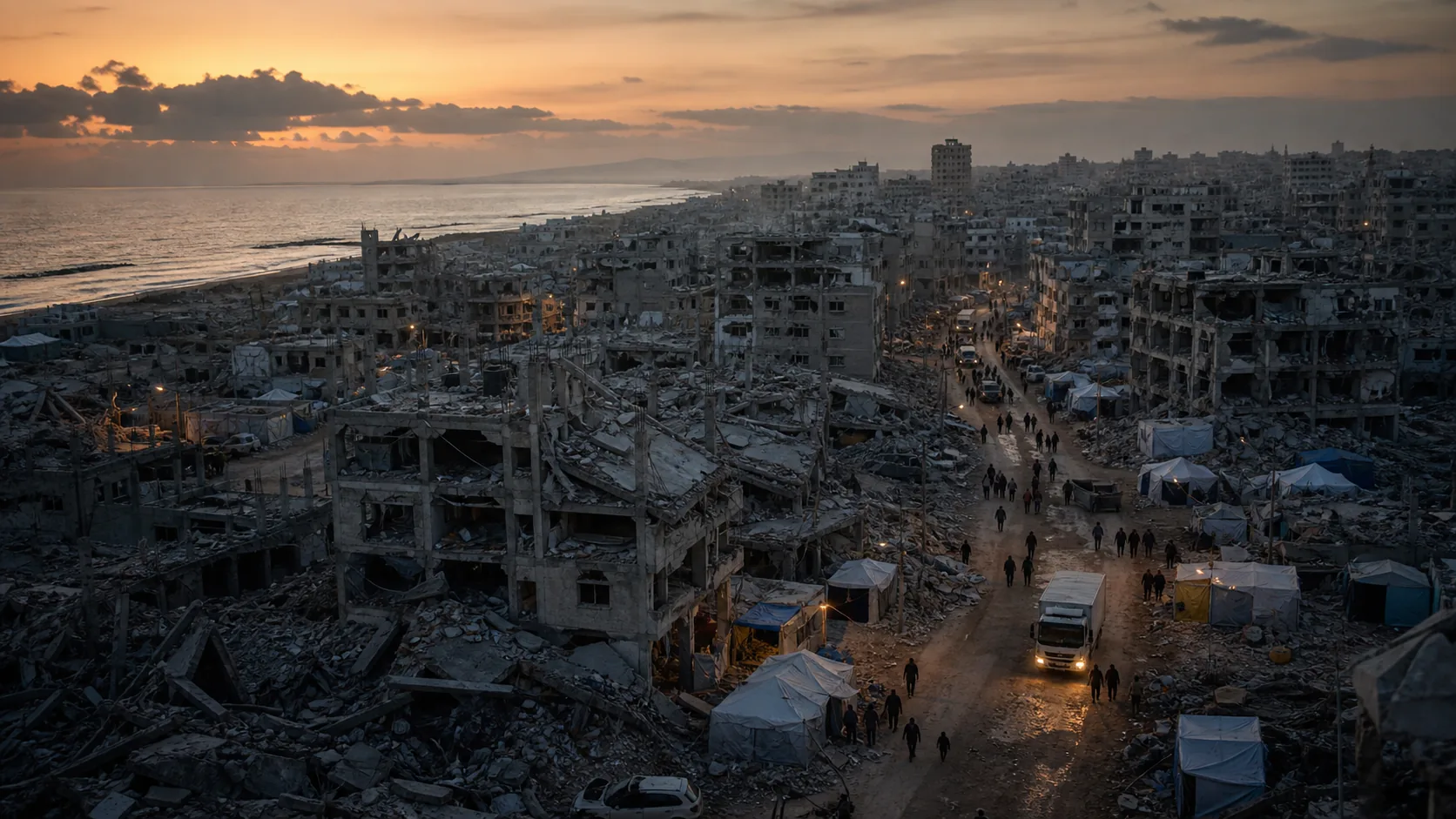
- Source
- AP, Al Jazeera, OCHA en VN-bronnen
- MOZOM headline
- MOZOM compares: Gaza 1,000 days of war, commemoration or stalled future?
- Original headline
- Gaza marks 1,000 days of war with loss, despair and uncertainty about the future
- Author
- Paul Giezen
- Date
- 2 juli 2026 om 18:06
- Subject
- On July 2, 2026, the war in Gaza is internationally described as a 1,000-day war, with massive destruction, displacement and a political process that provides little guidance for civilians.
Summary of the original report
AP describes how Palestinians in Gaza are experiencing the thousandth day of the war with grief, exhaustion and a feeling of abandonment. Al Jazeera places a stronger emphasis on scale: much of the Gaza Strip has been destroyed or rendered inaccessible, according to local and international data. Meanwhile, OCHA and UN channels continue to warn of food shortages, displacement, limited aid transit and a civilian population with increasingly fewer safe options. The gist is that 1,000 days is not just an anniversary number, but a summary of long-term social breakdown.
Own source research
MOZOM has placed the reporting on three layers. First layer: the date and the symbol. AP makes day 1,000 primarily a human milestone. Second layer: the physical space. Al Jazeera emphasizes that destruction and Israeli control or military zones have changed the map of Gaza itself. Third layer: emergency aid practice. OCHA and UN updates show that the Gaza discussion is inseparable from access to food, water, medical care and safe routes. MOZOM's own layer: the word '1000 days' may sound mildly commemorative, but it is also proof that crisis management has replaced a political solution.
Striking in this message
It is striking that day 1,000 is easily presented as a snapshot, while it actually reveals the duration. A war that lasts that long changes language. Words like temporary, emergency and transitional become weaker when people have been living in tents, ruins or queues for years.
Less visible context
What is less visible is that reconstruction does not start as soon as the guns fall silent. Reconstruction requires governance, security, money, materials, property rights, border agreements and international guarantees. If that layer is missing, the news is stuck in counts: deaths, injuries, trucks, destroyed buildings. The more difficult question is what political power is worth when citizens cannot regain a normal life.
Possible message behind the news
A possible message is that 1,000 days of war not only shows what has been destroyed, but also how difficult it is to rebuild political trust after a prolonged crisis.
Neutral conclusion
The neutral conclusion: Gaza 1,000 days of war is actually a date in an ongoing conflict. But as a news layer it is more: it shows that a war is not only measured by military actions, but also by the extent to which an area can still live, care, learn, govern and recover.