
MOZOM-analyse
Ukrainian protests: only Fedorov, or a breach of trust around the war summit?
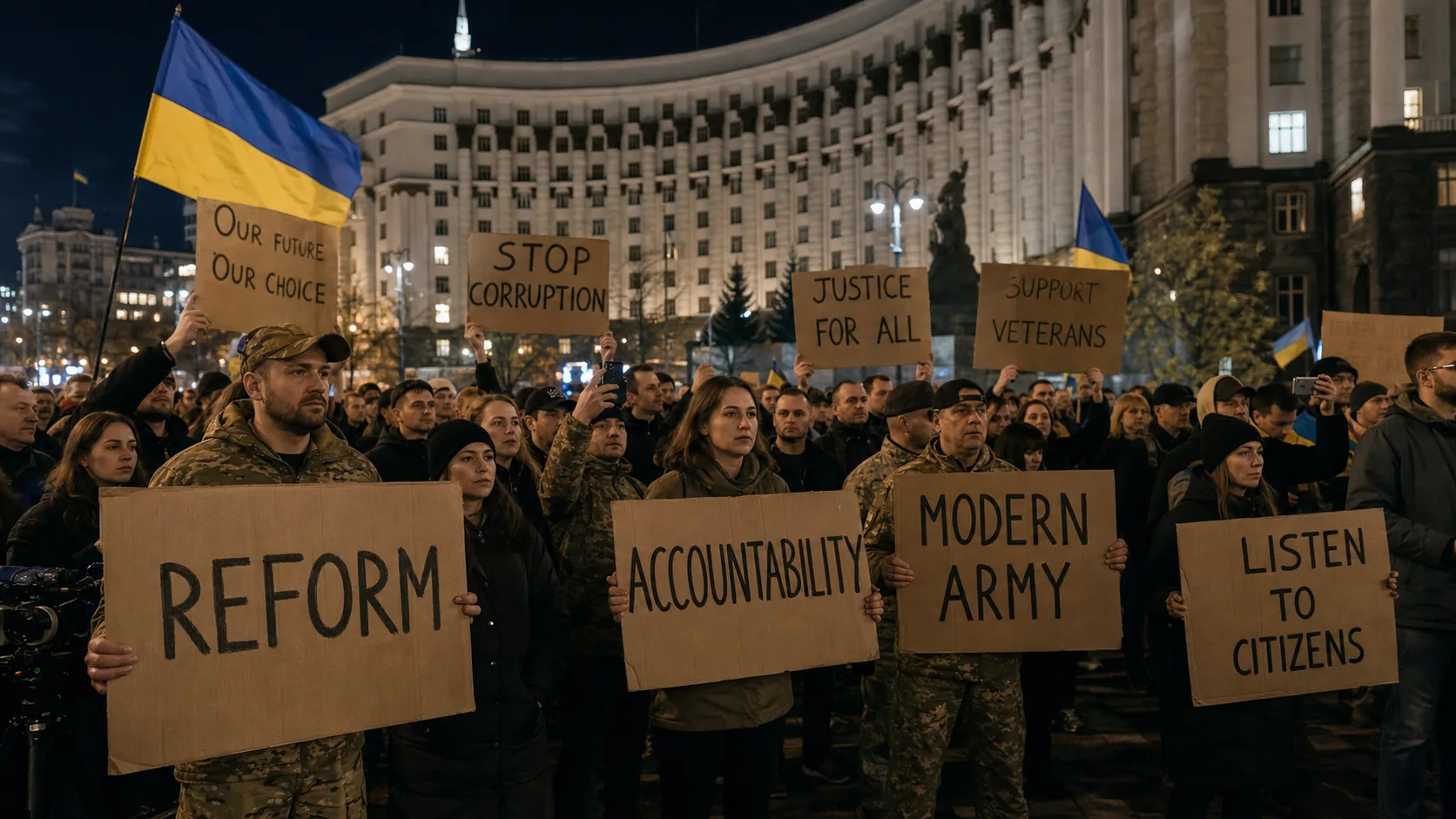
- Source
- Kyiv Independent, Ukrainska Pravda, AP, LiveMint, Daily Mail, Forbes, CNBC, CNN, Yahoo, Bao Nghe An en Voennoe Delo
- MOZOM headline
- Ukrainian protests: only Fedorov, or a breach of trust around the war summit?
- Original headline
- Analysis of the protests in Kyiv and other Ukrainian cities after the cabinet and army crisis surrounding Mykhailo Fedorov and Oleksandr Syrskyi
- Author
- Paul Giezen
- Date
- 19 juli 2026 om 19:10
- Subject
- MOZOM compares Western reporting on the Ukrainian protests with Ukrainian sources and protest messages themselves: Fedorov's dismissal is the reason, but the stakes seem broader.
Summary of the original report
Since mid-July 2026, thousands of Ukrainians have been protesting in Kyiv and other cities following the cabinet and army crisis surrounding Mykhailo Fedorov and Commander-in-Chief Oleksandr Syrskyi. Western media often summarize the case as a protest against the dismissal or demotion of a popular defense official. Ukrainian media place more emphasis on the slogans and demands: Fedorov back, Syrskyi gone, modernization of the army, better dealings with soldiers and more accountability of the war leadership. That makes the protests more sensitive than an ordinary personnel dispute. They touch on confidence in Zelenskyy's center of power, on the question of who controls the war and on how much criticism may still become visible in wartime.
Own source research
MOZOM has only included the current wave of protests from July 16 to 19, 2026. Older protest lines from earlier years have therefore been excluded from this article. The source layer was examined in four groups. Group one: Western transfers and news media such as LiveMint, Daily Mail, Yahoo, Forbes, CNBC and CNN. They mainly provide the international context and the short news formula. Group two: Ukrainian media such as Kyiv Independent and Ukrainska Pravda, which are closer to the protesters, slogans and calls. Group three: non-Western or pro-Russia sources such as Voennoe Delo and Bao Nghe An, who politicize the protests more sharply or frame them as a break with Zelensky. Group four: the visible protest message itself, insofar as it is reflected in reporting. This does not provide evidence of a central conspiracy, but it does reveal a clear pattern: the protests are about trust, army leadership, modernization and political control, not just about Fedorov's career.
Which narrows the heads
The wording 'protest after dismissal of minister' is useful, but it diminishes the citizen's message. A dismissal is an event. A breach of trust is a process. This process is particularly evident in the street scenes and Ukrainian reporting: citizens asking why someone associated with drone innovation and reform has to make way, while the controversial military top remains in place. The headline therefore determines whether the reader sees a personnel issue or a war political crisis.
Less visible context
Less visible in many Western short messages is that Ukrainian criticism of its own leadership in wartime is doubly charged. Russia can use such protests as propaganda, making Western newsrooms cautious about exaggerating internal Ukrainian divisions. At the same time, the existence of protest is important: Ukrainian citizens take the risk of going against decisions of their own presidential center in wartime. This does not automatically indicate collapse, but it does indicate pressure beneath the surface. Democratic support for Ukraine becomes stronger, not weaker, when this internal tension can be honestly identified.
Possible message behind the news
The visible message of much Western reporting is: Ukrainians are protesting after the dismissal of a popular minister. The critical MOZOM reading is: that dismissal is the hook, but the real stakes are confidence in the way the war is managed.
Neutral conclusion
The conclusion: the mainstream hook is not necessarily wrong, but it is incomplete. Today's protests in Ukraine are not just about Fedorov as a person. They are about the clash between a modern war approach and an old military command culture, about trust in Syrskyi, about the price that soldiers and civilians pay and about the question of whether Zelenskyy's power center still listens enough. That is more newsworthy than the simple story of a fired bigwig.
Source:
- Kyiv Independent: protesten voor derde dag rond militaire leiderschapscrisis
- Kyiv Independent: veteraan en protestfiguur over druk en intimidatie
- Ukrainska Pravda: demonstranten kondigen nieuwe protestactie aan
- LiveMint: waarom demonstranten in Kyiv 'shame' riepen
- Daily Mail: massale protesten na ontslag populaire defensieminister
- Forbes: mass protests over sacking of Defence Minister Fedorov
- CNBC: Oekraiense oorlogscontext en Zelenskyy
- CNN: Russische aanvallen en internationale oorlogscontext
- Yahoo News: protesten na ontslag van Fedorov
- Bao Nghe An: Zelensky zegt legerhervorming toe terwijl protesten doorgaan
- Voennoe Delo: Ruslandgezinde lezing van protesten tegen Zelensky