
MOZOM-analyse
Trump and the EAC: more secure elections or more political control over the electoral process?
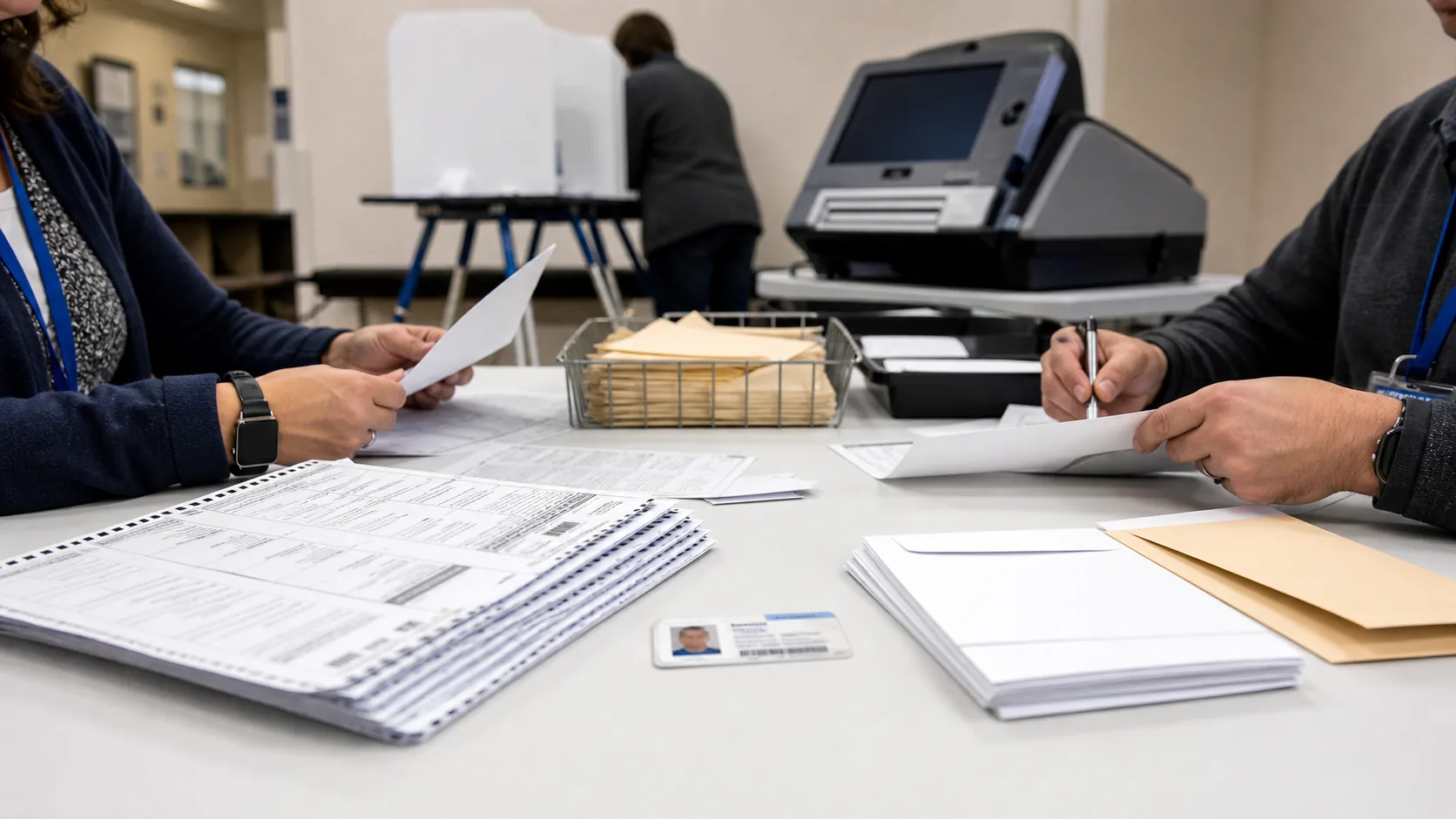
- Source
- White House, EAC, AP, Votebeat, federale rechtbank, BPC, Heritage en Pew Research Center
- MOZOM headline
- Trump and the EAC: more secure elections or more political control over the electoral process?
- Original headline
- Trump removes leadership of Election Assistance Commission as debate over proof of citizenship and mail-in voting heats up
- Author
- the MOZOM.nl editorial team
- Date
- 10 juli 2026 om 16:47
- Subject
- MOZOM investigates whether Trump's attempt to tighten the American election system can make elections more secure and fraud-proof, or whether it makes independent audit more vulnerable.
Summary of the original report
The Election Assistance Commission, EAC, is a federal commission that supports U.S. states and local election authorities. It does not count votes itself and does not centrally organize the elections. However, it develops voluntary guidelines for voting systems, certifies voting equipment through testing laboratories, administers federal election subsidies and maintains the national registration form. According to the EAC, the commission under the Help America Vote Act is deliberately four-member and bipartisan: no more than two members may belong to the same party and commissioners are confirmed by the Senate after nomination by the president. AP reports that Trump has removed two Democratic commissioners, Thomas Hicks and Benjamin Hovland; Votebeat reported that all of the remaining leadership has been pushed away. Republican Christy McCormick also left, leaving the committee without commissioners. The political background is clear: Trump wants, among other things, proof of American citizenship upon registration. A federal judge ruled in October 2025 that the president could not unilaterally have the national mail registration form adjusted through the EAC, because the Constitution places election rules primarily with states and Congress. The question is therefore not only about fraud, but also about power: who can change the rules, and when?
Own source research
MOZOM has separated the discussion into three layers. Layer one is the substantive security question. Stricter verification can make elections fairer if it focuses on real risks, is free or easily accessible for voters, works with reliable government registers, offers recovery options in the event of errors and is not implemented chaotically shortly before an election. Layer two is the fraud evidence question. Proponents rightly point out vulnerabilities: postal votes have more links, voter lists must be cleaned up and non-citizens are not allowed to vote. Opponents rightly point to proportionality: the best available public investigations and lawsuits show no evidence that recent national results have been determined by large-scale non-citizen or postal voting fraud. Layer three is the institutional question. Even good security measures lose confidence when implemented by eliminating a party-balanced layer of oversight. MOZOM's own conclusion: better control can be democratically sensible; administratively beheading the EAC is the weakest route for this.
Striking in this message
It is striking that the same measure evokes two opposing words: election integrity and power grab. This is because the content and the procedure are intertwined. If you only look at the content, you will see an understandable requirement: proof that someone is allowed to vote. Anyone who only looks at the procedure sees a president who removes the leadership of an independent commission shortly before elections. Both observations can be true at the same time.
Less visible context
Less visible is that American elections are decentralized. States and counties administer the elections, not the EAC. As a result, Trump cannot simply count votes nationally or manage ballot boxes. At the same time, the EAC is important for technical standards, testing laboratories, certification, federal subsidies, forms and national expertise. Especially in a polarized system, such a supporting layer is more than bureaucracy: it is a hinge of trust between parties that do not believe each other.
Possible message behind the news
A possible message is that Trump is finally doing what his supporters believe is necessary: imposing strict requirements on registration, postal voting and voter lists. The critical MOZOM reading is that true election integrity not only requires stricter rules, but also an independent referee who does not appear to be dependent on the president.
Neutral conclusion
The neutral conclusion: some parts of Trump's election agenda, if carefully designed, can make elections more secure and fraud-proof. Think of better citizenship checks via government registers, clear ID rules, free document assistance, ballot tracking, paper ballots, strong chain of custody and broad recovery procedures. But leaving the EAC without commissioners does not in itself make elections fairer. It cannot immediately halt day-to-day implementation, but it does weaken the party-balanced leadership of the federal agency that supports election administration. The best reform would therefore not be through administrative voids, but through legislation, evidence, implementation funding, independent review, and protection of both voting security and voting access.
Source:
- White House: Ensuring Citizenship Verification and Integrity in Federal Elections
- EAC: Commissioners and Help America Vote Act structure
- EAC: 2024 Election Administration and Voting Survey
- AP: Trump ousts election commission members
- Votebeat: Trump fires EAC members
- Federal court opinion: executive order and citizenship proof on registration form
- Supreme Court: Trump v. Slaughter
- Bipartisan Policy Center: Five things to know about the SAVE America Act
- Heritage Foundation: Ensuring that only citizens vote in U.S. elections
- Heritage Foundation: election fraud database
- Pew Research Center: partisan divide on early and absentee voting