
MOZOM-analyse
MOZOM analyses: AfD Erfurt protest network, left-wing blockade coalition or democratic resistance?
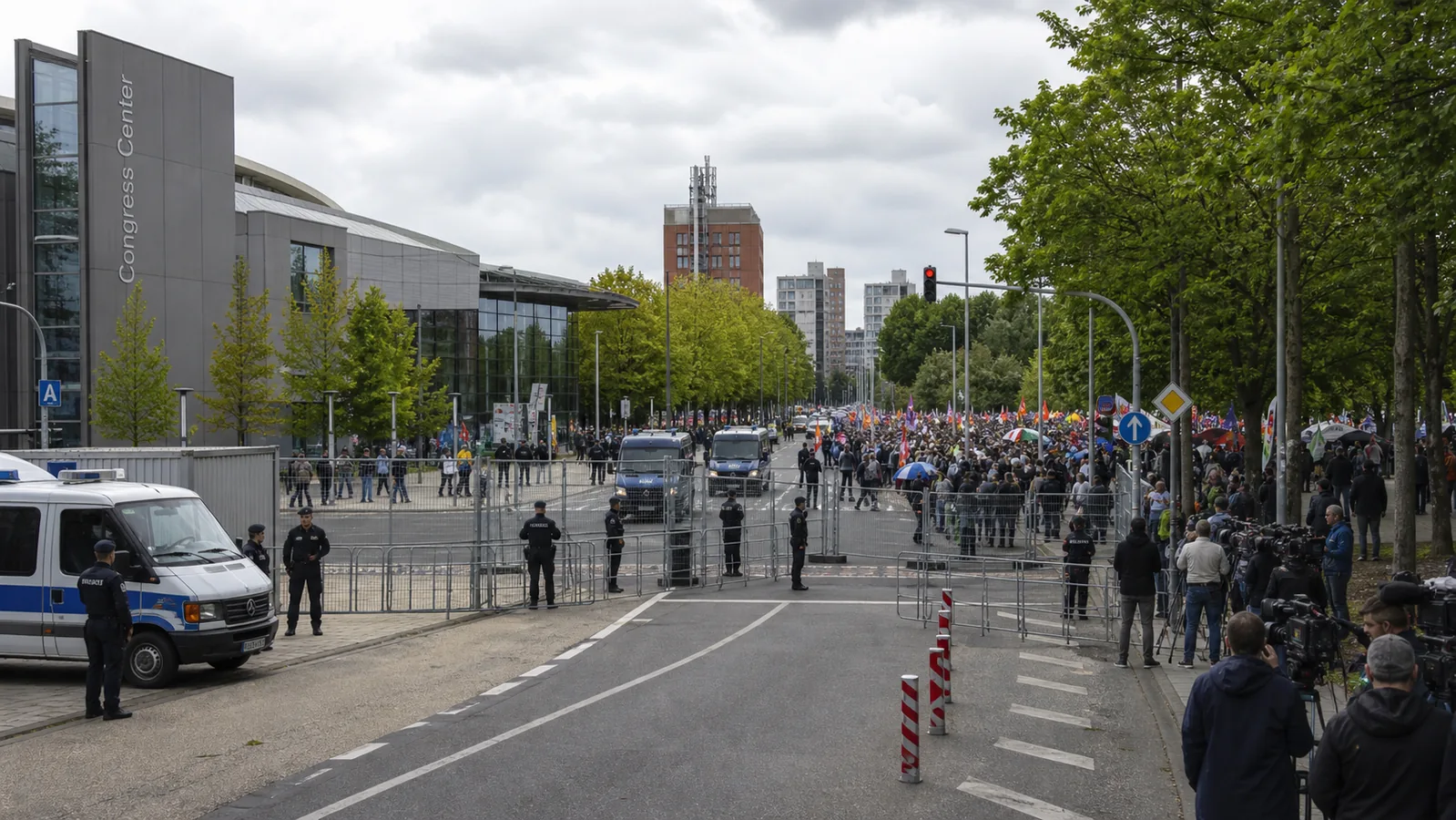
- Source
- Widersetzen, DGB, Bundestag, Tagesschau, MDR, ZDF, AP, Groenen en Fridays for Future
- MOZOM headline
- MOZOM analyses: AfD Erfurt protest network, left-wing blockade coalition or democratic resistance?
- Original headline
- Protests around the AfD party day in Erfurt show an organized network of blockade actions, trade union demonstrations and media attention
- Author
- Paul Giezen
- Date
- 4 juli 2026 om 19:20
- Subject
- MOZOM investigates whether the protests around the AfD party day in Erfurt were mainly ordinary democratic countervailing forces, or also a coordinated left-progressive attempt to politically block and negatively charge the AfD.
Summary of the original report
On July 4, 2026, according to the police, approximately 31,000 people gathered at protests around the AfD Bundesparteitag in Erfurt; Widersetzen and other organizers spoke of at least 50,000 participants. The Widersetzen action alliance had a clear goal before and during the day: to prevent or seriously hinder the AfD party day with blockades. The DGB and the broader Zusammenstehen association chose a different, legal mass demonstration with words such as democracy, human dignity, solidarity and open society. In addition, Greens, Fridays for Future, trade union circles and left-wing or anti-fascist networks, among others, called for participation. MOZOM sees this as a well-founded pattern of coordinated left-progressive mobilization against the AfD. The more pointed question is whether such protests are not only reported by mainstream media, but also given extra moral weight because the AfD is almost always approached from the frame of the extreme right, danger of fascism and democratic emergency.
Own source research
MOZOM has divided the network into five layers. Layer one is the blocking layer: Widersetzen wanted to block access to the AfD party day and presented this as an anti-fascist duty. Layer two is the trade union and citizen layer: DGB, Zusammenstehen, ver.di, welfare organizations and local initiatives gave the protest a broader social face. Layer three is the party political layer: Greens, left-wing youth and climate networks and other progressive players visibly called for or joined. Layer four is the control layer: the Bundestag report shows that political questions have been asked about contacts, campaign and possible support, while the government denies support for a mentioned campaign, according to that source. Layer five is the media layer: mainstream media mainly chose images and words around blockades, threats, police, extreme right and democratic defense. This does not provide evidence for a secret central direction, but it does provide evidence for a powerful public front in which activism, politics and media reinforce each other.
Striking in this message
It is striking that the anti-AfD coalition is being broadened both morally and organizationally. A more radical blockade tactic stands next to trade union banners, citizen initiatives, churches, climate groups and political youth. This gives the protest a soft outer edge around a hard core: blocking becomes not just action, but a sign of decency. Mainstream media often picks up on that tension without fully explaining it. The camera sees the crowd and the police; What is less visible is that the protest is also an attempt to socially isolate the AfD and brand it politically negatively.
Less visible context
Less visible is the difference between protest against a party and prevention of party politics. Germany has good reasons to closely monitor far-right movements, especially because of its history. At the same time, the AfD remains a legal party with voters, congressional rights and parliamentary presence. When opponents say that a party day should not take place, it shifts from expression to power over access. The media play a decisive role in this: through selection, headlines, live blogs, images and labels they determine whether the day is mainly read as civil resistance or as an organized blockade of a political opponent.
Possible message behind the news
A possible message is that a broad society is standing up against extremism. The critical counter-reading is that a left-progressive coalition tries to block, isolate and make morally untouchable a legal opposition party with the help of media images.
Neutral conclusion
The neutral conclusion: Erfurt showed a large and partly professionally organized anti-AfD mobilization, with both legal demonstrations and blockade attempts. The sharper MOZOM reading is that this is more than spontaneous anger. It is a pattern in which left-wing and progressive networks, trade unions, parties, action groups and media attention combine to build a negative political image around the AfD. That can be called democratic resistance. But anyone who looks honestly will also see the other side: here an attempt is made not only to criticize a party, but to complicate its public presence and make it morally suspect.
Source:
- Widersetzen: AfD Bundesparteitag verhindern
- Widersetzen: 12 blokkades en terugblik op Erfurt
- DGB Hessen-Thüringen: Protest gegen den AfD-Bundesparteitag
- Bundestag: Protestaufrufe gegen den AfD-Bundesparteitag in Erfurt
- Tagesschau: Zehntausende protestieren gegen AfD in Erfurt
- MDR: liveverslag AfD-Parteitag, blokkades en protesten in Erfurt
- ZDF: AfD gewinnt Hase-und-Igel-Spiel gegen Demonstranten
- AP: AfD convention, protesters and police clash
- Groenen: Zusammenstehen gegen die AfD
- Fridays for Future: solidariteit met Widersetzen