
MOZOM-analyse
MOZOM analyses: Russian shadow fleet avoids Channel, safety at sea or economic pressure with military frame?
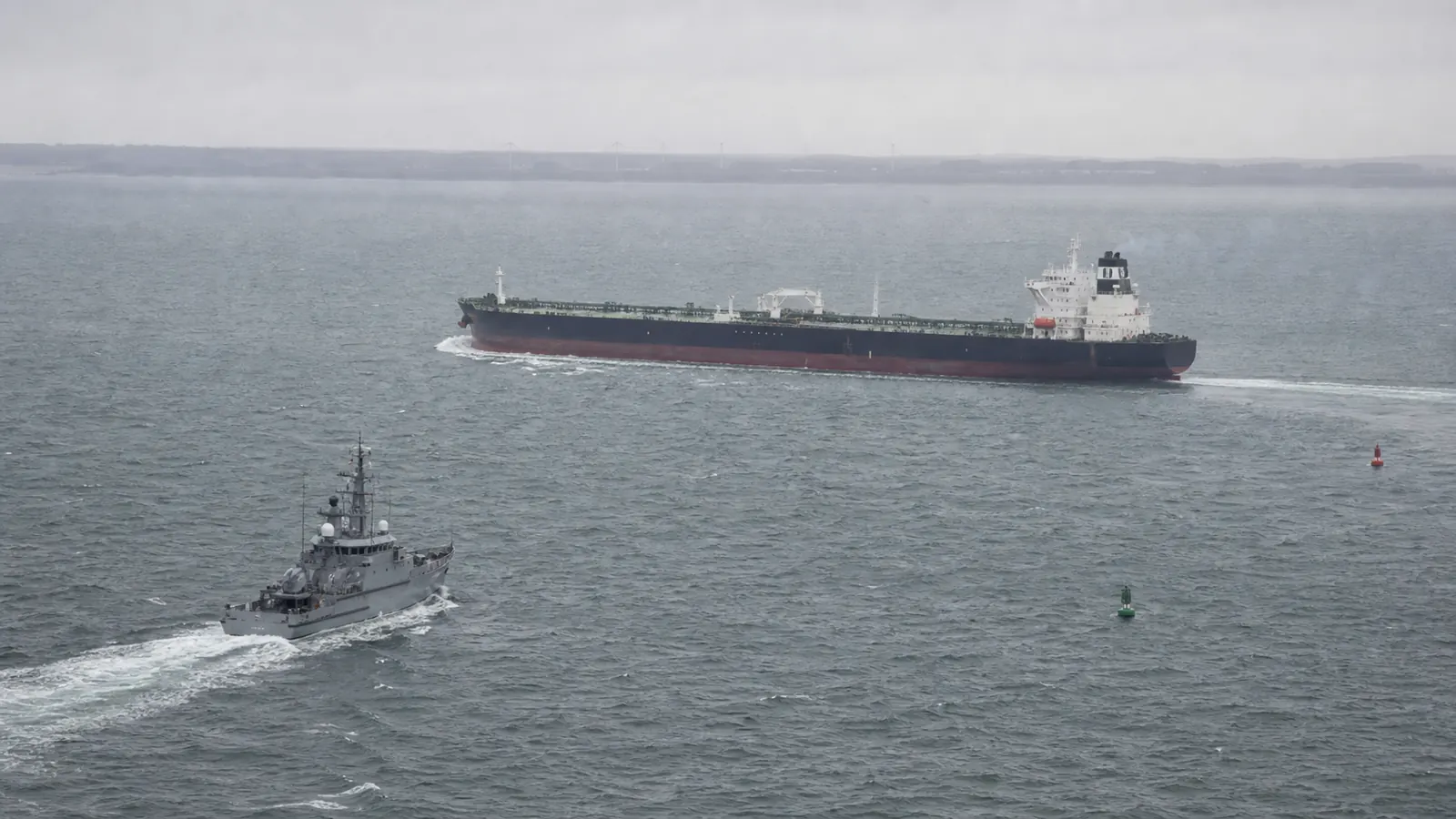
- Source
- Financial Times, Britse regering, Europese Raad, Euronews, SWP en Deense Maritieme Autoriteit
- MOZOM headline
- MOZOM analyses: Russian shadow fleet avoids Channel, safety at sea or economic pressure with military frame?
- Original headline
- Tankers from the Russian shadow fleet would avoid the Channel after European interceptions
- Author
- the MOZOM.nl editorial team
- Date
- 4 juli 2026 om 12:35
- Subject
- MOZOM investigates how European actions against tankers from the Russian shadow fleet are simultaneously presented as sanctions enforcement, maritime security and protection against hybrid threats.
Summary of the original report
The Financial Times reported on July 4, 2026 that tankers belonging to the Russian shadow fleet are increasingly avoiding the Channel and British or French waters after interceptions by European navies. According to this report, some ships are choosing longer routes via the North Atlantic Ocean, partly after vessels became legally more vulnerable due to flag problems or sanctions. The British government presented the June interception of the Smyrtos as a blow to the Russian war chest. The European Council explicitly links new sanctions to limiting Russian energy revenues and hitting the shadow fleet ecosystem. SWP simultaneously describes the same fleet as sanction evasion, environmental hazard and safety risk. That double frame is the core: the file is about oil revenues, but is sold on the basis of security, fear of sabotage and maritime danger.
Own source research
MOZOM has placed four layers next to each other. Layer one: the official sanctions goal is economic. The EU and the UK want to hit Russian oil revenues because they finance the war in Ukraine. Layer two: the legal implementation layer runs through sanctions lists, port access bans, service bans, flag status, insurance and inspection. Layer three: the security layer broadens the story: older tankers, unclear ownership, environmental risk, possible sabotage and hybrid threat. Layer four: the medial consequence is that economic pressure becomes a protection story. This may be justified when ships operate in a truly dangerous or stateless manner, but it can also lower the evidentiary threshold. The own MOZOM layer is therefore: the word shadow fleet is not a neutral technical label. It is a politically powerful word that compresses trade, war, security and moral consent into one image.
Striking in this message
It is striking that European action against oil shipping is rarely sold solely as economic coercion. There is almost always an added layer of security: danger to waters, sabotage, hybrid threat, stateless ships, environment. This makes the policy more palatable to the public. Nobody wants dangerous tankers next to the coast. But if the actual goal is to make Russian oil more expensive, more difficult and less profitable, that must be stated honestly.
Less visible context
What is less visible is that sanctions enforcement at sea is not a simple button. Ships fly flags, have insurers, owners, managers, cargo interests and passage rights. A boarding or diversion may be legally correct, but remains diplomatically sensitive. The danger is not just Russia or oil, but also precedent: once security language legitimizes economic control, the same logic can later be applied to other trade routes. Anyone who cheers today because it affects Russia must also think about the power that this normalizes Europe.
Possible message behind the news
A possible message is that Europe finally dares to take action against Russian war financing. The critical counter-reading is that economic policy is given military and moral weight through security language.
Neutral conclusion
The neutral conclusion: European interceptions and sanctions appear to be changing the behavior of tankers from the Russian shadow fleet, including around the Channel. The more pointed MOZOM reading is that this shows exactly how powerful framing is. When oil enforcement is packaged as maritime security and hybrid threat, economic pressure takes on an aura of protection. That may sometimes be justified, but it should not mean that every subsequent intervention is automatically above criticism.
Source:
- Financial Times: Russische schaduwtankers mijden Kanaal na maritieme onderscheppingen
- Britse regering: eerste Britse onderschepping van schaduwvlootvaartuig
- Europese Raad: sancties van 15 juni 2026 tegen energie-inkomsten en schaduwvlootecosysteem
- Euronews: EU stelt nieuwe sancties voor tegen Russische olie en schaduwvloot
- SWP: maatregelen tegen de Russische schaduwvloot
- Danish Maritime Authority: EU-designated vessels onder sanctieregime