
MOZOM-analyse
EU and UK sanction Russian cyber networks: defense or declaration of digital war?
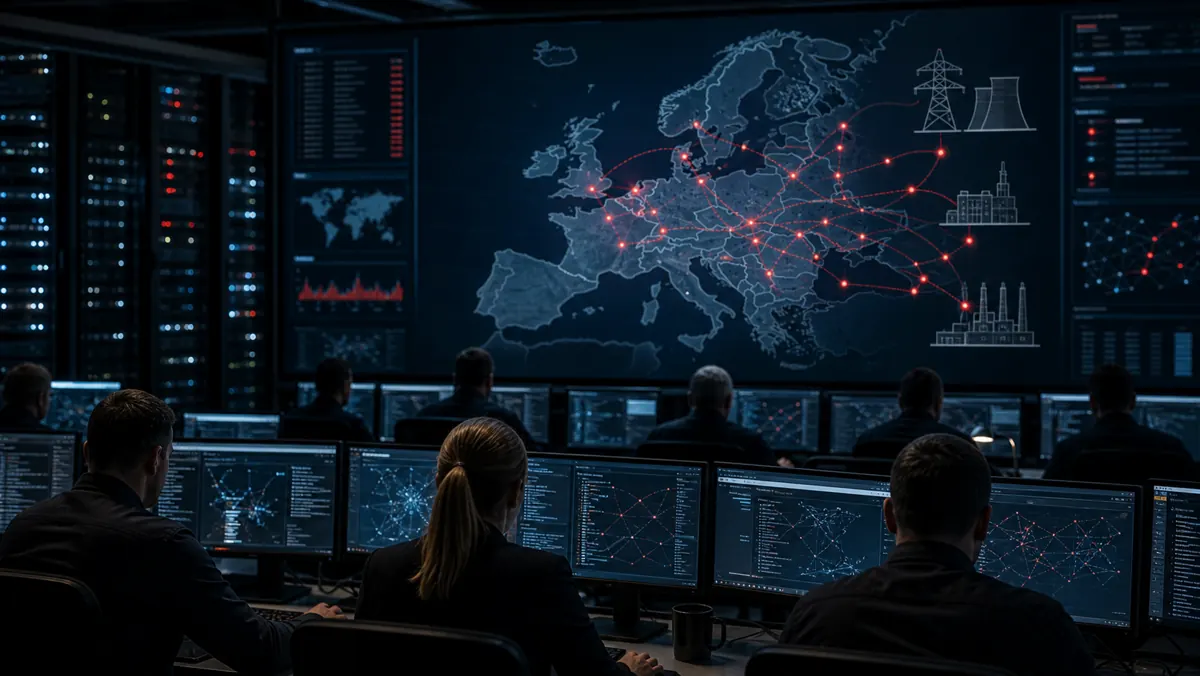
- Source
- Raad van de EU, Britse regering, ANSSI/CERT-FR, NATO, AP en Le Monde
- MOZOM headline
- EU and UK sanction Russian cyber networks: defense or declaration of digital war?
- Original headline
- EU and Britain target Russian intelligence-linked cyber networks after years of espionage and sabotage claims
- Author
- the MOZOM.nl editorial team
- Date
- 13 juli 2026 om 16:58
- Subject
- MOZOM investigates why the joint EU and UK sanctions against Russian cyber actors are more than a technical security message: they make cyber attacks visible as a geopolitical means of pressure against European infrastructure.
Summary of the original report
The Council of the EU states that the FSB, through the 16th Center, controls several cyber threat groups, including Turla. According to the EU, France, Germany, Poland, Cyprus, the Netherlands, Austria, Slovakia, Romania and Finland have been targets of infiltration, espionage or sabotage. The EU imposes sanctions on nine individuals and four entities, including GRU intelligence officers, cybercriminals, self-proclaimed hacktivists and private companies. The UK simultaneously announces sanctions against 24 individuals and entities. The British government names GRU Unit 29155, the IMPULS company, Lumma Stealer actors and Rybar LLC, among others. NATO also condemns the same Russian cyber activities and says attacks on critical national infrastructure and government agencies pose a threat to allies.
Own source research
MOZOM has compared the political sanction texts with the technical threat analysis. Evidence from EU source: EU appoints FSB 16th Center as controller of threat groups including Turla and imposes measures on nine individuals and four entities. Evidence from British source: UK names 24 sanctions targets, including GRU leadership, IMPULS, Lumma Stealer actors and Rybar LLC, and attributes a failed attack on Poland's energy grid to FSB Center 16. Evidence from French/ANSSI source: French authorities say they have seen compromise and targeting through Turla since 2010, with casualties in diplomacy, defense, justice and technology. Probably: the sanctions are intended as a political cost increase and as a public signal that cyber operations are no longer treated as separate technical incidents. Uncertain: how much operational effect these sanctions have on the actual capacity of Russian cyber groups.
Striking in this message
The language shift is striking. A 'cyber incident' sounds technical and distant. A “Russian cyber ecosystem” sounds like an organized power structure. A 'failed attack on the Polish energy grid' makes the step to ordinary citizens concrete: not just data or servers, but heat, electricity and daily security. At the same time, an important part of the burden of proof remains based on government attribution and intelligence information that cannot be fully verified publicly.
Less visible context
The most important shift is that Europe is building legal and political instruments to treat cyber operations as foreign security policy. That is understandable when power plants, ministries and defense companies are targeted. But it also requires discipline: attribution must remain as concrete as possible, sanctions must be legally defensible and citizens must be able to see where factual technical analysis ends and political interpretation begins. Otherwise, cybersecurity will become a domain in which governments gain a lot of power, but outsiders have little control.
Possible message behind the news
One possible message is that Europe and the UK are finally responding firmly to Russian cyber threats. The more pointed MOZOM reading is that this also marks a new phase: cyber attribution becomes public security policy, but democratic control over the underlying burden of proof remains limited.
Neutral conclusion
The conclusion: this is newsworthy because the sanctions reveal more than a list of names. The EU and the UK are trying to make a Russian network of intelligence services, cybercriminals, private companies and information actors politically visible. This may be necessary to deter attacks on infrastructure and governments. But it also raises a lasting question: if cyber attacks are increasingly treated as war politics, how do democracies ensure that attribution, sanctions and countermeasures remain verifiable and legally clear?
Source:
- Raad van de EU: statement over Russisch cyber-ecosysteem
- GOV.UK: UK and EU strike Russian cyber networks with new sanctions
- CERT-FR: Targeting and compromise of French entities using Turla
- ANSSI: Ciblage et compromission d'entites francaises par le FSB
- NATO: statement condemning Russia's malicious cyber activities
- AP: EU and Britain target Russian intelligence officers over cyberspying campaign
- Le Monde: France sanctions Russian elite cyberespionage unit Turla