
MOZOM-analyse
MOZOM analyses: IMO requests release of 44 seafarers, trade route or forgotten workplace?
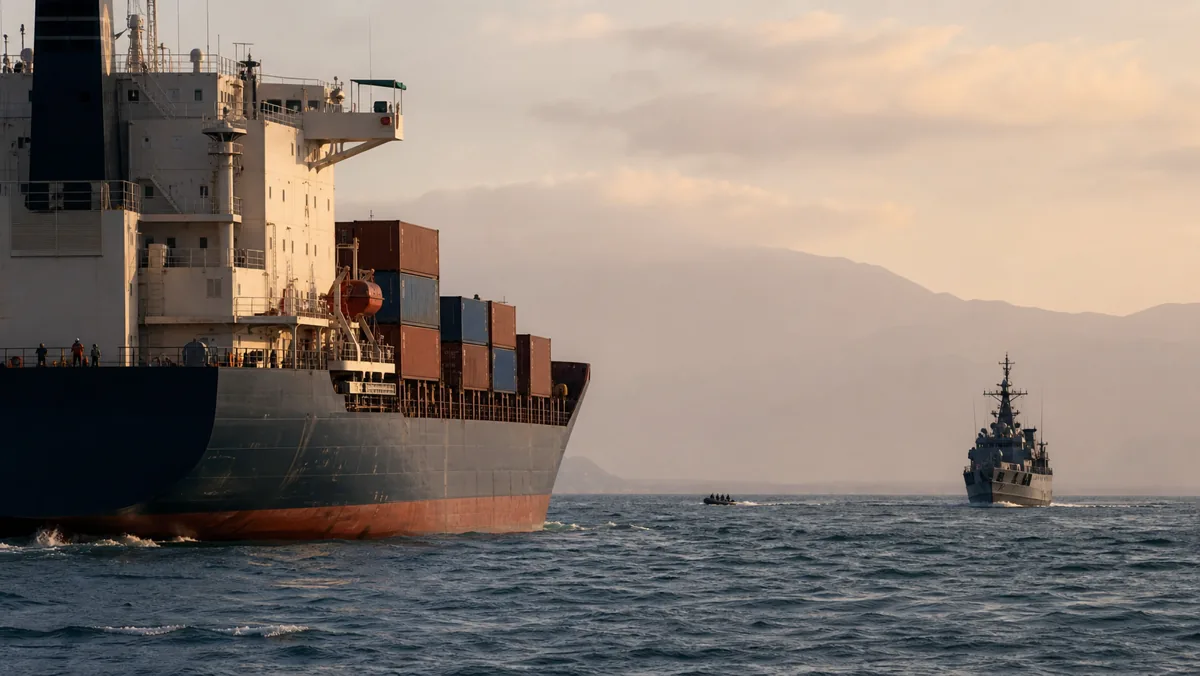
- Source
- UN News, International Maritime Organization, IMO Council en IMO Piracy/Security
- MOZOM headline
- MOZOM analyses: IMO requests release of 44 seafarers, trade route or forgotten workplace?
- Original headline
- UN maritime agency seeks release of 44 detained seafarers as food runs low
- Author
- Paul Giezen
- Date
- 6 juli 2026 om 20:07
- Subject
- MOZOM investigates why the IMO's call to release 44 seafarers in Somali waters is more than a piracy message: it affects trade routes, crew safety, Red Sea tension and the invisible workplace of the global economy.
Summary of the original report
UN News reports on July 6, 2026 that the International Maritime Organization is calling for the urgent release of 44 seafarers held in Somali waters by pirates and armed robbers. They are being held on three ships that were attacked in separate incidents in April and May, according to IMO Secretary General Arsenio Dominguez. According to him, the crews are facing shortages of food and water and the constant threat of violence. The IMO says it has recorded 24 attempted and actual incidents of piracy and armed robbery against ships in the Red Sea and Gulf of Aden in the past three months. Globally, the number of reported incidents of piracy and armed robbery at sea increased by 17 percent between 2024 and 2025, according to the IMO, from 146 to 171. The same UN News update also notes that the IMO evacuated 2,500 seafarers from the Strait of Hormuz in June, before the operation was halted on June 25 following an attack on a container ship in the Gulf of Oman.
Own source research
MOZOM has broken down the IMO/UN News message into three layers. Layer one is the immediate need: 44 people stuck on three ships, with a shortage of food and water. Layer two is the regional escalation: 24 recent incidents in the Red Sea and Gulf of Aden do not point to one individual case, but to a more crowded risk picture. Layer three is the systems layer: the same organization addressing piracy around Somalia had to simultaneously evacuate seafarers from the Strait of Hormuz due to broader regional tensions. MOZOM's own layer is that maritime safety is often told as cargo protection, but in reality it starts with people who work on ships for months between geopolitics, crime, insurance language and military presence.
Striking in this message
It is striking that the word trade route quickly mutes the human layer. A sailing route can be diverted, insured or militarily supervised. A crew stuck with less food and water cannot. The language of maritime safety must therefore not only be about ships, ports and chokepoints, but also about the people who literally keep the global economy afloat.
Less visible context
What is less visible is that maritime risks are piling up. Piracy around Somalia, armed robbery in the Gulf of Aden, tensions around the Strait of Hormuz and attacks in the Gulf of Oman are different dossiers, but for crews and shipowners they can come together in the same planning. If a route becomes more dangerous, costs, insurance pressure and waiting times increase. But the first vulnerability is often on board: crews cannot simply disembark when safety risks change.
Possible message behind the news
A possible message is that piracy is back as a serious security problem around important shipping routes. The sharper counter-reading is that world trade only sees its human workplace when that workplace is at risk.
Neutral conclusion
The neutral conclusion: the IMO calls for the release of 44 seafarers held in Somali waters. The sharper MOZOM reading: This is not just a piracy message, but a reminder that trade routes are made of people, not just containers, insurance and maps.