
MOZOM-analyse
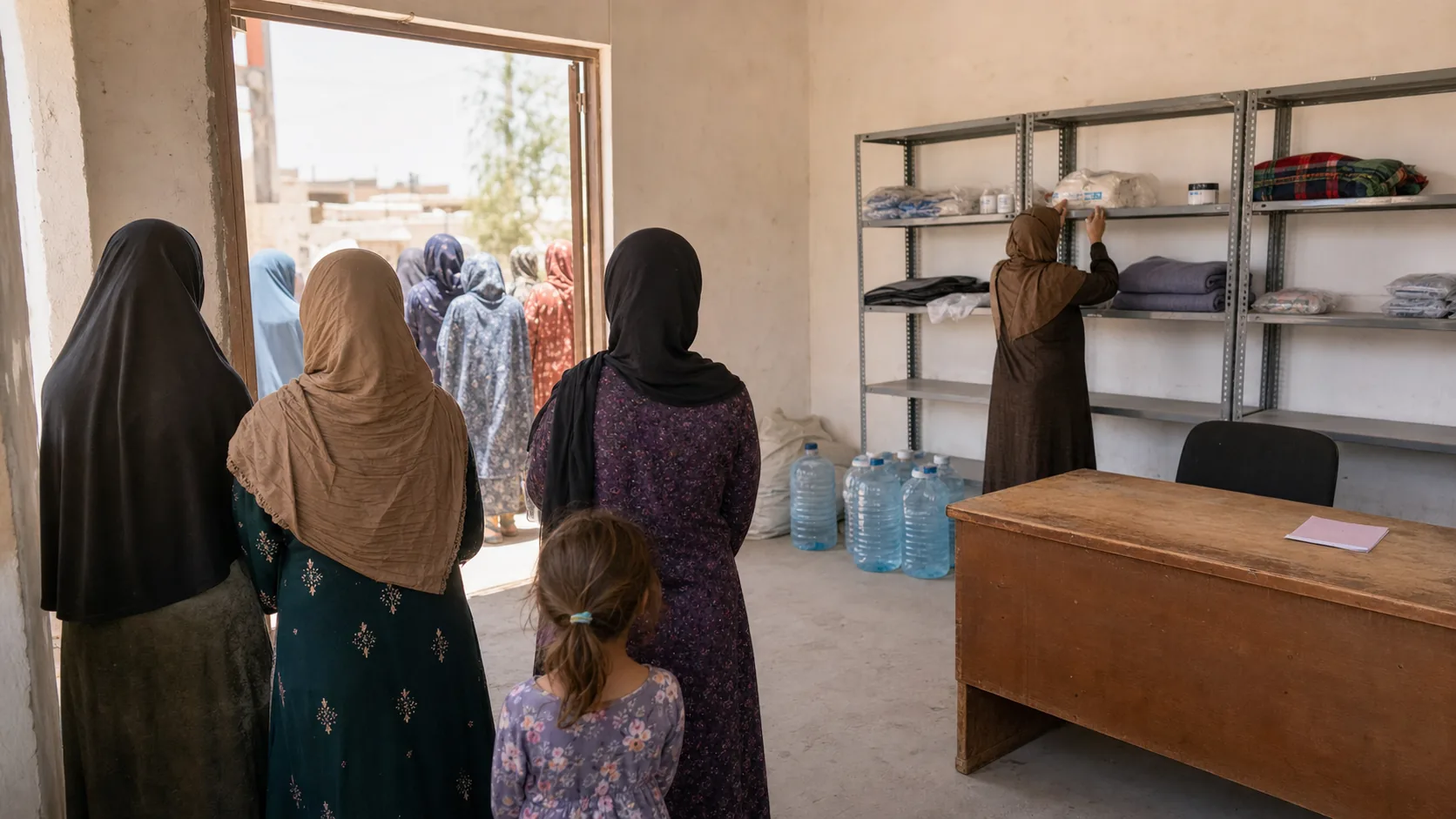
UN Women: 1 million women and girls lose support due to aid cuts
- Source
- UN Women, OECD, AP en The Guardian
- MOZOM headline
- UN Women: 1 million women and girls lose support due to aid cuts
- Original headline
- UN Women warns that aid cuts are dismantling women's organizations in crisis
- Author
- Paul Giezen
- Date
- 11 juli 2026 om 23:00
- Subject
- MOZOM investigates why the new UN Women warning is not just about less development money, but about the disappearance of local helplines for women and girls in war and crisis.
Summary of the original report
On July 10, 2026, UN Women published a new report on the consequences of international aid cuts for women's organizations in humanitarian crisis situations. The organization is based on responses from 855 mainly local and national women's organizations and women's rights organizations in 52 crisis and conflict countries. According to UN Women, 84 percent of these organizations have reported increased demand for aid since January 2025, while almost nine in ten say they can no longer cope with the current need. AP reports that at least 1 million women lost access to aid and essential services and that one in five organizations surveyed expect temporary or permanent closure within a year. Based on the report, The Guardian mentions a broader threat of closure and points out that many organizations are introducing waiting lists or having to turn away women and girls.
Own source research
MOZOM sees three separate layers in the sources. Layer one is the money: the OECD figures show a historically large drop in official development assistance in 2025, including a severe contraction in humanitarian aid and UN contributions. Layer two is the organizational chain: UN Women shows that the blow does not only fall on large international institutions, but on local women's organizations that are often the first and last point of entry for aid. Layer three is the social damage: if a shelter, legal helpline or psychosocial support function closes, not only a service disappears, but also knowledge of local risks and the relationship of trust that victims need to ask for help.
Striking in this message
It is striking how mild the word 'aid cuts' sounds compared to the concrete consequences. In a budget document it is one item less. In a crisis area, it may mean that a woman no longer receives a safe referral after violence, that a girl stays home from school longer or that a local organization ceases to exist within a few months after years of work. The framing changes as soon as you look not at the donor budget, but at the last working door where people could still knock.
Less visible context
What is less visible is that much international aid becomes credible precisely through local organizations. Large institutions can provide money, scale and visibility, but local women's organizations know the families, the language, the risks and the places where women still dare to speak. This makes them vulnerable: they are often financially dependent on short-term project funding, but socially they carry out tasks that require long-term trust. If donor countries demand rapid savings and strict measurability at the same time, these silent links are the first to fail.
Possible message behind the news
A possible message is that donor countries are putting their affairs in order in aid systems that are too large or too expensive. The critical MOZOM reading is that the bill for that political choice now also falls to local women's organizations that have little power, but bear a lot of direct responsibility.
Neutral conclusion
The preliminary conclusion: the UN Women warning is newsworthy because it shows where macro policy is landing. A drop in development aid of tens of billions of dollars sounds abstract. But once local women's organizations lose staff, rent, transportation and trust networks, a budget decision becomes a security problem. Anyone who wants to reform foreign aid must therefore also explain how the last helplines for women and girls in crisis areas are maintained.
Source:
- UN Women: at least one million women and girls lose access to critical support
- UN Women report: Beyond the breaking point
- OECD: A historic decline in foreign aid, preliminary 2025 ODA data
- AP: At least 1 million women have lost access to aid after funding cuts
- The Guardian: One million women lost access to humanitarian support